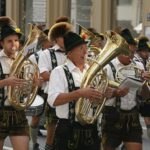
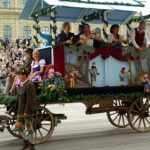
Most people picture Oktoberfest as one giant tent full of lederhosen, oompah bands, and liters of beer sloshing around on long wooden tables. That image isn’t wrong exactly – it’s just missing almost everything that makes the festival interesting. Oktoberfest started as a horse race. It’s named after a month it barely takes place in. And the “traditional” outfits half the crowd wears today are, historically speaking, a fairly recent addition to the whole affair. Once you dig into where this festival actually came from, the modern version starts to make a lot more sense – and it’s a much better story than “Germans really like beer.”
Where Oktoberfest Actually Came From
Oktoberfest began in 1810, not as a beer festival at all, but as a wedding celebration. Crown Prince Ludwig of Bavaria married Princess Therese von Sachsen-Hildburghausen, and the city of Munich threw a public party to mark the occasion, centered around a horse race held on a field just outside the city gates. That field still exists – it’s called Theresienwiese in her honor, usually shortened to “die Wiesn,” which is what Munich locals still call Oktoberfest today rather than its formal name.
The race was such a hit that the city decided to repeat it the following year, and the year after that, gradually adding agricultural shows, small fairs, and eventually beer stands as the event grew. By the mid-1800s, the horse race had faded out, but the festival itself had taken on a life of its own, run in large part by Munich’s major breweries, who saw an obvious opportunity in a few hundred thousand thirsty visitors gathering in one place every autumn.
So Why Is It Called “Oktoberfest” If It Happens in September?
This trips up a lot of first-time visitors who show up in early October expecting the festival to be in full swing, only to find the tents already packed up. The scheduling shift happened for a practical reason: Bavarian weather in late September tends to be milder and more reliable than October, better suited to outdoor drinking and standing in beer garden lines for hours at a time.
So today’s Oktoberfest actually runs primarily through September, typically starting on a Saturday in mid-to-late September and wrapping up on the first Sunday in October (occasionally stretching a day or two later if that Sunday happens to be October 3rd, German Unity Day). The name stuck around purely out of tradition, even though the festival barely touches the month it’s named for.
The Opening Ceremony: Tapping the First Keg
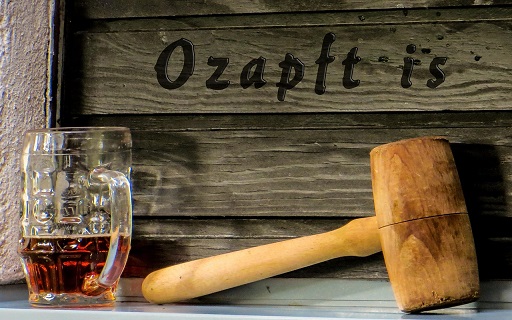
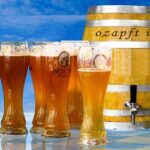
Oktoberfest has an official start moment, and it’s oddly specific. At noon on opening day, the Mayor of Munich taps the first keg in the Schottenhamel tent, shouting “O’zapft is!” – Bavarian dialect for “It’s tapped!” Until that keg is tapped, no beer is served anywhere on the grounds, even if a tent is already packed with people waiting. Once the mayor lands the tap cleanly (which, tradition holds, is a good omen for how smoothly the festival will run), a 12-gun salute goes off and beer starts flowing across all the tents simultaneously.
It’s a genuinely big deal in Munich – local news covers it live, and getting a seat in the Schottenhamel tent for the ceremony itself is a serious undertaking involving reservations made months in advance.
What People Actually Drink and Eat
Only beer brewed within Munich’s city limits, following strict purity standards, is permitted at Oktoberfest – six breweries qualify: Augustiner, Hacker-Pschorr, Löwenbräu, Paulaner, Spaten, and Hofbräu. The beer served is a specific style brewed for the occasion, called Märzenbier or Oktoberfestbier, slightly stronger and maltier than a standard lager, traditionally brewed in March (hence “März,” meaning March) and stored through the summer to be ready by fall.
It’s served exclusively in the Maß – a one-liter glass stein – and carrying several of these at once, which servers do with startling regularity, is its own small feat of physical strength that tends to draw applause from onlookers.
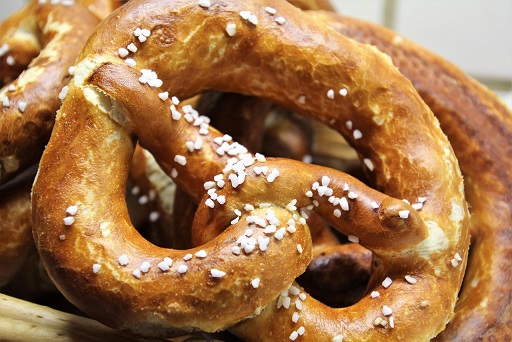
Oktoberfest food leans hearty and specific to Bavarian tradition rather than generic festival fare. Expect Hendl (roast chicken, often eaten with your hands), Schweinshaxe (roasted pork knuckle with crackling skin), Brezn (pretzels the size of a dinner plate, meant for sharing), and Obatzda, a soft cheese spread mixed with paprika and onion, usually eaten with dark bread. Weißwurst, a delicate white sausage, is technically a breakfast food and traditionally shouldn’t be eaten after noon – a rule that plenty of locals still take seriously, even if most tourists have never heard of it.
The Lederhosen and Dirndl Question
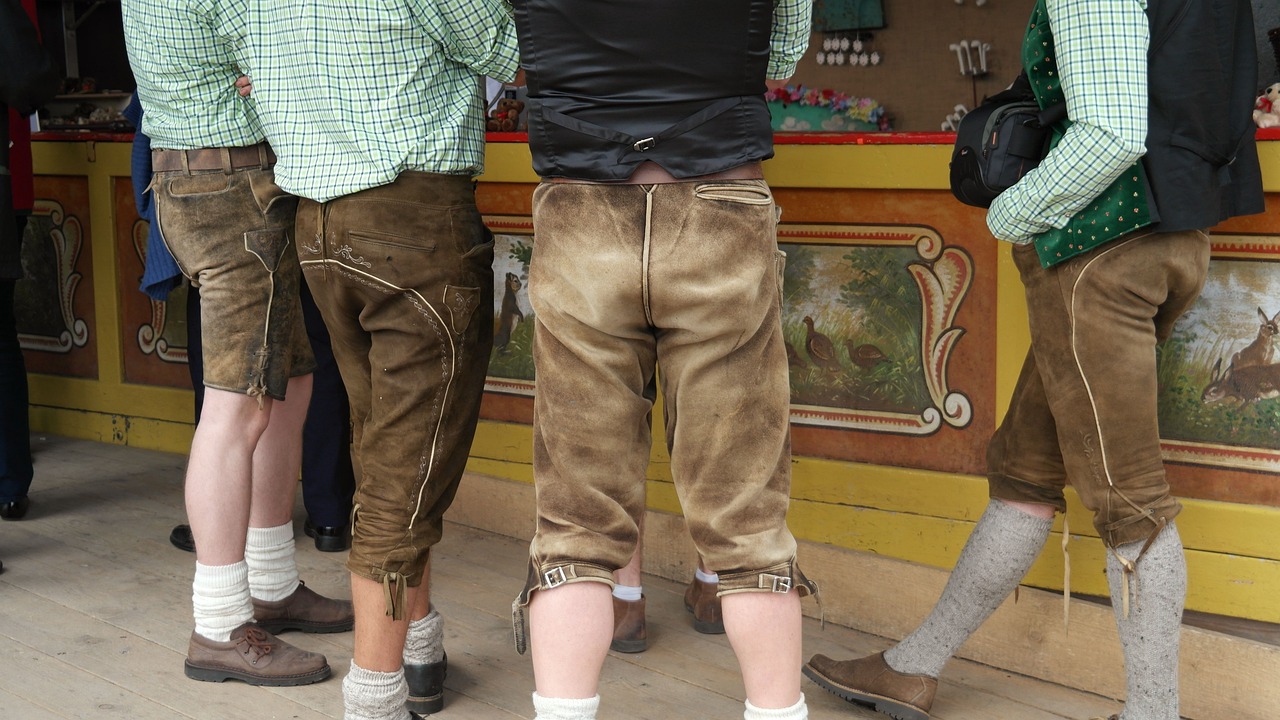
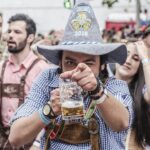
Here’s a myth worth clearing up: those leather shorts and dresses everyone associates with Oktoberfest weren’t originally festival costumes at all. Lederhosen and dirndls are traditional Bavarian working clothes, rural and practical in origin, worn by farmers and laborers long before anyone associated them with beer tents. Their popularity at Oktoberfest specifically took off in the early 20th century, partly as a nostalgic nod to rural Bavarian identity, and has grown into something close to an unofficial uniform for the festival over the past few decades.
Outside of Bavaria, and especially outside Germany altogether, most Germans don’t wear this clothing in daily life or even at other regional festivals. A Berliner showing up in lederhosen for a random Tuesday would get about the same reaction as an American wearing a cowboy hat to the grocery store in Boston – it’s regionally specific, not a national costume, whatever souvenir shops abroad might suggest.
Is Oktoberfest Really “German,” or Just Bavarian?
This is worth untangling for anyone planning a trip based on Oktoberfest alone. The original festival is a Munich institution, deeply tied to Bavarian identity specifically, not a nationwide German tradition. Plenty of German cities now run their own Oktoberfest-style events – Stuttgart, Berlin, even smaller towns – but these are generally understood as spin-offs inspired by the Munich original rather than parallel traditions with their own separate history.
Visiting Munich’s actual Oktoberfest and assuming the whole country operates this way is a common misstep. Someone from Hamburg or Cologne might have never attended an Oktoberfest tent in their life, and regional pride runs deep enough that plenty of northern Germans view the whole spectacle with a certain amused distance rather than participation.
A Few Practical Tips
If a trip to the real Munich Oktoberfest is in the plans, a handful of things are worth knowing ahead of time: tent seating fills up fast, and without a reservation, getting a table on a weekend afternoon can mean a long wait outside; the festival grounds are free to enter, with cost coming entirely from food, drink, and rides; and tents each have their own personality – some louder and younger, some more traditional and family-oriented – so it’s worth researching which tent actually matches the experience being sought rather than picking the first one with an open door.
What the Festival Says About Bavaria
Strip away the tourist version, and Oktoberfest is really a snapshot of Bavarian regional pride – its brewing traditions, its rural clothing customs, its own dialect and sense of humor, all wrapped into two and a half weeks of very organized chaos. It’s less a “German” festival than a very Bavarian one that happened to become globally famous, which might be the most interesting thing about it once you actually know the history behind the beer stein.
FAQ
Why is Oktoberfest held in September instead of October? The festival shifted earlier in the 1800s to take advantage of milder, more reliable late-September weather, but the original October name stuck out of tradition.
What beer is served at Oktoberfest? Only beer from six Munich breweries – Augustiner, Hacker-Pschorr, Löwenbräu, Paulaner, Spaten, and Hofbräu – served as a specially brewed style called Märzenbier or Oktoberfestbier.
Do all Germans celebrate Oktoberfest? No – the original festival is a specifically Bavarian, Munich-based tradition. Other German cities host their own spin-off versions, but it isn’t a nationwide custom.
Is Weißwurst really only eaten before noon? Traditionally, yes. Weißwurst is considered a breakfast sausage, and older Bavarian custom holds that it shouldn’t be eaten after the noon church bells ring.