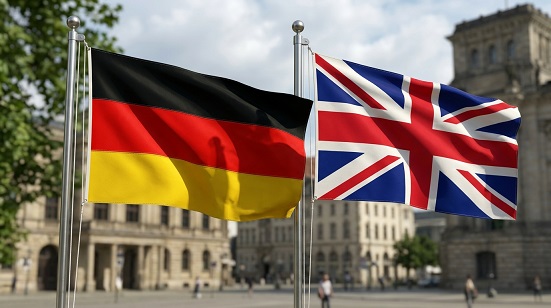
Ask a Brit who’s just moved to Germany how the first few weeks went, and you’ll usually get some version of the same story: a German colleague gave blunt, unfiltered feedback on a work presentation, and the Brit spent the rest of the day wondering if they’d done something wrong. They hadn’t. That’s just how a lot of German workplace communication works, and it’s one of the clearest, most immediate culture shocks between two countries that, on paper, seem fairly similar.
Germany and the UK are both major Western European economies, both known for a certain reserve compared to their southern neighbors, and both easy to lump together as “similar enough” from a distance. Spend real time in both places and the differences start showing up constantly, in ways that go well beyond driving on different sides of the road.
Directness vs Politeness as a Communication Style
This is probably the single biggest difference people notice first. German communication tends to prioritize clarity and honesty over softening a message, while British communication leans heavily on politeness, understatement, and reading between the lines.
A German might tell you directly that an idea won’t work and explain exactly why. A Brit is more likely to say something like “that’s an interesting approach” while actually meaning the opposite, a habit well-documented enough that it’s become something of a national joke in the UK itself. Neither approach is better, but they cause real friction when they meet. Germans working with British colleagues sometimes come away thinking the feedback was vague or unclear. Brits working with German colleagues sometimes come away feeling like the feedback was harsh or overly blunt, even when nothing personal was meant by it.
Humor: Present in Both, Expressed Very Differently
There’s a persistent myth that Germans don’t have a sense of humor, which isn’t true so much as it is a difference in style and context. British humor thrives on irony, self-deprecation, and sarcasm woven into ordinary conversation, often used as a social lubricant even in fairly serious settings. German humor tends to be more separated from daily interaction, saved more for actual jokes, comedy shows, or close friendships rather than layered constantly into small talk or professional conversation.
This gap causes some genuinely funny misunderstandings. A British visitor making a dry, sarcastic joke in a German business meeting might be met with a confused pause rather than a laugh, not because the joke wasn’t funny, but because sarcasm delivered with a straight face in a formal setting isn’t the expected register there.
Punctuality: A Difference in Degree, Not Just Attitude
Both cultures value punctuality more than a lot of other countries, but Germany takes it noticeably further. Arriving five minutes late to a German business meeting without warning can genuinely be read as disrespectful of other people’s time. In the UK, a similar delay is more likely to get a passing comment or none at all, particularly in social rather than professional contexts.
This shows up in trains too, or at least it’s supposed to. Germany’s reputation for precise, on-time trains has taken a real hit in recent years (Deutsche Bahn’s punctuality has become something of a national complaint among Germans themselves), but the cultural expectation of punctuality remains strong even if the trains don’t always live up to it anymore, which is its own small irony.
Pub Culture vs Beer Garden Culture
Drinking culture reveals a lot about how each country structures social life. The British pub is often the center of a neighborhood’s social world, a place people return to regularly, sometimes with a regular seat or a drink order the bartender already knows. Rounds are a big part of pub etiquette too, where one person buys a round for the whole group and it’s expected to rotate rather than everyone paying individually.
German beer culture, especially in beer gardens (Biergärten), tends to be more individually paced. Everyone typically buys and pays for their own drinks rather than participating in a round system, and communal seating means it’s completely normal for strangers to share a table once the regular seats fill up. Conversation flows more slowly too, often over a full liter stein that’s meant to be nursed through a long, unhurried evening rather than a faster-paced round of pints.
Workplace Culture and Small Talk
British workplace culture generally includes a fair amount of social chat woven into the day, catching up about the weekend, a bit of banter before a meeting starts. German workplace culture tends to separate work time from social time more sharply. Small talk still happens, but it’s often brief, and getting straight to the agenda is generally seen as a sign of respect for everyone’s time rather than coldness.
This extends into formality as well. German professional settings often use last names and the formal “Sie” until a closer relationship develops, while UK workplaces tend to move to first names almost immediately, even with senior colleagues or new clients.
Regional Variation Within Both Countries
Neither country is a single monolith culturally, which is worth keeping in mind before generalizing too broadly. Bavaria’s more traditional, community-oriented culture differs noticeably from Berlin’s faster-paced, more international feel, just as London’s culture differs substantially from a small town in Yorkshire or rural Wales. Younger Germans in bigger cities, particularly those in international industries, often adopt more relaxed, British-style small talk and informality than older generations or those in smaller towns, which means some of these “differences” are shrinking somewhat among younger, urban populations on both sides.
A Few Practical Tips for Navigating Both Cultures
If you’re moving between the two, or hosting visitors from one country while living in the other, a few adjustments go a long way. When working with Germans, take direct feedback at face value rather than searching for a hidden diplomatic meaning behind it. When working with Brits, listen for understatement and softened language, since “not bad” might genuinely mean quite good, and “quite good” might mean just okay. Show up on time for German meetings without exception, and don’t be offended if a German colleague skips the small talk and gets straight to business. If you’re at a German beer garden, don’t wait for someone to buy you a round, and don’t be surprised when a stranger sits down at your table.
Why These Differences Matter Beyond Travel
Understanding Germany vs UK culture isn’t just useful for a vacation itinerary. It matters for anyone working across borders, managing international teams, or building friendships that cross the Channel, since so many of these differences show up in exactly the moments that matter most: a piece of feedback, a meeting that starts a few minutes late, a joke that lands differently than intended. Neither culture is doing communication “wrong.” They’re just running on different assumptions about honesty, humor, and how much cushioning a message needs before it reaches the other person.
FAQ
Why do Germans seem more direct than British people? German communication tends to value clarity and honesty over softening a message, while British communication relies more heavily on politeness and understatement, which can make German feedback feel blunt by comparison.
Do Germans really not have a sense of humor? That’s a myth rather than a fact. German humor exists but tends to be separated from everyday conversation and professional settings, unlike British humor, which is often woven into daily interaction through irony and sarcasm.
Is Germany actually more punctual than the UK? Cultural expectations around punctuality are generally stricter in Germany, particularly in professional settings, even though Germany’s train punctuality specifically has declined in recent years.
What’s the biggest difference between German and British drinking culture? British pub culture often involves buying rounds for a group, while German beer garden culture tends to be more individually paced, with people typically buying their own drinks and sharing communal tables with strangers.