Black Forest, Germany: Cuckoo Clocks, Cake and Waterfalls
At the top of the town of Triberg, a river called the Gutach throws itself down a wooded hillside in seven cascades, dropping more than 160 meters into the valley. A few streets below, shop windows are crowded with carved wooden clocks, each with a tiny door waiting to open at the top of the hour. And in a café on the main street, someone is cutting a slice of a dessert that was named after the very region they’re standing in.
That single town holds most of what people mean when they say “the Black Forest”: waterfalls, cuckoo clocks, and cake. But the region around it is far bigger and more varied, a range of forested hills, glacial lakes, spa towns, and half-timbered villages in southwestern Germany. This guide covers what to see, what to eat, and how to plan a trip.
What and Where Is the Black Forest?
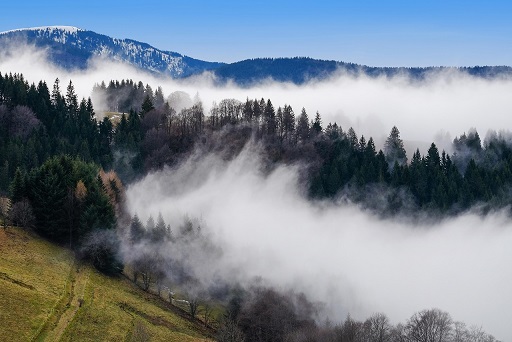
The Black Forest, or Schwarzwald, is a wooded mountain range in the state of Baden-Württemberg. It stretches for about 160 kilometers, running south from the Karlsruhe area to the Swiss border, and gets its name from the dark spruce and fir trees that cover many of its slopes. Its highest peak is the Feldberg at 1,493 meters, the tallest mountain in Germany outside the Alps.
The main gateways are Freiburg in the south, Baden-Baden in the north, and Pforzheim on the northern edge, which was also the destination of Bertha Benz’s famous 1888 drive. You can read her story in our article on Bertha Benz and the first road trip.
A clock billed as the world’s largest cuckoo clock, a few kilometers from Triberg
Quick photo stop
Baden-Baden
Thermal spas, elegant gardens, a grand 19th-century resort feel
Relaxation, culture
Freiburg
A university city with a medieval old town and a cathedral
Base for exploring, food
Titisee
A glacial lake with summer swimming and boating
Summer days
Feldberg
The region’s highest peak, hiking and winter sports
Hiking, skiing
Gutach
The Vogtsbauernhof open-air museum, with farmhouses from the 1600s
History, families
Schiltach, Gengenbach
Half-timbered towns on the Kinzig
Strolling
Black Forest High Road
A scenic ridge road past the Mummelsee lake and Hornisgrinde peak
Drives and views
Cuckoo Clocks: Real vs. Souvenir
The cuckoo clock is the region’s best-known export. Black Forest clockmaking goes back centuries, and Triberg is often named as the place where the cuckoo clock was first made, although the exact origin is debated among historians. The traditional style, with a carved wooden case and a mechanical cuckoo that pops out on the hour, is now a worldwide symbol of Germany.
If you’re curious, you can follow the German Clock Road (Deutsche Uhrenstraße) through workshops and museums, and visit the German Clock Museum, which is dedicated to timepieces of all kinds. If you want to buy one, ask where it was made and how, since the market includes handmade clocks from the region and cheaper imitations. Prices vary widely, and a good clock is a long-term purchase.
What to Eat
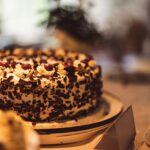
Schwarzwälder Kirschtorte (Black Forest cake). Layers of chocolate sponge, cherries, and whipped cream, soaked with Kirschwasser, a clear cherry brandy. According to German food guidelines, Kirschwasser is what makes a cake a true Black Forest cake. Triberg is one of the places said to have first produced it commercially.
Schwarzwälder Schinken. A cold-smoked ham that is a PGI-protected product, meaning it must come from the region to carry the name.
Flammkuchen and Spätzle. Thin, crisp tarte-flambée-style flatbread and soft egg noodles, both staples of southwestern German cooking.
Trout, venison, and rye bread. Traditional dishes from the region’s streams and forests, served with hearty farmhouse bread. See our guide to German bread culture.
The Bollenhut and Local Traditions
You may see photos of women wearing a wide straw hat decorated with big red pompoms. This is the Bollenhut, a traditional hat from the Gutach area, and it has become one of the region’s emblems. Today, it’s mostly worn on festive occasions and in folk performances.
Hiking and Spas
The Black Forest is hiking country, with thousands of marked trails. The long-distance Westweg runs the length of the range, and shorter routes near Feldberg, Todtnau, and the Belchen massif offer wide views over the Rhine Valley. In the north, the Black Forest National Park protects a large area of forest and moorland.
After hiking, spas are the other major draw. The Black Forest Spa Route, a roughly 270-kilometer loop between Pforzheim and Freudenstadt, links a series of spa towns including Baden-Baden.
When to Go
Spring. Waterfalls are at their fullest and the hills turn green.
Summer. The best time for hiking, swimming in Titisee, and festivals.
Autumn. Quieter trails and colorful forests.
Winter. Cross-country skiing and downhill runs around the Feldberg, plus Christmas markets in Freiburg and other towns. See our guide to Germany’s Christmas markets.
Getting There and Around
By train. Freiburg’s main station is the main rail gateway, and regional trains and the scenic Black Forest Railway connect many smaller towns.
By air. The nearest international airport is Basel-Mulhouse-Freiburg.
By car. A car gives you the most freedom, especially on the Black Forest High Road, a ridge route from Baden-Baden toward Freudenstadt.
KONUS guest card. Many towns offer a KONUS card to guests staying overnight, giving free use of regional buses and trains. Ask your accommodation.
A Three-Day Route
Day 1: Baden-Baden and the High Road. Start with a morning in Baden-Baden’s spa district, then drive the Black Forest High Road past the Mummelsee and Hornisgrinde toward Freudenstadt.
Day 2: Gutach and Triberg. Visit the Vogtsbauernhof open-air museum in Gutach, then continue to Triberg for the waterfalls, cuckoo clocks, and a slice of cake. Stop at Schonach for the giant clock.
Day 3: Titisee, Feldberg, and Freiburg. Walk or boat on Titisee, take in the views from the Feldberg, and end the day in Freiburg’s old town.
Practical Tips
Bring walking shoes and layers. Weather in the hills changes quickly.
Carry some cash. Small farms, cafés, and family-run shops sometimes prefer it.
Remember Sunday closures. Shops are mostly closed, so plan ahead. See our guide to Sunday closing in Germany.
Check opening hours of museums, waterfalls, and attractions, especially in winter.
Book accommodation early for summer weekends and the Christmas season.
For more places to visit, browse our travel to Germany section, and for another classic route, see our guide to the Romantic Road.
FAQ
Why is it called the Black Forest? The name comes from the dark appearance of the dense spruce and fir forests that cover much of the range.
What is the Black Forest famous for? Cuckoo clocks, Black Forest cake, the Triberg Waterfalls, Baden-Baden’s spas, and its hiking trails and half-timbered villages.
What is the highest mountain in the Black Forest? The Feldberg at 1,493 meters, the highest peak in Germany outside the Alps.
How many days do you need in the Black Forest? Three days lets you see the main highlights, such as Baden-Baden, Triberg, Titisee, and Freiburg, while a week allows time for hiking and smaller villages.