Konrad Adenauer: Germany’s First Chancellor After the War
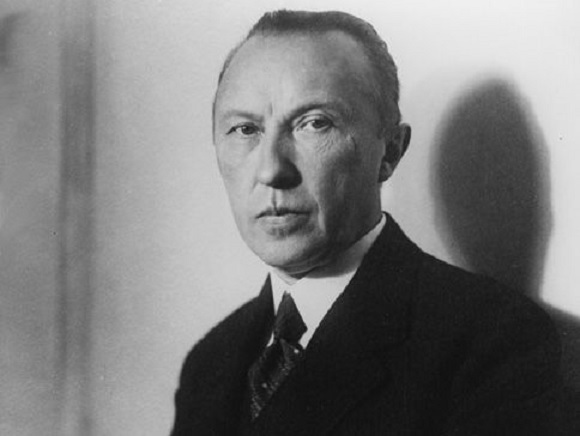
In February 1933, a few weeks after Adolf Hitler became chancellor, he traveled to Cologne for an election rally. The city’s mayor, a stern Catholic lawyer named Konrad Adenauer, refused to receive him. It was a small act of defiance in a year when most officials were deciding how far to bend, and it cost him his job within weeks.
Sixteen years later, the same man became the first chancellor of the Federal Republic of Germany. He was already 73 years old and expected, by many, to serve only briefly. He stayed for 14 years, and in that time he set the direction of West German politics for generations. This is the story of Konrad Adenauer, “der Alte” (“the Old Man”), and why he’s still called the founding chancellor.
Early Life and Cologne
Konrad Adenauer was born on 5 January 1876 in Cologne, the third of five children in a middle-class Catholic family. He studied law, began a career in the city administration, and in 1917 was elected Oberbürgermeister (lord mayor) of Cologne, the youngest in the city’s history at that time. He held the post until 1933 and is remembered for modernizing the city, promoting its economy and culture, and developing major infrastructure, including the first motorway between Cologne and Bonn. He also served as president of the Prussian State Council.
Adenauer was an open opponent of the Nazis. After his refusal to welcome Hitler in 1933, he was dismissed as mayor, and a smear campaign against him followed. He was arrested in 1934 and again in 1944, after the failed plot against Hitler, and narrowly avoided worse. For most of the Nazi years, he lived quietly, largely out of public life.
In 1945, the Americans reinstated him as mayor of Cologne, but the British, who took over the zone, soon removed him again. He turned instead to national politics, becoming a founder of the Christian Democratic Union (CDU) and president of the Parliamentary Council that drafted West Germany’s constitution, the Basic Law, in 1948 and 1949.
Chancellor, 1949 to 1963
In August 1949, West Germany held its first federal election, and on 15 September Adenauer was elected chancellor. His age made people assume his term would be short. He remained until October 1963, and he still holds the record as the oldest German chancellor, leaving office at 87.
His central idea was the Westbindung, a firm anchoring of West Germany in the Western alliance. He believed that Germany’s future lay with democratic Europe and the United States, not in neutrality between East and West. Over his time in office, this meant:
Joining European integration. West Germany became a founding member of the European Coal and Steel Community in 1952, an early step toward today’s European Union.
Regaining sovereignty. In May 1955, the occupation period officially ended and West Germany became a sovereign state. That year it also joined NATO and set up the Bundeswehr, the new army.
Reconciliation with Israel. In 1952, Adenauer signed the Luxembourg Agreement with Israel and the Jewish Claims Conference, providing reparations for Nazi crimes. At the time it was a controversial step, and it’s now seen as an important moment in Germany’s acknowledgment of responsibility.
Bringing prisoners home. On a 1955 trip to Moscow, he secured the release of the remaining German prisoners of war held in the Soviet Union.
Reconciliation with France. In January 1963, he signed the Élysée Treaty with French President Charles de Gaulle, formalizing the friendship between two countries that had fought three wars in less than a century.
At home, the 1950s were the years of the “economic miracle” (Wirtschaftswunder), led in economic policy by his minister Ludwig Erhard. His 1957 campaign slogan, “Keine Experimente!” (“No experiments!”), expressed what many Germans wanted after the upheavals of the war, and it helped him win an absolute majority that year.
The Criticisms
Adenauer’s record is generally admired, but historians have also pointed to its limits.
Reunification. Reunification was his stated aim, but he wanted it only on his own terms, which the Soviet side did not accept, and it remained out of reach during his lifetime. Critics argue he missed chances; defenders say reunification on Soviet terms would have meant giving up West Germany’s freedom.
An authoritarian style. He governed firmly and made decisions from the top, a style later described as “chancellor democracy.” The Spiegel affair of 1962, when he called a magazine’s report on the military an “abyss of treason,” led to a scandal and public protest, and it ended up strengthening press freedom in West Germany.
Former Nazi officials. His government employed officials who had held positions under the Nazi regime, the best-known example being his chief of staff Hans Globke. Many historians see this as a troubling compromise with the past.
The Spiegel affair and several other crises weakened his position. A coalition deal with the Free Democrats (FDP) tied the next government to his stepping down, and he resigned on 15 October 1963.
Retirement and Death
Adenauer spent his remaining years at his home in Rhöndorf, near Bonn, writing his memoirs and tending the garden. He died there on 19 April 1967, aged 91.
His Legacy
Adenauer’s legacy is the shape of postwar West Germany: a democracy firmly tied to the West, reconciled with France, and integrated into a growing European community. His successors, including Willy Brandt and Angela Merkel, built on and sometimes departed from his legacy, and the debate over whether he was too cautious or exactly cautious enough continues. His long-standing goal, reunification, was finally achieved in 1990, which you can read about in our article on German reunification. For the period that shaped him, see our overview of Germany under Hitler.
Places to Visit
Rhöndorf, near Bonn. His former home is preserved as a museum and memorial. Check opening hours before you go.
Bonn. The former capital of West Germany has museums on the postwar period, including the House of History.
Cologne. The city where he served as mayor for 16 years.
FAQ
Who was Konrad Adenauer? The first chancellor of West Germany, serving from 1949 to 1963. He had earlier been mayor of Cologne and an opponent of the Nazis.
What is the Westbindung? The policy of firmly anchoring West Germany in the Western alliance and European integration, rather than staying neutral between East and West.
Why was Adenauer’s age notable? He was 73 when he became chancellor and 87 when he resigned, making him the oldest German chancellor.
What was the Spiegel affair? A 1962 scandal in which the government moved against the magazine Der Spiegel after it published a critical report on the military. It damaged Adenauer’s position and ended up strengthening press freedom.