Picture a group of adults in warm coats pulling a small wooden handcart through a cold northern German town on a Friday evening. The cart is loaded with drinks. Somebody is organizing a sack race on a village green. Somebody else is trying to fling a tea bag as far as possible. They’re all headed, with great seriousness, toward a plate of cabbage and sausage.
This is a Kohlfahrt, literally a “cabbage tour,” and it’s one of the great winter rituals of northwest Germany. It combines a walk, a party, and a very specific meal, and it has a cast of characters, a rulebook, and a king. If you’re in Bremen, Oldenburg, or the surrounding region between November and March, you’ll see it happening around you. Here’s how it works, step by step.
Step One: Wait for the Frost
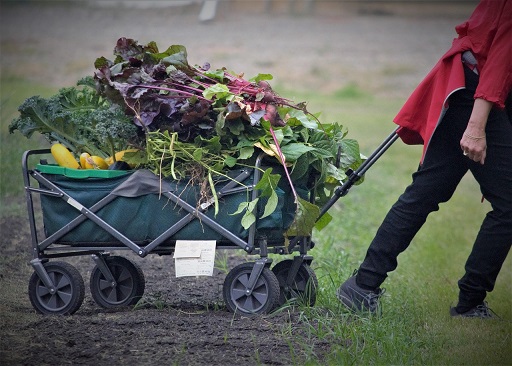
The Kohlfahrt season is tied to the weather. Grünkohl (kale) has traditionally been harvested only after the first frost, which is said to make the leaves sweeter and more tender. In Bremen, the season runs from the first frost until about March, and Friday and Saturday evenings belong to the Kohlfahrer, the “cabbage tourers.”
Kale is a point of regional pride. It’s nicknamed the “palm of the north” and, in East Frisia, the “East Frisian palm,” because the tall, curly stalk looks a bit like a tropical tree. In Bremen, some locals call it Braunkohl (brown kale) rather than Grünkohl, a small detail that marks you out as an insider if you use it. The Dutch have a close cousin, boerenkool.
Step Two: Meet the Sausage
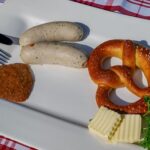
The kale is only half the dish. The other half is Pinkel, a smoked sausage that is the signature of the Bremen and Oldenburg region and is eaten almost only there and around Osnabrück. It’s a type of Grützwurst, made from bacon, oat or barley groats, suet, lard, onions, and spices. The name has inspired several jokes, including the one that the groats sausage “pinkelt,” or drips, when it’s cooked.
Regional differences matter. The Bremen version is fattier, with more bacon, while the Oldenburg version, called Fleisch-Pinkel, contains more meat. The plate is usually completed with other smoked or cured pork, such as Kassler or Mettwurst, plus potatoes. A small glass of schnapps is a traditional companion.
Step Three: Pack the Bollerwagen
The Bollerwagen is a small wooden handcart, and it’s the unofficial vehicle of the Kohlfahrt. It carries drinks and supplies and makes the whole procession look like a mobile party. You can rent one if you don’t have a friend with a cart: tourist offices in Oldenburg arrange rentals, and some restaurants hire them out too.
Kohlfahrten are organized by all sorts of groups: families, clubs, colleagues, and friends. In Bremen, the official history of the custom reaches back more than 200 years, and in Oldenburg, a tradition of more than 150 years is claimed, with one story crediting the gymnastics pioneer Friedrich Ludwig Jahn as an early inspiration. Whatever the exact origin, it has lasted for a very long time.
Step Four: Play the Games
According to one Bremen tourism site, a Kohlfahrt without games would be as pointless as Bremen without its river, the Weser. The walk includes challenges, often at stops along the way, and the participants collect points. Typical games include sack races and tea bag throwing, which is a specialty of Oldenburg. The activities aren’t only for fun, because they also help decide who becomes the evening’s king.
Step Five: Eat, and Crown the King
Most tours end at an inn, where the kale and Pinkel are served in large quantities. The climax is the crowning of the Kohlkönig or Kohlkönigin, the cabbage king or queen. Methods vary. In some groups, the person who is the last one still eating wins, while in others, it’s whoever has the most points from the games. In some circles, the token is a pig’s lower jaw with the names of the winners engraved in the bone. In a number of groups, the winner is awarded a ceremonial order by the previous king and takes on the job of organizing the next year’s Kohlfahrt, which is a clever way to keep the tradition going.
When Politicians Join In
The Kohlfahrt has even reached the capital. Bremen’s representation in Berlin holds a kale walk through the Tiergarten park followed by a Kohl-und-Pinkel dinner, and it crowns a king or queen, with recent winners including the musician Sven Regener and the actress Sabine Postel. Oldenburg runs its own event in Berlin, the “Defftig Ollnborger Gröönkohl-Äten” (hearty Oldenburg kale feast), organized by a group from the Oldenburg region, which crowns a Kale King from the political world.
How to Join as a Visitor
Go on a weekend evening between about November and March. In Bremen, this is when the Kohlfahrt crowds are out.
Book early. Inns that serve kale are popular on weekends, so reserve a table in advance.
Rent a Bollerwagen from a tourist office or a restaurant if you want the full experience.
Join a group. Local tourism offices and some companies organize Kohlfahrten, and some Bremen venues combine the walk with a boat or a party.
Dress warmly. It’s an outdoor event in the German winter.
Pace yourself. The meal is heavy and traditionally accompanied by schnapps.
Check dietary options. Pinkel and other pork are central, so vegetarians should ask the venue about alternatives.
Don’t want to walk? Many restaurants in the north serve Grünkohl and Pinkel during the season, and you can enjoy the dish without the tour.
Where It Fits in the German Food Year
Kohlfahrt season arrives just as the autumn and winter calendar fills up. It follows the roast goose of St. Martin’s Day, runs through the weeks of Advent and Christmas, and continues into March. It’s also a perfect example of how German social life is organized around clubs and groups, as explained in our guide to Vereine and Stammtisch. The names tell a story too: Grünkohl or Braunkohl, depending on who you ask, as we explain in our guide to German food words by region. For more regional dishes, browse our German cuisine pages.
FAQ
What is a Kohlfahrt? A group outing in northwest Germany that combines a walk with a Bollerwagen, games, and a meal of kale and Pinkel, usually ending with the crowning of a Kohlkönig or Kohlkönigin.
When is Grünkohl season in Germany? It begins with the first frost and runs until about March, with the peak of Kohlfahrten in the colder months.
What is Pinkel? A smoked sausage made from bacon, oat or barley groats, suet, lard, onions, and spices, traditionally eaten with kale in the Bremen, Oldenburg, and Osnabrück region.
Why do people say Braunkohl in Bremen? It’s the local name for the same kale, and some Bremen locals prefer it to Grünkohl.