German Culture

All about Germany

  • Home
  • Learn German
    • German Language Basics
    • German Grammar & Vocabulary
    • German Learning Tips
    • German Idioms & Expressions
    • German Quizzes & Exercises
  • Articles
    • Famous Germans
    • German Holidays
    • German Cuisine
    • How To In Germany
    • Daily Life in Germany
    • German Facts
    • German Traditions
  • Facts About Germany
  • German History
    • Early History of Germany
    • Middle Ages in German History
    • German Reformation Period
    • 19th Century and German Unification
  • German Recipes
    • German Baking Recipes
    • German Bread Recipes
    • German Christmas Recipes
    • Desserts
    • German Easter Recipes
    • Halloween Recipes
    • Main Dishes
    • German Salad Recipes
    • German Salads
    • Sauerkraut Recipes
  • Travel to Germany
  • Contact

Burg Satzvey – Moated Castle

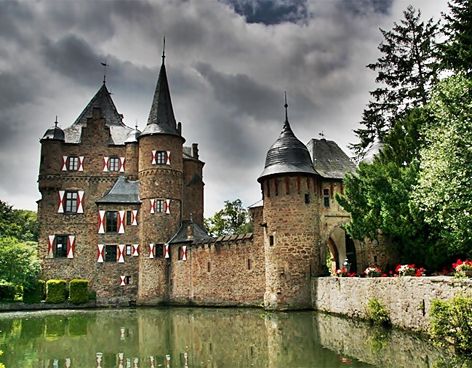
Satzvey Castle is one of the best-kept moated castles in Rhineland, whose origins go back to the 12th century. Satzvey Castle is well-known today for its diverse events, showing history and tradition in an interesting and fun way.

Burg Satzvey is a medieval water castle, originally from the 12th century, and is located on the north-eastern edge of the Eifel in Mechernich in North Rhine-Westphalia.

The castle’s lineage has spread over many ancient royal families. It began with the Benedictines, until the Archbishop of Cologne gave the lordship to Otto von Vey in 1368. Although the castle has retained the name Vey (partially), the family’s ownership of Burg Satzvey was far less enduring.

By 1391, the last of the line had died out and it passed on to Heinrich von Krauthausen. Von Krauthausen was the son-in-law of Otto von Vey, and was chiefly responsible for the construction of the Satzvey Castle we know today.

But even von Krauthausen didn’t maintain power for very long time either. After a series of famous noble families held control, by the 16th century, a man named Wilhelm Spieß von Büllesheim usurped Satzvey with the blessing of the Cologne Archbishop.

In the 1700s, Satzvey was once again under new management, and this time would be a bit more lasting. The castle was sold to Karl Otto von Gymnich.

Satzvey Castle remains in the Gymnich family today, and the Gymnichs have been particularly active in preserving the castle’s history with festivals and other events.


Related articles:
The History of German Castles: From Medieval Fortresses to Fairytale Palaces
Augustusburg castle – the German Heritage
Wartburg Castle- the Place of Luther’s Inspiration

Lichtenstein Fortress
The Most Haunted Places in Germany: Castles, Ghosts, and Legends

You might also like:

  • Castle Neuschwanstein
    The History of German Castles: From Medieval…
  • German Castles and Medieval Architecture: Fortresses, Fantasy, and Function
    German Castles and Medieval Architecture
  • Burg_Eltz
    The Most Haunted Places in Germany: Castles, Ghosts,…
  • Halloween Events in Germany
    Halloween Events in Germany 2026: Parks, Castles, Parties
  • Germany's ghost stories
    Haunted Germany: Ghost Legends and Castles
  • Underground Cities of Germany: Bunkers, Tunnels
    The Underground Cities of Germany: Bunkers, Tunnels,…
  • Autobahn Bastei Bridge
    Touring Germany via the Autobahn: Must-See Stops and…
  • Exploring the Rhine Valley: Castles, Riesling, and Wine Towns
    Exploring the Rhine Valley: Castles, Riesling, and…

Recent Posts

German beer explained

German Beer Styles: Pils, Helles, Weizen, Kölsch and More

German dumplings explained

German Dumplings: Klöße, Knödel, Spätzle and Maultaschen

Dresden Stollen

Dresden Stollen: Facts, Myths and the Stollenfest

German Meal Times: What Germans Eat and When

Feierabend: How Germans End the Workday and Why It Matters

German Clubs: Vereine, Stammtisch and How to Join One

Kohlfahrt: Germany’s Kale Walk and Grünkohl Guide

Untranslatable German Words: 18 You’ll Actually Use

Copyright © 2026 · German Culture

Go to mobile version