
Long before the name “Germany” existed, the lands of Central Europe were inhabited by a diverse network of tribes known as the Germanic peoples. These groups—including the Saxons, Goths, Vandals, Suebi, and many others—were not unified by a single culture or identity but shared linguistic and cultural similarities. Their influence extended across … [Read more...]
Social Welfare in Germany: Bismarck’s Lasting Legacy

Today, social welfare systems are taken for granted in much of the world. But did you know that the roots of modern healthcare, pensions, and unemployment insurance began in 19th-century Germany? And it wasn’t created by a liberal reformer—but by the Iron Chancellor himself, Otto von Bismarck. Let’s explore how and why Bismarck built the first … [Read more...]
Kaiser Wilhelm I: The First Emperor of a United Germany

Kaiser Wilhelm I might not be as flashy as Bismarck or as controversial as his grandson Wilhelm II, but without him, there would be no German Empire. As the first Emperor of a united Germany, Wilhelm I played a central—if often understated—role in one of Europe’s most transformative chapters. Who was the man behind the title, and how did he help … [Read more...]
Prussia Before Germany: The Military State That Shaped a Nation

Before Germany became a unified empire in 1871, there was Prussia—a powerhouse of discipline, precision, and iron will. While today the name Prussia has vanished from maps, its influence still echoes across German history. From its militarized society and brilliant rulers to its role as the engine behind unification, Prussia helped create the … [Read more...]
Realpolitik Explained: Bismarck’s Art of Power

Imagine a political strategy where ideals don’t matter—only results. Where moral convictions take a backseat to outcomes, and alliances shift based on need, not loyalty. This is the world of Realpolitik, a cold, calculating style of governance that changed Europe forever. And no one embodied it more than Otto von Bismarck. But what exactly is … [Read more...]
The Unification of Germany: How Bismarck Built a Nation from Blood and Iron

In the mid-19th century, Germany wasn't a country. It was a chaotic jigsaw puzzle of kingdoms, duchies, and principalities—39 in total—each with its own ruler, army, and agenda. But within just a few years, that patchwork was transformed into a unified empire, largely thanks to the vision and cunning of one man: Otto von Bismarck. Why Was … [Read more...]
Otto von Bismarck: The Iron Chancellor Who Forged a Nation
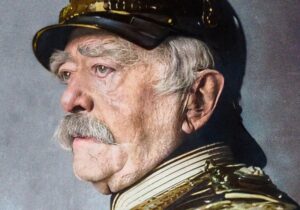
Imagine a single man so powerful and cunning that he could bend the fate of an entire continent. A political chessmaster who engineered wars, shaped ideologies, and unified a fragmented collection of states into a global powerhouse—all while wearing a spiked helmet. That man was Otto von Bismarck, the “Iron Chancellor,” and his story is as … [Read more...]
Osterbrot – Traditional German Easter Bread Recipe

Osterbrot is a traditional German Easter bread, enjoyed during the holiday season as part of a festive breakfast or brunch. This soft, slightly sweet yeast bread is enriched with raisins, almonds, and citrus zest, giving it a fragrant and tender crumb. Typically, Osterbrot is shaped into a round loaf, brushed with egg wash for a golden crust, … [Read more...]
Franzbrötchen – Traditional German Cinnamon Pastry Recipe

Franzbrötchen is Hamburg’s famous cinnamon pastry, known for its buttery, flaky texture and caramelized cinnamon-sugar filling. Resembling a mix between a croissant and a cinnamon roll, this treat is enjoyed for breakfast or as an afternoon snack with coffee. Bakers achieve its distinctive spiral shape by rolling and flattening the dough, … [Read more...]
Kartoffelsalat – Traditional German Potato Salad Recipe

Kartoffelsalat is a must-have at many German holiday tables, especially during Easter brunches and summer picnics. Unlike the creamy mayonnaise versions found elsewhere, southern Germany’s potato salad is typically served warm, made with vinegar, broth, onions, and crispy bacon. It’s a dish that brings families together—easy to prepare in large … [Read more...]
- « Previous Page
- 1
- …
- 36
- 37
- 38
- 39
- 40
- …
- 163
- Next Page »