German Culture

All about Germany

  • Home
  • Learn German
    • German Language Basics
    • German Grammar & Vocabulary
    • German Learning Tips
    • German Idioms & Expressions
    • German Quizzes & Exercises
  • Articles
    • Famous Germans
    • German Holidays
    • German Cuisine
    • How To In Germany
    • Daily Life in Germany
    • German Facts
    • German Traditions
  • Facts About Germany
  • German History
    • Early History of Germany
    • Middle Ages in German History
    • German Reformation Period
    • 19th Century and German Unification
  • German Recipes
    • German Baking Recipes
    • German Bread Recipes
    • German Christmas Recipes
    • Desserts
    • German Easter Recipes
    • Halloween Recipes
    • Main Dishes
    • German Salad Recipes
    • German Salads
    • Sauerkraut Recipes
  • Travel to Germany
  • Contact

December 1 in German History

December 1, 1018

Death of Dietmar in Merseburg, Germany. The Saxon, Dietmar was an important chronicler of his age and his works are important documentation to the period.

December 1, 1724

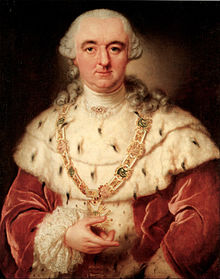
Karl_Theodor_(Bayern)

Birth of Karl Theodor, the Wittelsbach Elector (Holy Roman Empire) of the Palatinate. On December 30, 1777 the Bavarian line of the Wittelsbach family ceased and the succession went to Karl Theodor. The Palatinate was thus united with Bavaria. In reaction to the new size and troublesome strength of Bavaria, Austria laid claim to a number of the territories. In a complex series of intrigues this led to the War of the Bavarian Succession which involved Austria, Bavaria, the Palatinate and Prussia.


December 1, 1884

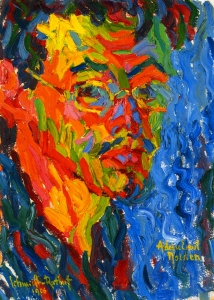
rotluff

Self-Portrait. Karl Schmidt-Rottluff – 1906

Birth of Karl Schmidt-Rottluff in Chemnitz, Germany. The artist was a member of the group, Die Brücke. An Expressionist and at times cubist, he was growing in his art in Berlin when the Nazis came to power. In 1937, 608 of Schmidt-Rottluff’s paintings were seized from museums by the Nazis and several of them shown in exhibitions of “degenerate art“.He was forbidden to paint in a style he could understand as artistic. After the war he returned to painting.

December 1, 1893

Birth of Ernst Toller in Samotschin, Germany. Toller was an Expressionist, Marxist, pacifist writer in the 20’s. He spent effort and time in protests and on revolutionary committees as well as in prison for his activities. His most noted lasting work is Masse-Mensch (1920). With the rise of the Nazis he immigrated to the United States, where he attempted to find a career as a Hollywood scriptwriter. He committed suicide in 1939.

December 1, 1932

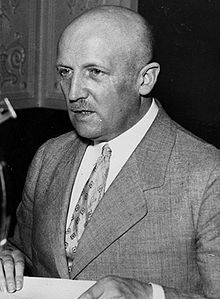
Kurt_von_Schleicher

Kurt von Schleicher becomes chancellor of the Weimar Republic. Schleicher was one of the early political leaders of the Weimar Republic. He became chancellor of the republic on December 1, 1932. He opposed the Nazis as they gained political strength. In January of 1933 Schleicher was replaced in the office of chancellor by Adolf Hitler. On June 30, 1934 he was murdered by the SS.

December 1, 1966

Kurt Georg Kiessinger (CDU) is elected chancellor of the Federal Republic of Germany (West Germany). Will Brandt (SPD) becomes the vice chancellor and foreign minister. This is the beginning of the Grand Coalition.

December 1, 1966

Under Chancellor Kurt Georg Kiessinger, Franz Josef Strauß is called upon to serve as the minister of finance. He will hold that position through 1969. In his position he undertook a tax reform and a budget reform.

You might also like:

  • Lost German Kingdoms: Forgotten States and Their Cultural Influence
    Lost German Kingdoms: Forgotten States and Their Cultural…
  • The Holy Roman Empire
    The Holy Roman Empire
  • The Holy Roman Empire: An Epoch of European History
    The Holy Roman Empire: An Epoch of European History
  • The Congress of Vienna and the German Confederation
    The Congress of Vienna and the German Confederation
  • The Treaty of Verdun and the Division of Charlemagne’s Empire
    The Treaty of Verdun and the Division of Charlemagne’s…
  • The Golden Bull of 1356
    The Golden Bull of 1356
  • The Napoleonic Wars and the Confederation of the Rhine
    The Napoleonic Wars and the Confederation of the Rhine
  • The Saxons and Their Conversion to Christianity
    The Saxons and Their Conversion to Christianity

Recent Posts

German potato soup (Kartoffelsuppe) represents the heart of traditional German home cooking.

German Potato Soup Recipe (Kartoffelsuppe)

Frederick the Great and the Potato

Frederick the Great and the Potato

Potatoes are one of the most beloved ingredients in German cuisine

Traditional German Potato Dishes

Traditional German potato dishes

Traditional German Potato Dishes You Should Know

Discover how potatoes in German culture shaped history

Potatoes in German Culture

The German Zeppelin represents far more than a transportation technology.

German Zeppelin: The Rise and Fall of Germany’s Giant Airships

Discover how the German Zeppelin worked

How the German Zeppelin Worked: Inside the Engineering of Airship Giants

Valentine’s Day in Germany: Love, History, and Traditions

Valentine’s Day in Germany: From American Import to Cultural Tradition

Copyright © 2026 · German Culture

Go to mobile version