German Culture

All about Germany

  • Home
  • Learn German
    • German Language Basics
    • German Grammar & Vocabulary
    • German Learning Tips
    • German Idioms & Expressions
    • German Quizzes & Exercises
  • Articles
    • Famous Germans
    • German Holidays
    • German Cuisine
    • How To In Germany
    • Daily Life in Germany
    • German Facts
    • German Traditions
  • Facts About Germany
  • German History
    • Early History of Germany
    • Middle Ages in German History
    • German Reformation Period
    • 19th Century and German Unification
  • German Recipes
    • German Baking Recipes
    • German Bread Recipes
    • German Christmas Recipes
    • Desserts
    • German Easter Recipes
    • Halloween Recipes
    • Main Dishes
    • German Salad Recipes
    • German Salads
    • Sauerkraut Recipes
  • Travel to Germany
  • Contact

December 10 in German History

December 10, 1520

Martin Luther takes a papal bull which threatens to excommunicate him and publicly burns it in front of the Elster Gate in Wittenberg.

December 10, 1872

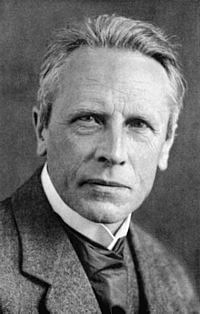
klages1

Birth of Ludwig Klages in Hannover, Germany. Klages was a professor at the University of Munich in natural sciences. He was the inventor of handwriting analysis. He was also a leader in the German vitalist movement arguing for a “Geist” which distinguishes humans from animals.

December 10, 1891

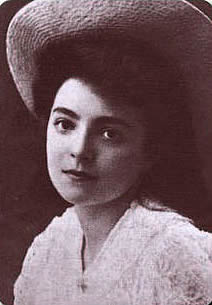
Nelly_Sachs_1910

Birth of Nelly (Leonie) Sachs (1891-1970) in Berlin, Germany. Her poetry and drama convey the suffering and pain of German Jews. She lived in Berlin until 1940, when she learned that she was soon to be taken to a concentration camp and was able to escape to Sweden. It was at that time that she began to write poetry in serious fashion. She was awarded the German Publishers’ Peace Prize in 1965 and the Nobel Prize for Literature in 1966. On the occasion of the receipt of the Nobel Prize she commented “I represent the tragedy of the Jewish People.” Her most noted play is, Eli: Ein Mysterienspiel vom Leiden Israels (1951). On December 10, 1966, Nelly Sachs won the Nobel Prize for Literature, which was presented on her 75th birthday.

December 10, 1929

Eugenio Pacelli (later Pope Pius XII) leaves Berlin after having been Papal Nuncio in Germany since 1917. On February 7, 1930, he will make the Vatican’s secretary of state.

December 10, 1966

Nelly Sachs wins the Nobel Prize for Literature, which was presented on her 75th birthday.

December 10, 1999

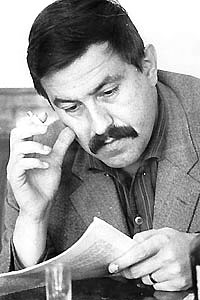
grass

Günter Grass wins the Nobel Prize for Literature.  Günter Wilhelm Grass was a German novelist, poet, playwright, illustrator, graphic artist, sculptor, and recipient of the 1999 Nobel Prize in Literature. He was born in the Free City of Danzig and died on April 13, 2015 in Leipzig.

December 10, 1999

The European Union, at its meeting in Helsinki, determines to take up negotiations with Rumania, Bulgaria, Latvia, Lithuania, the Slovak Republic and Malta for admission to the Union. Negotiations begin in the spring of 2000. At the time of the decision negotiations were already underway with Poland, Hungary, the Czech Republic, Slovenia, Estonia and Cyprus.

December 10, 2000

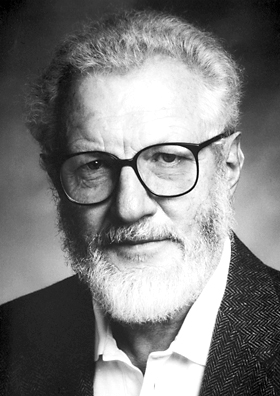
kroemer

Herbert Kroemer wins the Nobel Prize in Physics. Born in Germany, Kroemer gained his doctorate at the University of Gottingen in 1952. He then carried on his work in fast transistors, laser diods and integrated chips while working for RCA laboratories and Varian Associates. From 1968 to 1976 he was a professor of physics at the University of Colorado and thereafter at the University of California in Santa Barbara.
Back to Today in German History Calendar

You might also like:

  • Martin Luther and the 95 Theses
    Martin Luther and the 95 Theses
  • German History: From the Holy Roman Empire to the Modern Era
    German History: From the Holy Roman Empire to the Modern Era
  • German Science and Culture in 18th Century
    German Science and Culture in 18th Century
  • All Facts About Germany: A Comprehensive Guide to the Country
    All Facts About Germany: A Comprehensive Guide to the…
  • German Reformation and Early Modern Period
    German Reformation and Early Modern Period
  • German Education: An Overview of Excellence and Innovation
    German Education: An Overview of Excellence and Innovation
  • Martin Heidegger - Being, Time, and the Question of Existence
    Martin Heidegger - Being, Time, and the Question of…
  • The Evolution of the German Language: A Cultural History
    The Evolution of the German Language: A Cultural History

Recent Posts

German wine culture means connecting to tradition

German Wine Culture

German potato soup (Kartoffelsuppe) represents the heart of traditional German home cooking.

German Potato Soup Recipe (Kartoffelsuppe)

Frederick the Great and the Potato

Frederick the Great and the Potato

Potatoes are one of the most beloved ingredients in German cuisine

Traditional German Potato Dishes

Traditional German potato dishes

Traditional German Potato Dishes You Should Know

Discover how potatoes in German culture shaped history

Potatoes in German Culture

The German Zeppelin represents far more than a transportation technology.

German Zeppelin: The Rise and Fall of Germany’s Giant Airships

Discover how the German Zeppelin worked

How the German Zeppelin Worked: Inside the Engineering of Airship Giants

Copyright © 2026 · German Culture

Go to mobile version