German Culture

All about Germany

  • Home
  • Learn German
    • German Language Basics
    • German Grammar & Vocabulary
    • German Learning Tips
    • German Idioms & Expressions
    • German Quizzes & Exercises
  • Articles
    • Famous Germans
    • German Holidays
    • German Cuisine
    • How To In Germany
    • Daily Life in Germany
    • German Facts
    • German Traditions
  • Facts About Germany
  • German History
    • Early History of Germany
    • Middle Ages in German History
    • German Reformation Period
    • 19th Century and German Unification
  • German Recipes
    • German Baking Recipes
    • German Bread Recipes
    • German Christmas Recipes
    • Desserts
    • German Easter Recipes
    • Halloween Recipes
    • Main Dishes
    • German Salad Recipes
    • German Salads
    • Sauerkraut Recipes
  • Travel to Germany
  • Contact

October 7 in German History

October 7, 1794

Birth of Wilhelm Müller in Dessau, Germany. Müller was a lyric poet who focused on Greek culture.

October 7, 1822

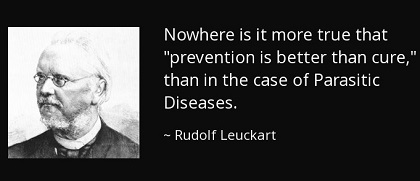
rudolf-leuckart-quote

Birth of Rudolf Leuckart in Helmstedt, Germany. Leuckart pioneered the science of parasitology. He was a professor of biology at the Universities of Göttingen, Giessen and Leipzig.

October 7, 1919

Death of Lassa Francis Lawrence Oppenheim in Cambridge, England (born in Windecken, Germany). Oppenheim, a jurist, immigrated to London in 1895 to teach at the London School of Economics. In 1908 he became a professor at Cambridge University. He specialized in international law. He based his concept of international law on adherence to specific agreements and customs between nations. His most significant book is International Law: A Treatise (2 vols. 1905-1906).

October 7, 1926

Death of Emil Kraepelin in Munich, Germany. A psychiatrist at the universities of Heidelberg and Munich, Kraepelin organized psychiatric disorders into a system usable by psychiatrists. The first publication of his Compendium der Psychiatrie was in 1883. His system was the starting point for contemporary classifications. He was the first to distinguish between schizophrenia and manic-depressive psychosis.

October 7, 1949

Establishment of East Germany. October 7 was the national holiday of the GDR until it ceased to exist in 1990.

October 7, 1989

Despite the mass exits of East Germans and the mass protests, East Germany continues to try to celebrate its 40th anniversary. On October 7 Soviet president Gorbatschov is a featured speaker in Berlin, but rather than encourage the Honecker government he says,”Whoever comes too late will be punished by events.”

October 7, 2001

Pope John-Paul II beatifies two Germans, Nikolaus Groß and Maria Euthymia Üffing.
You might also like:

  • Exploring the Depths of German Philosophy: A Journey Through Time and Thought
    Exploring the Depths of German Philosophy: A Journey Through…
  • Gottfried Wilhelm Leibniz: A Pioneering Polymath of the 17th Century
    Gottfried Wilhelm Leibniz: A Pioneering Polymath of the 17th…
  • Education in Germany: A Comprehensive Overview
    Education in Germany: A Comprehensive Overview
  • German Science and Culture in 18th Century
    German Science and Culture in 18th Century
  • German Education: An Overview of Excellence and Innovation
    German Education: An Overview of Excellence and Innovation
  • How German Names Work: Surnames, Meanings & Traditions
    How German Names Work: Surnames, Meanings & Traditions
  • Martin Luther and the 95 Theses
    Martin Luther and the 95 Theses
  • Oktoberfest Origins: From Royal Wedding to Global Icon
    Oktoberfest Origins: From Royal Wedding to Global Icon

Recent Posts

The German Zeppelin represents far more than a transportation technology.

German Zeppelin: The Rise and Fall of Germany’s Giant Airships

Discover how the German Zeppelin worked

How the German Zeppelin Worked: Inside the Engineering of Airship Giants

Valentine’s Day in Germany: Love, History, and Traditions

Valentine’s Day in Germany: From American Import to Cultural Tradition

"Kinder, Küche, Kirche" functions primarily as a historical artifact and cautionary phrase

“Kirche, Küche, Kinder”: Germany’s Three K’s

Women and German Military Traditions

Women in German Army: Historical Evolution

Hindenburg disaster

The Death of the Hindenburg: The Catastrophe That Ended the Airship Era

German wedding Tracht represents the most meaningful ways modern couples honor their cultural heritage.

German Wedding Tracht: History and Cultural Meaning

The History of Traditional German Clothing

The History of Traditional German Clothing

Copyright © 2026 · German Culture

Go to mobile version