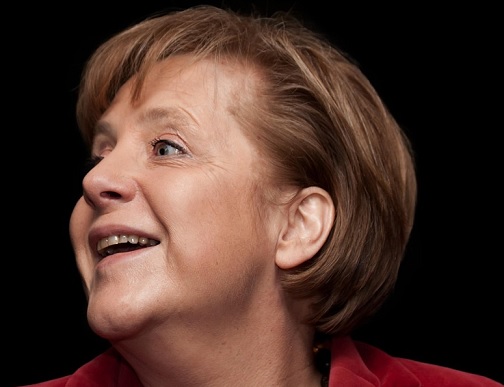
On 22 November 2005, a scientist who grew up behind the Iron Curtain walked into the Chancellery in Berlin and took over the government of Europe’s largest economy. Angela Merkel was the first woman to lead Germany, the first chancellor from the former East, and the first born after the Second World War. She would stay for 16 years, through four terms and an almost unbroken series of crises.
Few people shaped Europe in the early 21st century as much as she did, and few are discussed as differently. Admirers see steadiness in dangerous times. Critics see delayed decisions with long-term costs. This article sets out who she is, what she did, and why her legacy is still debated.
From Hamburg to Templin
Angela Merkel was born Angela Kasner in Hamburg in 1954. Soon after her birth, her father, a Lutheran pastor, moved the family to East Germany, where she grew up in the small town of Templin in Brandenburg. Her Christian home made her slightly suspect in a state that discouraged religion, and her parents worked to keep the family out of trouble so that she could receive a good education.
She studied physics in Leipzig and worked as a researcher at the Academy of Sciences in East Berlin, completing a doctorate in the 1980s. By her own later account, the fall of the Berlin Wall was the turning point. On the evening of 9 November 1989, she has said she went to a sauna before crossing the border to see the West. Within months she had joined the political movements of the transition, and after reunification she moved quickly. You can read about that night in our article on 9 November, Germany’s Day of Fate.
The Rise in Politics
Merkel joined the Christian Democratic Union (CDU) in the early 1990s and became a minister in Helmut Kohl’s government, first for women and youth and then for the environment. When a party donations scandal engulfed Kohl in the late 1990s, she publicly broke with him and soon became party leader, a position she held until 2018. In 2005, after a narrow election, she became chancellor in a grand coalition with the Social Democrats (SPD). She was re-elected in 2009, 2013 and 2017, and stepped down in December 2021 after handing over to Olaf Scholz, having chosen not to run again.
The Crises She Governed Through
Merkel’s time in office was defined less by one signature reform than by a sequence of emergencies.
The financial and euro crises (2008 onward). She was central to Europe’s response to the banking crisis and the sovereign debt crisis, including the debated austerity conditions placed on countries like Greece.
The nuclear phase-out (2011). After the Fukushima disaster in Japan, her government decided to phase out nuclear power in Germany.
Russia and Ukraine (2014 onward). After Russia’s annexation of Crimea, Merkel helped negotiate the Minsk agreements and kept channels to Moscow open.
The 2015 refugee influx. When more than a million people arrived, many fleeing the war in Syria, she said, “We can do this” (Wir schaffen das), a phrase that came to define her last years in power.
The coronavirus pandemic (2020 to 2021). As a trained scientist, she became known for explaining infection data in plain terms.
Her Style
Merkel was known for a cautious, pragmatic approach and a dry sense of humor. She avoided big speeches, preferred to wait for consensus, and was often nicknamed Mutti (“Mum”) by the media. Her signature hand gesture, fingertips joined in a diamond shape, became known as the Merkel-Raute. Forbes named her the world’s most powerful woman for ten consecutive years.
Praise and Criticism
Opinion about her record is divided, and the debate has intensified since she left office. Some of the main points on each side:
Supporters point to:
Her calm management of several overlapping crises.
Germany’s economic strength and low unemployment during much of her tenure.
Her moral argument for admitting refugees in 2015, which she still defends.
Her role as a defender of liberal democratic values in Europe.
Critics point to:
Her government’s support for the Nord Stream 2 gas pipeline from Russia even after the 2014 annexation of Crimea, a decision now widely regarded as a mistake by many observers following Russia’s 2022 invasion of Ukraine.
Germany’s dependence on cheap Russian gas, which became a major vulnerability when supplies were cut.
The pace of Germany’s digitalization and infrastructure investment.
Her 2015 refugee policy, criticized by some as too open and by others for how it was implemented.
The nuclear phase-out, which some argue deepened reliance on imported gas.
Merkel has rejected much of this criticism. In her memoir she argues that Nord Stream 1 was approved under her predecessor, Gerhard Schröder, and that gas was needed as a transitional fuel while Germany shifted to renewable energy and phased out nuclear power. She also stands by the 2015 refugee decision and the nuclear exit. Historians generally say it’s too early for a final verdict, and public opinion has shifted: she was among the most popular politicians in the world when she retired in 2021, while polls and commentary since then have been more mixed.
The Memoir and After Politics
After leaving office, Merkel kept a low public profile and avoided party events. In November 2024 she published her memoir, Freiheit (Freedom: Memoirs 1954 to 2021), a book of roughly 700 pages co-written with her longtime adviser Beate Baumann and released in 30 languages. It covers her East German childhood, reunification, and her 16 years in office. A common criticism of the book is that it admits few mistakes. In 2022, she received the UNHCR Nansen Refugee Award for her role in protecting refugees during the Syrian crisis.
Why She Matters
Whatever one thinks of her decisions, Merkel changed what a German leader could look like. She was a scientist, a woman, an East German, and a politician who built her authority by being quiet and prepared rather than loud. For many Germans, she is the only chancellor they remember from childhood. Her tenure also overlaps with some of the defining developments of modern Europe, from the euro to the refugee debate to the war in Ukraine, which is why her record continues to be examined.
How long was Angela Merkel chancellor? Sixteen years, from 22 November 2005 to December 2021, across four terms.
Where was Angela Merkel born? In Hamburg in 1954, though she grew up in the East German town of Templin.
What did Merkel mean by “Wir schaffen das”? It means “We can do this.” She said it in 2015 about Germany’s ability to handle the large number of refugees arriving, and it became the best-known phrase of her tenure.
What is Merkel’s memoir called? Freiheit (Freedom: Memoirs 1954 to 2021), published in November 2024.