Dinner for One and Silvester: Germany’s New Year’s Eve
Every 31 December, millions of Germans sit down in front of the television to watch an 18-minute black-and-white comedy sketch in English, about a very old lady, her very drunk butler, and a tiger-skin rug. They know every line. Many say the key phrase along with the actors. And almost none of them could tell you why they do it, except that it wouldn’t feel like New Year’s Eve without it.
The sketch is Dinner for One, and it’s the strangest and most beloved fixture of Silvester, as Germans call New Year’s Eve. In 2026 the evening falls on a Thursday, with New Year’s Day on Friday, which means a four-day stretch that many people will turn into a long weekend. Here’s what the tradition is, where it came from, and how the rest of the night works, including the fireworks rules that catch visitors off guard every year.
What Is Dinner for One?
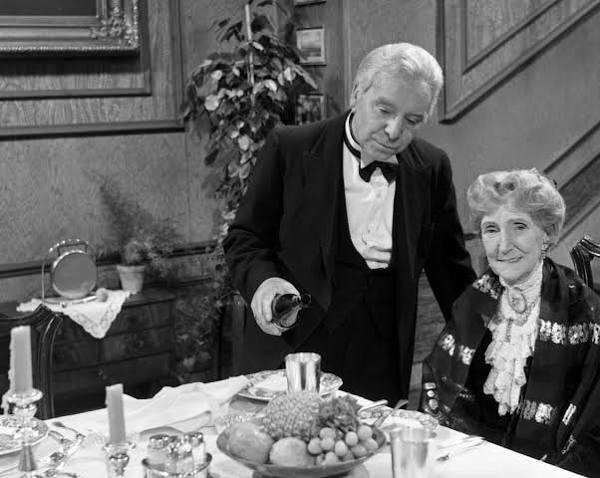
Dinner for One (full title: Dinner for One or The 90th Birthday) is a short British comedy sketch starring Freddie Frinton as the butler James and May Warden as Miss Sophie, who is celebrating her 90th birthday. Each year she holds a birthday dinner for her four close friends, Sir Toby, Admiral von Schneider, Mr. Pommeroy, and Mr. Winterbottom. The problem is that all four have long since died, so James must play each of the guests in turn, drinking each one’s toasts for them.
As the dinner proceeds through its courses, starting with mulligatawny soup, James gets steadily drunker. He repeatedly trips over the head of the tiger-skin rug and drinks from a flower vase. Before each course he asks the sketch’s most famous line, “The same procedure as last year, Miss Sophie?”, and she replies, “The same procedure as every year, James.” The phrase is so familiar in Germany that it has become an everyday idiom for anything that happens in the same way every time.
(A behind-the-scenes detail: according to German broadcasters, the drinks on set were actually diluted apple juice, and only the vase held plain water.)
How a British Sketch Became a German Tradition
The story of how it got to Germany is almost as strange as the sketch itself.
Early 1950s. Freddie Frinton buys the rights to the sketch and tours it around England with different stage partners.
1963. The German TV presenter Peter Frankenfeld sees it performed in Blackpool and invites Frinton and Warden to appear on his show. It airs on German television on 8 March 1963.
1963. The broadcaster NDR records a full version in Hamburg, in English, for its archive. The performers are reportedly paid 4,150 Deutschmarks.
1963 to 1972. The recording is shown now and then as a filler between programs.
1972. NDR airs it on New Year’s Eve for the first time, and the habit sticks. The ritual has continued every year since.
1988. It enters the Guinness Book of Records as the world’s most frequently repeated television production.
Frinton died in 1968, long before the sketch became a national ritual, so he never knew about it.
Why Do Germans Love It?
There’s no single answer, and Germans themselves joke about the mystery. A few explanations are commonly offered:
The ritual itself. The sketch is about repetition, and watching it every year turns the repetition into the joke.
Shared experience. For one evening, a large part of the country watches the same thing, much like a family tradition on a national scale. NDR said roughly 15 million people watched it on New Year’s Eve 2021.
Language. The English lines are simple enough for everyone to remember, which makes them easy to quote.
Absurd, gentle humor. The slapstick needs no translation.
It’s also largely a German-speaking phenomenon. Austria’s ORF broadcasts it too, and the sketch is reportedly little known in Britain, where it was made, a fact that regularly puzzles British residents of Germany.
Germans enjoy local variations as well. Regional broadcasters have aired dialect versions, including a Low German (Plattdeutsch) version on NDR and others in Cologne and Hessian dialects, and the sketch has even been performed on stage in Berlin. Because broadcast times change, check TV listings for 2026, as the sketch is usually shown several times throughout 31 December.
Silvester in Germany: What Else Happens
Dinner for One is just part of the night. A typical Silvester also includes:
Dinner with friends or family. Raclette and fondue are very popular choices for the evening, since guests can cook at the table and eat slowly.
Midnight toasts. At midnight, people raise a glass of Sekt (sparkling wine), hug, and wish each other “Guten Rutsch!”, literally a “good slide,” meaning a smooth transition into the new year.
Lucky charms. Marzipan pigs, four-leaf clovers, and chimney sweep figures are given as good-luck gifts, and lentils are sometimes eaten for good fortune in the coming year.
Berliner prank. Many hosts serve jelly doughnuts (called Berliner or Pfannkuchen) with a few filled with mustard instead of jam, as a joke.
Bleigießen. The old custom of melting small pieces of metal and pouring them into water to predict the future has largely moved from lead to tin or wax in recent years because of health concerns.
The Chancellor’s address. The head of government traditionally gives a televised New Year’s address on 31 December.
Public parties. Large cities host open-air celebrations. Check your city’s website for the 2026 program.
Fireworks Rules for Silvester 2026
Germans love fireworks, and the rules are strict, so learn them before you buy.
Rule
Details for 2026
When you can buy
Category F2 fireworks, the standard Silvester type, may be sold from 29 to 31 December (Tuesday to Thursday)
When you can set them off
Only on 31 December and 1 January
Age limit
18 or older to buy and to use F2 fireworks
Local bans
Many cities and towns have no-fireworks zones, so check local rules
Because shops close early on 31 December, the sensible plan is to buy fireworks by the 30th. For shop hours across the holiday period, see our guide to Christmas in Germany 2026. Don’t set off leftover fireworks after 1 January, since that’s outside the permitted period.
If you have pets, plan ahead for the noise. And if you’re staying in a city centre, expect fireworks to start well before midnight.
A Practical Plan for 31 December 2026
Shop by 30 December for food, drinks, and fireworks. Many supermarkets close early on the 31st.
Remember the holiday. New Year’s Day (1 January) is a public holiday, so shops will be closed until Saturday, 2 January.
Check public transport. Many cities run special night services, others reduce them.
Book restaurants and venues early. Silvester tables sell out.
Watch for quiet-day rules. Silvester is not one of the protected quiet days, but check local rules for events. See our guide to the stille Feiertage.
Don’t miss the sketch. Check the TV listings for Dinner for One on 31 December. The version you’ll see is the English-language recording from 1963.
Why do Germans watch Dinner for One on New Year’s Eve? It’s a TV tradition that began in 1972 and grew into a national ritual. The sketch is short, funny, and easy to quote, and watching it has become part of the evening.
Is Dinner for One a British or German production? It’s a British comedy sketch performed in English. The version Germans watch was recorded by German broadcaster NDR in Hamburg in 1963.
When can you set off fireworks in Germany? Only on 31 December and 1 January. Standard Silvester fireworks may be sold from 29 to 31 December in 2026 and only to people aged 18 or over.
What does “Guten Rutsch” mean? It’s the German New Year’s greeting, literally a “good slide,” wishing someone a smooth start to the new year.