Süßes oder Saures: Trick-or-Treating in Germany Explained
An American mom in a suburb outside Frankfurt told me about her first German Halloween. Her kids had been planning their costumes for weeks, and on October 31 she walked them down the street at dusk, expecting porch lights and bowls of candy. Most houses were dark. A few doors opened to polite, slightly surprised faces. One neighbor apologized for having nothing in the house, then ran upstairs and came back with a handful of chocolate bars. By the end of the evening, the kids had a modest bag of sweets and a story they still tell.
That is trick-or-treating in Germany in a nutshell. It exists, it’s growing, and it can be charming, but it works on different rules than in the United States.
What Germans Say Instead of “Trick or Treat”
The German phrase is “Süßes oder Saures!”, literally “sweets or sour.” The “sour” part is the threat: give us something sweet or we’ll play a prank. Some groups use the longer rhyme “Süßes, sonst gibt’s Saures” (“sweets, or else you’ll get sour”). Children shout it when the door opens, often in a group, and most neighbors respond with candy, chocolate, or small sweets.
How Common Is Trick-or-Treating in Germany?
Not as common as you might expect, and it varies a lot by place.
Cities and suburbs: More likely, especially in neighborhoods with families and younger residents.
Areas with international communities: Places near US military bases, such as around Kaiserslautern and Stuttgart, or neighborhoods with many expat families, often have strong Halloween habits.
Villages and rural areas: Less common, and unexpected knocking may get a cooler reception.
Older generations: More likely to see Halloween as an imported novelty, not a tradition they feel obliged to join.
Because participation is uneven, you can’t assume the house next door is on board. This is the single biggest difference from American suburbs, where decorated porches are a near-universal signal.
The Unwritten Rules
German trick-or-treating etiquette is mostly common sense, with a few local twists.
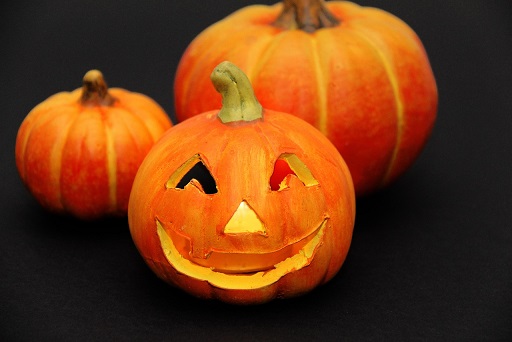
Look for a signal. A carved pumpkin, a decoration, or a light left on is the usual invitation. No signal usually means no candy, and many Germans consider a surprise ring at the door slightly intrusive.
Go early. The clocks change on October 25 this year, so it’s dark by about 5 p.m. Most families go out in the early evening, roughly between 5 and 7 p.m. After that, many people consider it too late, especially with younger children and especially in apartment buildings.
Go in groups, and keep parents nearby. Younger kids are generally accompanied by an adult. Older kids often go in small groups, and it’s polite to have a parent waiting at the end of the street.
Ring once and be polite. In apartment buildings (the most common housing in German cities), you ring the bell and wait. If no one answers, move on. Don’t ring every bell on the panel.
Say thank you, and accept a “no.” A friendly “Danke” is expected whatever you receive, and a polite refusal is just part of the game.
What Kids Collect
German trick-or-treat hauls look slightly different from American ones. Many neighbors give out familiar brands like Haribo gummy bears, small chocolates, or chewy candies, and some hand out fruit or smaller, simpler treats. You may also see homemade cookies or stickers. Allergy awareness is high, so don’t be surprised if a neighbor checks with a parent first.
What About the “Saures” Part?
The prank threat is mostly a joke, but it’s worth knowing that real pranks can have consequences. Throwing eggs at a house, for example, can count as property damage under German law, and neighbors do not always treat it lightly. Most families keep it to the sweet part and leave the tricks out of it.
Older German Door-to-Door Traditions
Trick-or-treating may be new, but going door to door for treats is not. Germany has its own versions, which many families see as more authentic.
Martinssingen (around November 10 and 11): In parts of the Rhineland and elsewhere, children carry lanterns, sing songs about St. Martin, and receive sweets at the door. It’s closely tied to St. Martin’s Day and often feels warmer and more community-focused than Halloween.
Sternsinger (early January): Children dressed as the Three Kings visit homes to sing and collect donations for charity, though that’s a fundraising tradition rather than a candy one.
Some families blend the two seasons, and some skip Halloween entirely in favor of Martinstag, which can explain why a neighbor looks puzzled when you ring the bell on October 31.
Tips for Parents and Expats
Check your neighborhood first. Ask neighbors, local parent groups, or your school or Kita whether children usually go out.
Decorate if you want visitors. A pumpkin and a light by the front door is the clearest invitation.
Stock up early. In 2026, October 31 falls on a Saturday, and in nine states it’s also a public holiday, so most shops will be closed. See our guide to whether Halloween is a public holiday in Germany.
Wear something reflective or carry a flashlight. It gets dark early in late October.
Mind the quiet hours. Keep group noise down in apartment buildings, and don’t stay out late.
Have a backup plan. A Halloween party at a school, community center, or park can be easier than knocking on doors. For ideas, see our list of Halloween events in Germany.
What do Germans say for trick or treat? “Süßes oder Saures!”, which means “sweets or sour.” Some children add “Süßes, sonst gibt’s Saures.”
Do kids trick-or-treat in Germany? Yes, but not everywhere. It’s most common in cities, suburbs, and international neighborhoods, and less common in villages.
What time do kids trick-or-treat in Germany? Usually in the early evening, around 5 to 7 p.m. On October 31, 2026, it’s dark by about 5 p.m. because the clocks go back on October 25.
How do I show I’m giving out candy in Germany? Put a carved pumpkin or decoration by the door and leave a light on. Without a signal, many neighbors assume you’re not participating.