German Culture

All about Germany

  • Home
  • Learn German
    • German Language Basics
    • German Grammar & Vocabulary
    • German Learning Tips
    • German Idioms & Expressions
    • German Quizzes & Exercises
  • Articles
    • Famous Germans
    • German Holidays
    • German Cuisine
    • How To In Germany
    • Daily Life in Germany
    • German Facts
    • German Traditions
  • Facts About Germany
  • German History
    • Early History of Germany
    • Middle Ages in German History
    • German Reformation Period
    • 19th Century and German Unification
  • German Recipes
    • German Baking Recipes
    • German Bread Recipes
    • German Christmas Recipes
    • Desserts
    • German Easter Recipes
    • Halloween Recipes
    • Main Dishes
    • German Salad Recipes
    • German Salads
    • Sauerkraut Recipes
  • Travel to Germany
  • Contact

How to Cook Sauerbraten

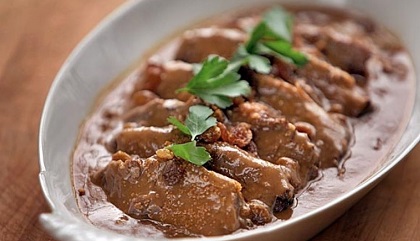
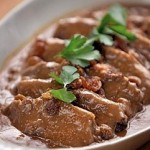
SauerbratenDon’t let the long cooking time scare you away. This authentic German dish will win your heart … after you have cooked it.

Difficulty Level: Average

Time Required: 3 days

Here’s How:

  1. Mix 2 cups water, 1 cup wine vinegar, 1 tsp salt, 2 onions, 1 carrot, 5 peppercorns, 2 whole cloves, and 1 bay leaf in a large saucepan.
  2. Bring the marinade to a boil, then lower the heat and simmer for 15 minutes.
  3. Place the meat — 1 kg piece of beef — in a big pot, pour in the marinade and leave the pot in the refrigerator for two to three days.
  4. Drain the meat and pat it dry on paper towels.
  5. Brown it in the oil in a large frying pan.
  6. Pour the cooled marinade without vegetables and spices over the beef.
  7. Cook the beef in a hot oven for about 1 1/2 hours, turning regularly.
  8. When the meat is done and tender, take it out of the oven onto a large platter.
  9. Degrease the sauce remaining in the frying pan and season it with salt and pepper.
  10. Over moderate heat, mix in 1 cup sour cream.
  11. Slice the sauerbraten and serve it in its sauce with potato dumplings or potato pancakes.

Tips:

  1. Take the piece of beef from the upper back hip, not the usual roast beef!
  2. Use dry red or white wine instead of water if you like.
  3. You may optionally add 1 cup raisins and sliced apples to the sauce so that it gets a more sweet-and-sour taste.

More German recipes


You might also like:
  • Traditional Sauerbraten Recipe: A German Classic That Stands the Test of Time
    Traditional Sauerbraten Recipe: A German Classic That Stands…
  • Hase in Rotweinsauce – Traditional German Rabbit in Red Wine Sauce Recipe
    Hase in Rotweinsauce – Traditional German Rabbit in Red Wine…
  • Traditional German Beef Rouladen Recipe
    Traditional German Beef Rouladen Recipe
  • Linsensalat – Traditional German Lentil Salad Recipe
    Linsensalat – Traditional German Lentil Salad Recipe
  • Authentic Königsberger Klopse Recipe: A Taste of German Tradition
    Authentic Königsberger Klopse Recipe: A Taste of German…
  • Easy Homemade German Spaetzle Recipe
    Easy Homemade German Spaetzle Recipe
  • German Christmas Goose Recipe
    German Christmas Goose Recipe
  • German Blutwurst Recipe: A Traditional Delight
    German Blutwurst Recipe: A Traditional Delight

Recent Posts

German potato soup (Kartoffelsuppe) represents the heart of traditional German home cooking.

German Potato Soup Recipe (Kartoffelsuppe)

Frederick the Great and the Potato

Frederick the Great and the Potato

Potatoes are one of the most beloved ingredients in German cuisine

Traditional German Potato Dishes

Traditional German potato dishes

Traditional German Potato Dishes You Should Know

Discover how potatoes in German culture shaped history

Potatoes in German Culture

The German Zeppelin represents far more than a transportation technology.

German Zeppelin: The Rise and Fall of Germany’s Giant Airships

Discover how the German Zeppelin worked

How the German Zeppelin Worked: Inside the Engineering of Airship Giants

Valentine’s Day in Germany: Love, History, and Traditions

Valentine’s Day in Germany: From American Import to Cultural Tradition

Copyright © 2026 · German Culture

Go to mobile version