If you sit down for breakfast at a German guesthouse expecting pancakes or a stack of cereal boxes, you’re in for a bit of a surprise. Instead, you’ll probably find a spread that looks more like a small deli counter: sliced ham and salami, two or three kinds of cheese, a basket of fresh rolls, butter, jam, maybe a soft-boiled egg sitting upright in its own little cup. It’s savory, it’s substantial, and it has almost nothing in common with what a lot of visitors picture when they hear the word “breakfast.”
German breakfast culture, or Frühstück, has its own logic, its own rituals, and its own regional quirks, and once you understand it, the whole meal starts to make a lot more sense.
The Basic Shape of a German Breakfast
At its core, a traditional German breakfast is bread-based and savory rather than sweet. Sweet cereals, pancakes, and syrup-heavy plates exist in Germany, but they’re treated more as occasional or American-influenced options than the daily norm.
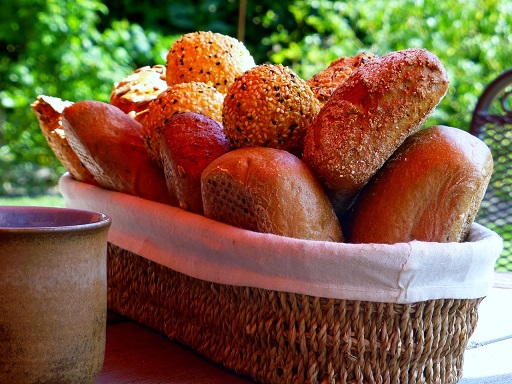
A typical spread includes fresh Brötchen (bread rolls) or slices of bread, a selection of Aufschnitt (cold cuts like ham, salami, or liverwurst), a few types of cheese ranging from mild Gouda to something sharper, butter, and usually a jam or honey for at least one slice. Many households also include a soft-boiled egg, served in its shell inside a small egg cup, eaten with a tiny spoon after tapping the top off with a knife, a small ritual that most Germans learned as children and never really think twice about.
Muesli and yogurt have become common too, especially on weekday mornings when there’s less time for a full spread, but even a “quick” German breakfast usually still involves bread of some kind.
Why Bread Is the Real Star
Bread isn’t just part of German breakfast, it’s the foundation the whole meal is built around, which makes sense in a country with more than three thousand registered bread varieties and a genuine national pride in its bakeries. Rolls and sliced bread act as the base for everything else. You don’t really eat the ham or cheese on its own. You build a small open-faced sandwich, add a slice of cheese or a bit of cold cut, maybe a thin layer of butter first, and eat it that way.
This is worth knowing before you sit down at a German breakfast table for the first time, because the format can feel unfamiliar if you’re used to eating each item separately off the plate.
The Sunday Brötchen Ritual
Weekday breakfasts in Germany tend to be quick and functional, something eaten standing at the counter or grabbed on the way out the door. Sundays are a different story entirely.
In a huge number of German households, Sunday morning starts with someone heading out early, often before the rest of the family is even awake, to the local bakery for fresh Brötchen. Since most other shops are closed on Sundays by law, bakeries are among the few businesses open, and the lines can get surprisingly long by eight or nine in the morning. This isn’t a chore so much as a small tradition, a reason to get up, get some fresh air, and come back with warm rolls before anyone else in the house has to lift a finger.
Sunday breakfast itself tends to be longer and more elaborate than a weekday one, sometimes stretching into a lazy late morning with extra items on the table: a boiled egg, maybe a slice of cake if there’s a birthday nearby, fresh orange juice, and the newspaper making its way around the table.
Regional Differences Worth Knowing
Breakfast habits shift depending on where you are in Germany, sometimes in small ways, sometimes in genuinely distinct regional customs.
In Bavaria, breakfast can involve Weißwurst, a delicate white sausage traditionally eaten before noon with sweet mustard and a soft pretzel, though this is more of a late-morning snack than an everyday breakfast item and has its own strict etiquette. Older Bavarian tradition holds that Weißwurst shouldn’t be eaten after the church bells ring at noon, a rule that’s mostly symbolic today but still gets mentioned with a wink by older generations.
Northern Germany leans more into darker rye breads and simpler cold-cut spreads, generally without the regional specialty items you find further south. Urban breakfast culture, especially among younger Germans in cities like Berlin or Hamburg, has also shifted noticeably toward café culture, with brunch spots offering more international, often sweeter options like avocado toast or pancakes alongside the traditional spread, a trend that’s grown steadily over the past decade or so.
Coffee, Not Tea, Runs the Table
Coffee is the default breakfast drink in the overwhelming majority of German households, usually brewed strong and served in a proper cup rather than to go, since breakfast is generally treated as something you sit down for rather than rush through. Tea has its own smaller but genuine following, particularly in the northwest region around East Frisia, where a specific tea culture exists with its own rituals around rock sugar and cream, distinct enough that it’s sometimes treated almost as its own regional identity.
A Few Tips If You’re Eating Breakfast in Germany
If you’re staying somewhere that serves a traditional German breakfast, a few things will make the experience easier to navigate:
Don’t expect sweet options to dominate the table. Bread, cheese, and cold cuts are the default, with jam or honey as more of an accent than the main event.
If a soft-boiled egg shows up in a cup, tap the top gently with the flat side of a knife rather than smashing it, and use the small spoon provided to eat it directly from the shell.
Building an open-faced sandwich with butter, then cheese or cold cuts, is the standard approach rather than eating items separately.
If you’re visiting on a Sunday, don’t be surprised if breakfast runs long. It’s treated as a genuine occasion, not just a quick meal before the day starts.
What This Says About German Food Culture More Broadly
German breakfast reflects something bigger about how food fits into daily life here: a preference for savory over sweet, a respect for quality bread and simple ingredients done well, and a clear distinction between the rushed weekday version of a meal and the relaxed, unhurried Sunday version of the same thing. It’s a meal built around ritual as much as nutrition, whether that’s the daily bakery run, the careful egg-tapping, or the slow unfolding of a Sunday morning with nowhere in particular to be. Once you’ve sat through a proper German Frühstück, the pancake-and-cereal version starts to feel like it’s missing something.
FAQ
What do Germans typically eat for breakfast? A savory spread of bread or rolls, cold cuts, cheese, butter, and often a soft-boiled egg, rather than sweet cereals or pancakes.
Why do Germans eat bread with cheese and cold cuts instead of a hot breakfast? German breakfast culture developed around bread as the meal’s foundation, with cold cuts and cheese layered on top as an open-faced sandwich rather than a separately plated hot dish.
Why is Sunday breakfast such a big deal in Germany? Since most shops are closed on Sundays, bakeries become one of the few open businesses, and picking up fresh rolls has become a small weekly ritual tied to a longer, more relaxed Sunday morning meal.
Do all regions in Germany eat the same breakfast? No. Bavaria has its own specialty items like Weißwurst, northern Germany favors darker rye bread, and East Frisia in the northwest has a distinct tea-based breakfast tradition rather than coffee.