German Culture

All about Germany

  • Home
  • Learn German
    • German Language Basics
    • German Grammar & Vocabulary
    • German Learning Tips
    • German Idioms & Expressions
    • German Quizzes & Exercises
  • Articles
    • Famous Germans
    • German Holidays
    • German Cuisine
    • How To In Germany
    • Daily Life in Germany
    • German Facts
    • German Traditions
  • Facts About Germany
  • German History
    • Early History of Germany
    • Middle Ages in German History
    • German Reformation Period
    • 19th Century and German Unification
  • German Recipes
    • German Baking Recipes
    • German Bread Recipes
    • German Christmas Recipes
    • Desserts
    • German Easter Recipes
    • Halloween Recipes
    • Main Dishes
    • German Salad Recipes
    • German Salads
    • Sauerkraut Recipes
  • Travel to Germany
  • Contact

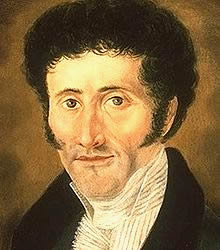
Wilhelm Hoffmann – E.T.A. Hoffman

ETA-Hoffmann

E(rnst) T(heodor) A(madeus) Wilhelm Hoffmann (1776-1822) was a German writer, composer, caricaturist, and painter, mostly known for his stories in which supernatural characters reveal people’s hidden secrets. Hoffmann’s first passions were music and painting, and only in the middle of his short life he started writing. His fiction works were the first examples of the genre of horrors and scary tales. E.T.A. Hoffmann revealed the tragic and sometimes grotesque sides of human nature by populating their lives with sinister characters. Here are some of the famous stories: “The Nutcracker”, “The Little Zaches”, “The Devil’s Elixir”, “The Sandman”, etc. Hoffmann’s works greatly influenced the works of H.C.Andersen, Washington Irving, Nathaniel Hawthorne and E.A. Poe.

E.T.A. Hoffmann was born in Koenigsberg, Prussia on January 24, 1776. He spent most of his life in his home town, sometimes leaving it for Berlin, Glogau, Leipzig, and a few Polish towns. In 1792-1800, Hoffmann studied law at Koenigsberg Law University. During this time he taught music, wrote his first stories and novels, and worked in Koenigsberg Supreme Court. Hoffmann’s career was unstable. He worked as a Prussian law officer and then had several positions as a conductor, a critic, and a theatrical musical director in Bamberg and Dresden until 1814. He recognized that he would never be a great composer, so he turned to writing.

He wrote his best works during the last ten years of his life, almost all of which he spent in Berlin. These are two novels – “The Devil’s Elixir” and “The Life and Opinions of Kater Murr”, and more than 50 short stories. Hoffmann died on June 25, 1822 from the progressive paralysis.

E.T.A. Hoffmann was a loner, he never had a wife or children. Actually there is only one allusion to his personal life – his fatal love affair with a married woman in 1796. After it he went to Glogau, leaving Koenigsberg for the first time in his life, and wrote “The Jesuit Churches in G.”, inspired by his church activities. Next year his father died. Probably this succession of unhappy incidents put a dark face on his further works. Otherwise why would a representative of the romantic movement take to depicting weird creepy characters like the Sandman?
sandman_gaiman
The Sandman


Related articles:
German Fairy Tales: How Brothers Grimm Shaped World Literature
German Literature: From the Brothers Grimm to Contemporary Authors
Bertolt Brecht
Johann Wolfgang von Goethe
Friedrich von Schiller – the German Genius of Beauty and Freedom
Grimms’ Brothers Fairy Tales
Heinrich Theodor Böll

You might also like:

  • Black Forest Germany
    How the Black Forest Shaped German Mythology and Culture
  • German Literature
    The Rich Tapestry of German Literature: From the…
  • Hidden Messages in German Fairytales
    Hidden Messages in German Fairytales
  • Grimms' Brothers
    In the Shadows of Enchanted Woods: A Journey Through…
  • Grimm Brothers
    German Fairy Tales: How Brothers Grimm Shaped World…
  • de-halloween
    Halloween Costumes in Germany: Why Scary Beats Cute
  • Dark Side of German History
    The Dark Side of German History: Strange and Unusual Events
  • Knecht Ruprecht
    Knecht Ruprecht: Exploring the Enigmatic Figure of…

Recent Posts

Halloween in German: Spooky Words and Phrases

Halloween Costumes in Germany: Why Scary Beats Cute

German Pumpkin Recipes: Kürbissuppe and More

German Pumpkin Festivals: Ludwigsburg and Beyond

Reformationstag: What Germans Celebrate on October 31

Süßes oder Saures: Trick-or-Treating in Germany Explained

Halloween Events in Germany 2026: Parks, Castles, Parties

Is Halloween a Public Holiday in Germany? What Really Happens on October 31 and November 1

Copyright © 2026 · German Culture

Go to mobile version