In many German towns, small brass plaques set into the pavement outside old homes are cleaned and polished around the evening of 9 November. Candles are placed beside them. Each plaque, a Stolperstein, carries the name of a person deported or murdered by the Nazis, and on this date the quiet street ritual says more than any speech could.
Across the same city, people may be marking something entirely different on the same day: the night the Berlin Wall opened and strangers hugged on top of it. Few dates in Germany carry both feelings at once. That’s why 9 November has its own name in German history, Schicksalstag, the “day of fate,” and why Germany has never turned it into a national holiday.
Why Is 9 November Called the Schicksalstag?
Historians use the term Schicksalstag der Deutschen because several turning points in modern German history happened on this date: the proclamation of the first republic in 1918, Hitler’s first attempt to seize power in 1923, the nationwide anti-Jewish pogrom of 1938, and the fall of the Berlin Wall in 1989. Some also add an earlier event, the execution of the Frankfurt Parliament deputy Robert Blum in Vienna in 1848, which became a symbol of the failed revolution of that year.
It’s worth noting that the term is a modern label rather than a fate written in the calendar. The events had different causes and nothing links them except the date and the way later generations have connected them. German educators and the Federal Agency for Civic Education even debate whether “Schicksalstag” is the right word, since it can suggest that history was destined. Still, it has stuck.
1918: The Republic Is Proclaimed
By November 1918, Germany was losing the First World War and the monarchy was collapsing. Around 2 p.m. on 9 November, Social Democrat Philipp Scheidemann stepped to a window of the Reichstag and told a waiting crowd that Germany was now a republic. The same day, Kaiser Wilhelm II’s abdication was announced, and a few hours later Karl Liebknecht proclaimed a “Free Socialist Republic” from the Berlin palace.
This was the birth of the Weimar Republic, Germany’s first democracy. It was also a moment of deep division, because many Germans never accepted the republic, and that resentment shaped what came next.
1923: The Hitler-Ludendorff Putsch
Five years later, on 9 November 1923, Adolf Hitler and the First World War general Erich Ludendorff led a march in Munich aimed at overthrowing the government. The date was deliberate: it was an attempt to reverse the 1918 revolution. Bavarian police stopped the march at the Feldherrnhalle, and the putsch failed. It was Hitler’s first attempt to seize power, and the Nazis later turned it into a commemoration with their own rituals.
1938: The Reichspogromnacht
On the evening of 9 November 1938, the Nazi regime organized a wave of violence against Jews across Germany and Austria. SA and SS men set synagogues on fire, destroyed thousands of shops and homes, and beat and killed Jewish people. The night is called the Reichspogromnacht or November pogrom. Many Germans avoid the older popular term “Kristallnacht,” which is considered to trivialize the violence by focusing on broken glass.
Historians see the night as the point where discrimination became open, state-organized persecution, and as a warning sign of the genocide that followed. It’s the darkest of the four events, and it’s the main reason 9 November is not a day of celebration in Germany.
1989: The Berlin Wall Falls
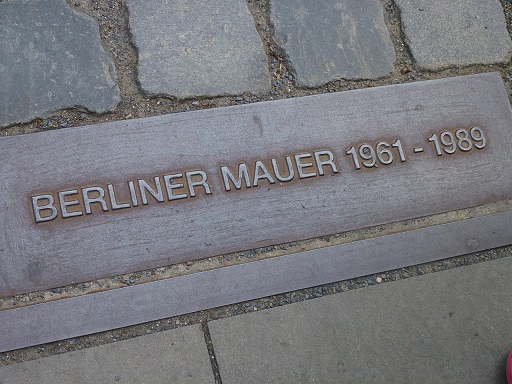
On the evening of 9 November 1989, after months of mass protests and the flight of thousands of East Germans via Hungary, the East German regime opened the border. A confusing press conference by the party official Günter Schabowski set off a chain reaction. Crowds gathered at the checkpoints, the guards gave way, and the Wall that had divided Berlin since 1961 was open. You can read the full story in our article on the fall of the Wall and reunification and the history of German reunification.
Reunification itself followed less than a year later, on 3 October 1990.
Why Isn’t 9 November a National Holiday?
When Germany chose a national day after reunification, 9 November was the obvious emotional candidate, since it marked the Wall’s fall. But the same date is the anniversary of the 1938 pogrom, and many felt it could not be celebrated. Germany chose 3 October, the day of formal reunification, as its national holiday instead (read more on the German Unity Day entry in our holidays guide).
So 9 November remains a Gedenktag, a day of remembrance, not a Feiertag. Government sources now describe it as a day of remembrance rather than celebration. It’s an ordinary working day, and shops and offices are open.
How Germany Marks the Day
Because the date carries so many meanings, there’s no single way to observe it. Typical observances include:
Memorial services at synagogues and sites of destroyed synagogues, often with readings of the names of victims.
Stolperstein cleaning and candle-lighting in many towns, usually organized by local groups, schools, and churches.
Ceremonies in Berlin, including at the Berlin Wall Memorial, where the fall of the Wall is remembered. Check the city’s event listings for the 2026 program.
Public talks, school projects, and exhibitions at museums and memorial sites across the country.
The tone is different from event to event. The 1938 remembrance is solemn, the 1989 remembrance is closer to quiet pride and gratitude, and many people hold both at once.
9 November 2026: What to Expect
In 2026, 9 November falls on a Monday. It’s the 108th anniversary of the republic’s proclamation, the 103rd of the Munich putsch, the 88th of the pogrom, and the 37th of the Wall’s fall. It’s a normal working day, but you may see commemorations in the media, in schools, and in public spaces. If you’re visiting, check local city or memorial-site websites for events and opening times.
Visiting and Respectful Tips
Be mindful of the tone. Don’t treat the date as a party or a photo opportunity, particularly at memorials.
Use the right terms. “Reichspogromnacht” or “November pogrom” is preferred over “Kristallnacht.”
Visit a memorial. In Berlin, the Berlin Wall Memorial on Bernauer Straße, the Brandenburg Gate (see our facts about the Brandenburg Gate), and the Memorial to the Murdered Jews of Europe are central sites. In Munich, the NS Documentation Centre covers the Nazi era and the 1923 putsch.
Confirm hours. Some museums and memorials adjust their hours on commemoration days.
Why is 9 November called the Schicksalstag? Because several decisive events in German history happened on that date: 1918, 1923, 1938 and 1989. Historians coined the term, although some question whether it is the best label.
Is 9 November a public holiday in Germany? No. It’s a day of remembrance, not a holiday. Germany’s national holiday is 3 October.
What happened on 9 November 1989? East Germany opened its border after months of protests, and the Berlin Wall fell that night, paving the way for reunification on 3 October 1990.
What is the Reichspogromnacht? The night of 9 to 10 November 1938, when the Nazi regime organized violent attacks on Jews, synagogues, shops and homes across Germany and Austria.