German Culture

All about Germany

  • Home
  • Learn German
    • German Language Basics
    • German Grammar & Vocabulary
    • German Learning Tips
    • German Idioms & Expressions
    • German Quizzes & Exercises
  • Articles
    • Famous Germans
    • German Holidays
    • German Cuisine
    • How To In Germany
    • Daily Life in Germany
    • German Facts
    • German Traditions
  • Facts About Germany
  • German History
    • Early History of Germany
    • Middle Ages in German History
    • German Reformation Period
    • 19th Century and German Unification
  • German Recipes
    • German Baking Recipes
    • German Bread Recipes
    • German Christmas Recipes
    • Desserts
    • German Easter Recipes
    • Halloween Recipes
    • Main Dishes
    • German Salad Recipes
    • German Salads
    • Sauerkraut Recipes
  • Travel to Germany
  • Contact

German-Style Fried Potatoes (Bratkartoffeln)

German-Style Fried Potatoes - Bratkartoffeln

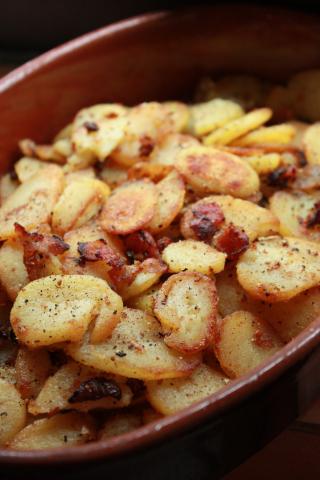
If there’s one side dish that defines rustic German cooking, it’s Bratkartoffeln – crispy, golden-brown slices of pan-fried potatoes that are as versatile as they are irresistible. Often made with leftover boiled potatoes, this dish is a staple in German homes, beer gardens, and taverns.

Whether served next to schnitzel, sausages, or eggs, Bratkartoffeln delivers savory comfort with every bite. It’s a dish that rewards patience and precision – and once you’ve tried it, you’ll never settle for basic home fries again.

History & Cultural Significance

Bratkartoffeln has long roots in German culinary tradition. Originally a practical way to use up boiled potatoes, it became a favorite for its rich, crispy texture and ability to complement just about anything. You’ll find it in homes across Germany, often alongside roast meats or served with a fried egg on top.

This dish is especially beloved in northern Germany, where it may include onions, bacon (Speck), or herbs like marjoram. It’s also a go-to at Oktoberfest and other local fairs.

For more Oktoberfest fare, check out our Oktoberfest Traditions guide.

Ingredients for Authentic Bratkartoffeln

Servings: 4

Ingredients:

  • 2 lbs (900 g) waxy potatoes (boiled and cooled overnight)
  • 1 medium onion, thinly sliced
  • 3–4 tbsp clarified butter or lard (or vegetable oil)
  • Salt and freshly ground black pepper, to taste
  • Optional: chopped parsley, smoked bacon (Speck), or marjoram

Kitchen Tools:

  • Sharp knife or mandoline
  • Large non-stick or cast-iron skillet
  • Spatula

How to Make Bratkartoffeln (Step-by-Step Instructions)

Step 1: Prep the Potatoes

  1. Peel the boiled and chilled potatoes.
  2. Slice them into thin rounds (about 1/8 inch thick).

Step 2: Start the Frying

  1. Heat half the butter or oil in a large skillet over medium heat.
  2. Add potato slices in a single layer (work in batches if needed).
  3. Let them cook undisturbed until they develop a golden crust, then gently flip.

Step 3: Add Onions and Optional Ingredients

  1. Once potatoes begin to crisp, add onions and cook until they caramelize.
  2. Add chopped bacon or herbs, if using.
  3. Season with salt and pepper to taste.

Step 4: Finish and Serve

  1. Continue frying until everything is golden and crispy.
  2. Garnish with chopped parsley and serve immediately.

How to Serve Bratkartoffeln

Bratkartoffeln pairs perfectly with:

  • Schnitzel
  • Bratwurst with Sauerkraut and Potatoes
  • Fried eggs or a dollop of herbed quark

They also work as a delicious brunch option or a rustic vegetarian main course with a fresh cucumber salad.

Regional Variations & Tips

  • Berlin Style: Made with smoked bacon and served with mustard
  • Bavarian Style: Includes onion, parsley, and sometimes a hint of caraway

Tips for Best Results:

  • Use day-old boiled potatoes to avoid sogginess
  • Don’t stir too often – let them brown
  • Use a wide skillet for better crisping

A Panful of Tradition

Bratkartoffeln is a dish where humble ingredients meet perfection through technique. Crispy on the outside, tender inside, and bursting with flavor, it’s a dish that deserves a spot in every home cook’s repertoire.

Next time you’re planning a hearty German meal, skip the fries – serve Bratkartoffeln instead.


Related Articles:
Potatoes in German Culture
The Role of Potatoes in German Cuisine
Brägele – Fried Potatoes
Schupfnudeln – German Potato Dumplings
Kartoffelpuffer (German Potato Pancakes)
Kartoffelklöße (German Potato Dumplings)
Crispy German Potato Pancakes (Kartoffelpuffer)

You might also like:

  • Traditional German Potato Dishes
    Traditional German Potato Dishes
  • Reibekuchen - Traditional German Recipe
    Reibekuchen - Traditional German Recipe
  • Gurkensalat – Traditional German Recipe
    Gurkensalat – Traditional German Recipe
  • Heringssalat – Traditional German Herring Salad Recipe
    Heringssalat – Traditional German Herring Salad Recipe
  • Kartoffelsalat – Traditional German Recipe
    Kartoffelsalat – Traditional German Recipe
  • Traditional German Potato Dishes You Should Know
    Traditional German Potato Dishes You Should Know
  • Potatoes in German Culture
    Potatoes in German Culture
  • The Role of Potatoes in German Cuisine
    The Role of Potatoes in German Cuisine

Recent Posts

Potatoes are one of the most beloved ingredients in German cuisine

Traditional German Potato Dishes

Traditional German potato dishes

Traditional German Potato Dishes You Should Know

Discover how potatoes in German culture shaped history

Potatoes in German Culture

The German Zeppelin represents far more than a transportation technology.

German Zeppelin: The Rise and Fall of Germany’s Giant Airships

Discover how the German Zeppelin worked

How the German Zeppelin Worked: Inside the Engineering of Airship Giants

Valentine’s Day in Germany: Love, History, and Traditions

Valentine’s Day in Germany: From American Import to Cultural Tradition

"Kinder, Küche, Kirche" functions primarily as a historical artifact and cautionary phrase

“Kirche, Küche, Kinder”: Germany’s Three K’s

Women and German Military Traditions

Women in German Army: Historical Evolution

Copyright © 2026 · German Culture

Go to mobile version