German Culture

All about Germany

  • Home
  • Learn German
    • German Language Basics
    • German Grammar & Vocabulary
    • German Learning Tips
    • German Idioms & Expressions
    • German Quizzes & Exercises
  • Articles
    • Famous Germans
    • German Holidays
    • German Cuisine: A Guide to Dishes, Regions and Food Traditions
    • How To In Germany
    • Daily Life in Germany
    • German Facts
    • German Traditions
  • Facts About Germany
  • German History
    • Early History of Germany
    • Middle Ages in German History
    • German Reformation Period
    • 19th Century and German Unification
  • German Recipes
    • German Baking Recipes
    • German Bread Recipes
    • German Christmas Recipes
    • Desserts
    • German Easter Recipes
    • Halloween Recipes
    • Main Dishes
    • German Salad Recipes
    • German Salads
    • Sauerkraut Recipes
  • Travel to Germany
  • Contact

St. Lucia’s Day

st.lucia

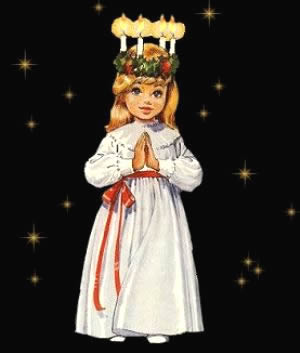
St. Lucia’s Day, otherwise called The Festival of Lights, is celebrated on December 13, a week after St. Nikolaus’ Day. Lucia became the “Nikolaus of the women”. In the early times, St. Nikolaus brought the gifts to the boys only, and St. Lucia visited girls with the gifts a week later. In some areas Lucia became the Christchild with the candle wreath on her head.

Lucia symbolizes light and growth for human and beast as she emerges out of the darkness. She is said to have been beheaded by the sword during the persecutions of Diocletian at Catania in Sicily. Her body was later brought to Constantinople and finally to Venice, where she rests now in the church of Santa Lucia. Because her name means “light”, she very early became the great patron saint for the “light of the body”–the eyes. Many of the ancient light and fire customs of the Yuletide became associated with her day. Thus we find “Lucy candles” lighted in the homes and “Lucy fires” burned in the outdoors.

In the early hours of the morning of December 13 a young woman, dressed in a white gown, and wearing a red sash and a crown of loganberry twigs and blazing candles, would go from one farm to the other carrying a torch to light her way, bringing saffron buns and steaming coffee on a tray, stopping to visit at each house and returning home by break of day. Every village and each family had its own Lucia – usually the youngest daughter, who would wake the family in the morning.
Related articles:

Christmas Stories
St. Andreas’ Day

St. Barbara’s Day
St. Nicholas Day
St. Martin’s Day (Martinstag) – November 11
St. Thomas’ Day
Three Kings and Epiphany


You might also like:

  • Knecht Ruprecht
    Knecht Ruprecht: Exploring the Enigmatic Figure of…
  • saint-nicholas
    Nikolaus, Knecht Ruprecht and Krampus: Who's Who
  • Germans Light Candles Advent
    Why Germans Light Advent Candles: A Tradition of…
  • Krampus is the shadow to Saint Nicholas's light.
    Krampus in Germany: Origins, Folklore, and Traditions
  • Planning Your German Christmas Market Trip
    Planning Your German Christmas Market Trip: Tips,…
  • valentines-day-traditions
    Valentine's Day in Germany: Traditions and Celebrations
  • Dinner for One
    Dinner for One and Silvester: Germany's New Year's Eve
  • German Advent traditions, their history and customs.
    Deep Guide to German Advent Traditions

Recent Posts

Feierabend: How Germans End the Workday and Why It Matters

German Clubs: Vereine, Stammtisch and How to Join One

Kohlfahrt: Germany’s Kale Walk and Grünkohl Guide

Untranslatable German Words: 18 You’ll Actually Use

Berliner

Berliner, Pfannkuchen or Krapfen? German Food Words

German Street Food: Döner, Currywurst and More

Kaffee und Kuchen

Kaffee und Kuchen: Germany’s Sacred Afternoon Break

Krankmeldung in Germany: How to Call in Sick in 2026

Copyright © 2026 · German Culture

Go to mobile version