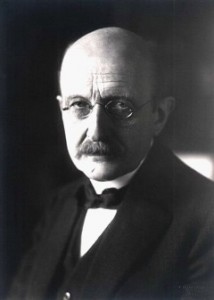
April 23, 1500 Birth of Johannes Stumpf in Bruchsal, Germany. Stumpf was one of the leading Swiss chroniclers of his age. His Gemeiner loblicher Eydgnoschafft Stetten, Landen und Völckeren chronikwirdiger Thaaten Beschreybung of 1547 to 1548 gives detailed information on that period in Switzerland. April 23, 1708 Birth of Friedrich von … [Read more...]
April 22 in German History
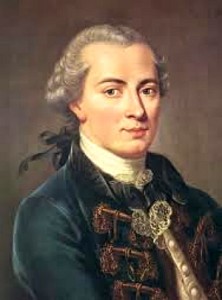
April 22, 1724 Birth of Immanuel Kant (1724-1804) in Königsberg, Germany (now in Russia). Kant would become one of the most influential philosophers of all times. His Critiques are the best known of his works, Kritik der reinen Vernunft, Kritik der Praktischen Vernunft. In ethics Kant is known for his categorical imperative. April 22, … [Read more...]
April 21 in German History
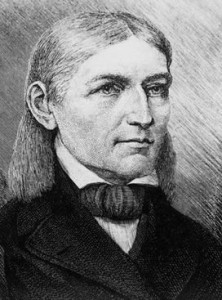
April 21, 1488 Birth of Ulrich von Hutten near Fulda. Von Hutten was a staunch supporter of Martin Luther both with his pen as a satirist and with his sword as a knight. In 1522 when German knights rose up against the princes, von Hutten fought with the band of Franz von Sickingen. C. F. Meyer immortalized him in his novel Huttens letzte Tage … [Read more...]
April 20 in German History
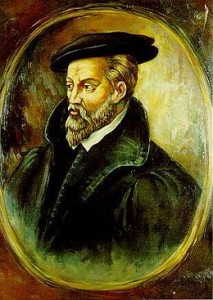
April 20, 1494 Birth of Johann Agricola (1494-1566) (original name: Johann Schneider) in Eisleben, Germany (He was a friend and supporter of Martin Luther). Agricola became a strong proponent of the concept that Christian grace replaces the Ten Commandments, which would no longer, then, have force. These views led to a cooling of relations … [Read more...]
April 19 in German History
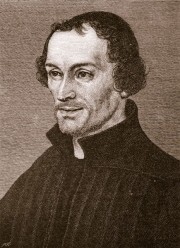
April 19, 1560 Death of Philipp Melanchthon (1497-1560) (Philipp Schwartzerd) in Wittenberg, Germany. Melanchthon was a friend and enthusiastic supporter of Martin Luther. In 1518 he was appointed at the University of Wittenberg as its first professor of Greek. In 1521 he published Loci communes, a systematic treatment of evangelical … [Read more...]
April 18 in German History
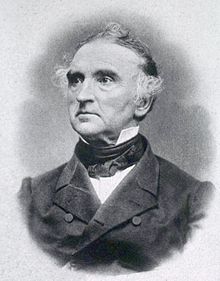
April 18, 1679 Death of Christian Hofmann von Hofmannswaldau in Breslau, Silesia (now Poland). Hofmannswaldau was one of the leading poets of the Baroque period in German literature. April 18, 1819 Birth of Franz von Suppe in Spalato, Austrian Empire (now in Croatia). Suppe was a conductor and composer of comic operas in Vienna. Among his … [Read more...]
April 17 in German History
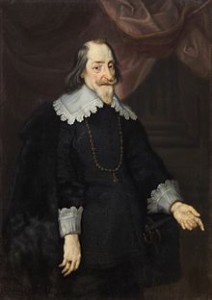
April 17, 1521 Martin Luther makes his first appearance before the Diet in Worms. April 17, 1573 Birth of Maximillian I in Munich, Germany. Maximillian was the Duke of Bavaria and involved in the Thirty Years' War in support of the Catholic cause. Bavaria had fallen into economic chaos when Maximillian came to power in 1597, but he was … [Read more...]
April 16 in German History
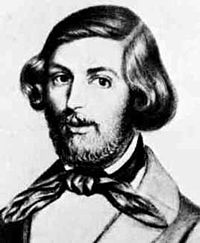
April 16, 1817 Birth of Martin Rudolph von Delbrück in Berlin, Germany. He forged the Prussian free-trade policy in cooperation with Otto von Bismark and was instrumental in convincing the southern German states to join the empire in 1870-71. April 16, 1820 Birth of Georg Curtius in Lübeck, Germany. Curtius was a scholar of Greek language. He … [Read more...]
April 15 in German History
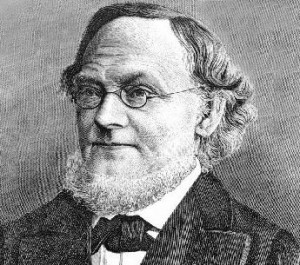
April 15, 1659 Death of Simon Dach in Königsberg, Prussia (now Russia). Dach was one of the outstanding German Baroque poets. April 15, 1707 Birth of Leonhard Euler in Basel, Switzerland. A mathematician of the Berlin Academy, Euler was one of the originators of pure mathematics. He made significant contributions to geometry, calculus, … [Read more...]
April 14 in German History
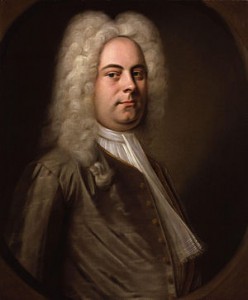
April 14, 1759 Georg Friedrich Händel dies in London (born in Halle, Germany). Among his many great works, the composer is most known for his Messiah (1741), his Water Music (1717) and his Music for the Royal Fireworks (1749). Händel moved to Hamburg in 1703 and was active as a musical performer. In 1705 he presented his first opera Almira. … [Read more...]
- « Previous Page
- 1
- …
- 126
- 127
- 128
- 129
- 130
- …
- 163
- Next Page »