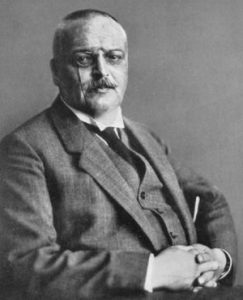
Aloysius Alzheimer (June 14, 1864 – December 19, 1915), known as Alois Alzheimer, was a German psychiatrist and neuropathologist and a colleague of Emil Kraepelin. Alzheimer is credited with identifying the first published case of "presenile dementia", which Kraepelin would later identify as Alzheimer's disease. From his youth Alois Alzheimer … [Read more...]
Heinrich Hertz – German Scientist and Physicist
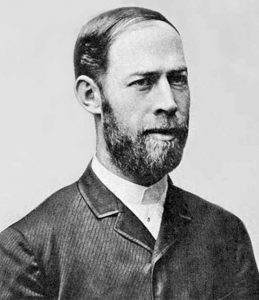
Heinrich Hertz (born on February 22, 1857 in Hamburg – died on January 1, 1894 in Bonn) was a German scientist and physicist who became the first scientist to prove that electromagnetic waves did indeed have an existence and in so doing he proved what had only been a theory first put forwards by the Scottish physicist James Clerk Maxwell. His … [Read more...]
Robert Koch
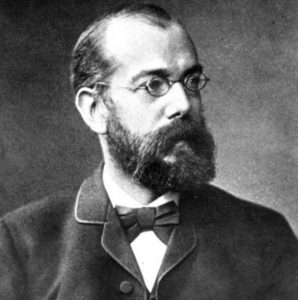
Robert Heinrich Hermann Koch (born on December 11, 1843 in Clausthal – died on May 27, 1910 in Baden-Baden) was a German physician and microbiologist. As the founder of modern bacteriology, he identified the specific causative agents of tuberculosis, cholera, and anthrax and gave experimental support for the concept of infectious disease. Germany … [Read more...]
Robert Schumann
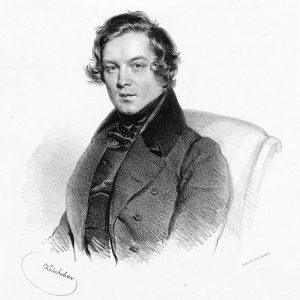
Robert Schumann (born in Zwickau on June 8, 1810 – died in Bonn on July 29, 1856) was a German composer and influential music critic. He is widely regarded as one of the greatest composers of the Romantic era. Schumann left the study of law, intending to pursue a career as a virtuoso pianist. He had been assured by his teacher Friedrich Wieck that … [Read more...]
Max Planck
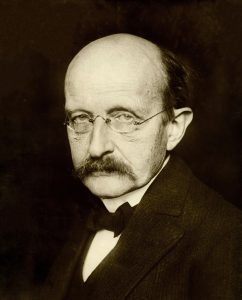
Max Karl Ernst Ludwig Planck, or simply Max Planck (born in Kiel on April 23, 1858 – died in Göttingen on October 4, 1947) was a German theoretical physicist. Planck made many contributions to theoretical physics, but his fame as a physicist rests primarily on his role as the originator of quantum theory, which revolutionized human understanding of … [Read more...]
Werner Heisenberg
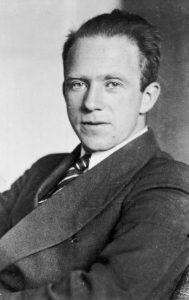
Werner Heisenberg was a German scientist and philosopher who was influential in the research of quantum mechanics in the mid-1900s. Heisenberg was born on December 5, 1901, in Würzburg, Germany. His father was a professor of medieval and Greek studies. He studied physics under Max Born at the ‘University of Munich’, receiving his doctorate in 1923. … [Read more...]
Johannes Gutenberg

Johannes Gensfleisch zur Laden zum Gutenberg (born in Mainz around 1400 – died on February 3, 1468) was a German blacksmith, goldsmith, printer, and publisher who introduced printing to Europe with the printing press. His introduction of mechanical movable type printing to Europe started the Printing Revolution and is regarded as a milestone of the … [Read more...]
George Frideric Handel

George Frideric Handel (born Georg Friedrich Händel on February 23, 1685 – died on April 14, 1759) was a German, later British, baroque composer who spent the bulk of his career in London, becoming well known for his operas, oratorios, anthems, and organ concertos. Although born in Halle, Germany, to German parents, he spent the greater part of … [Read more...]
Johannes Kepler

Johannes Kepler (December 27, 1571 – November 15, 1630) was a German mathematician, astronomer, and astrologer who discovered the ovoid movements of the planets around the sun. The first astronomer to state the fundamental laws of planetary motion, Kepler was also known for his works in geometry, optics and philosophy. His significant achievements … [Read more...]
Karl der Große, or Charlemagne

Charlemagne (April 2, 742 – January 28, 814), numbered Charles I, was King of the Franks from 768, King of the Lombards from 774 and Emperor of the Romans from 800. He united much of Europe during the early Middle Ages. He was the first recognized emperor in western Europe since the fall of the Western Roman Empire three centuries earlier. The … [Read more...]
- « Previous Page
- 1
- …
- 3
- 4
- 5
- 6
- 7
- …
- 11
- Next Page »