
Germany might not be the first country that comes to mind when you think of wine, but it should be. With vineyards older than most European nations, a deep cultural reverence for terroir, and a passion for perfection, German winemaking is both ancient and ever-evolving. This is the story of how wine took root in Germany - and why it still thrives … [Read more...]
A Sip Through Time: Unveiling the Fascinating History of German Wine
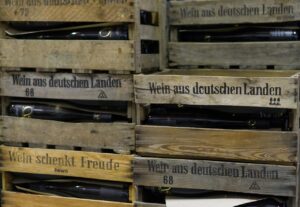
The story of German wine is a captivating journey through centuries of tradition, craftsmanship, and innovation. From the rolling vineyards along the Rhine and Mosel rivers to the quaint winemaking villages nestled in the valleys, Germany has been an integral part of the wine world for over a millennium. In this article, we explore the rich history … [Read more...]
Wooden Toys from the Ore Mountains
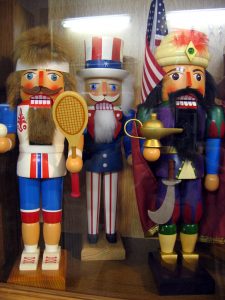
Ore Mountain folk art (Erzgebirgische Volkskunst) is a well-known form of highly artistic wood carving from East Germany. Typical creations include Christmas decorations and products such as wooden miners' figures (Bergmannsfigur), Christmas angels (Weihnachtsengel), Reifendrehen figures of animals made by wood turning, smoking figures … [Read more...]
Almabtrieb and Viehscheid – Bringing Cattle Home from Mountain Pastures
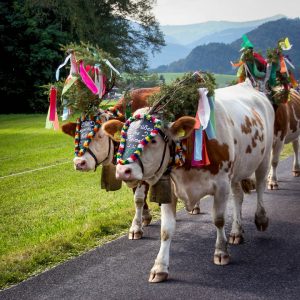
Bavaria may be the home of BMW and Audi, but there are still some age-old rural traditions that surprise even visitors from other parts of Germany. One of which is the annual festival which celebrates the return of the prodigal cows, the Viehscheid. Because here the cows really do come home, every autumn, after having spent their summers up in the … [Read more...]
Reinheitsgebot
The Reinheitsgebot, literally "purity order", sometimes called the "German Beer Purity Law" in English, is a series of regulations limiting the ingredients in beer in Germany and the states of the former Holy Roman Empire. The best-known version of the law was adopted in Bavaria in 1516, but similar regulations predate the Bavarian order, and … [Read more...]
9 German Superstitions

Here are some superstitions – or Aberglauben – that you may come across in Germany. Knowing what these are might help explain any ‘unusual’ behavior you see in Germany, and help you to avoid making an embarrassing faux-pas yourself! 1. Chimney sweepsChimney sweeps are repositories of good luck everywhere. In Germany, they are particularly … [Read more...]
Walpurgisnacht – Walpurgis Night

In Germany, Walpurgisnacht, the night from 30 April to 1 May, is the night when witches are reputed to hold a large celebration on the Brocken and await the arrival of spring. Walpurgis Night (in German folklore) the night of 30 April (May Day's eve), when witches meet on the Brocken mountain and hold revels with their gods..." Brocken is the … [Read more...]
The History of the German Language
German is one of the largest groups of Indo-Germanic languages. It is used as the official language of Germany, Austria and Liechtenstein, and is a co-official language in Switzerland, Belgium, Luxembourg, and the European Union.. The history of the language begins in the Early Middle Ages with the High German consonant shift. During the migration … [Read more...]
Krampus – the Dark Side of St. Nicholas

Krampus, whose name is derived from the German word Krampen, meaning pickaxe, is said to be the son of Hel in Norse mythology. Originally, Krampus was a purely pagan creation, said to be the son of Hel from Norse mythology. But he got grafted onto Christian tradition as a sidekick of St. Nicholas. The legendary beast also shares characteristics … [Read more...]
Good Friday – Karfreitag

Many people in Germany mark the crucifixion of Jesus by participating in church services and processions on Good Friday (Karfreitag), which is two days before Easter Sunday. For others, it is the start of a long weekend and possibly a spring vacation. Good Friday is a public holiday in all German states. Post offices, banks, stores and other … [Read more...]
- « Previous Page
- 1
- …
- 15
- 16
- 17
- 18
- 19
- …
- 24
- Next Page »