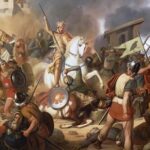
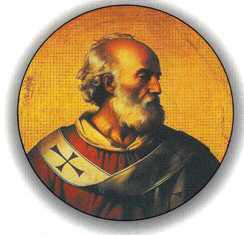
The first pope of Germanic origin was elected. Boniface II was Gothic. (The Goths were an East Germanic people. The Germans of today descend from the West Germanic grouping.) Boniface II was appointed by his predecessor, Felix IV, rather than being elected. In protest against the process by which Boniface became pope and in fear of the influence of the Ostrogothic king Athalaric, the Roman churchmen elected an anti-pope, Dioscorus. The controversy soon ended, however, when Dioscorus died soon after his election and Boniface was able to gather enough support to continue as pope. Boniface II died in 532.
September 17, 1179
Death of Hildegard von Bingen near Bingen. Feast day of St. Hildegard. Hildegard was born in Bermersheim, Germany (at that time the Holy Roman Empire) near the Rhine. She was brought up in a convent (which was common among daughters of noble families). In 1147 or 1148 she founded her own Benedictine convent near Bingen. In 1165 she founded another Benedictine convent near Rüdesheim. Hildegard had had visions since childhood but kept them secret until adulthood. She is now considered to be one of the greatest mystics in the history of Germany. She was also a natural scientist, healer, artist, poet and musician. During her lifetime she was in frequent correspondence with the emperor, Friedrich Barbarossa, and had influence on his decisions. Her books include Wisse die Wege des Herrn, Buch des verdienstlichen Lebens, Buch des göttlichen Werkes, Liber Simplicis Medicnae and Liber Compositae Medicinae. In the two medical books she catalogued 280 plants and their medicinal properties. Investigations of her life were undertaken by Popes Gregory IX, Innocent IV, Clement V and John XXII but Hildegard has not been formally canonized. She has been considered a saint, however, since the 13th century. There is formal celebration of her feast day (September 17) in the liturgy in Limburg, Mainz, Speyer and Trier.
September 17, 1730
Birth of Friedrich von Steuben in Magdeburg, Germany. Steuben, a Prussian officer, was induced by Benjamin Franklin to come to America on the side of the rebelling colonies. Arriving in 1777 he was placed in charge of the troops at Valley Forge. He retrained the forces and wrote a manual, Regulations for the Order and Discipline of the Troops of the United States. The city of Steubenville, Ohio is named for him.
September 17, 1826
Birth of Bernhard Riemann in Breselenz, Germany. Riemann’s work in mathematics led to innovations in theoretical physics and relativity theory. The Riemann surface is named in his honor as is Riemannian geometry. He was a professor of mathematics at the University of Göttingen.
September 17, 1921
Death of Philipp Eulenburg in Köngisberg, Germany (now in Russia). Eulenburg was the closest advisor to Wilhelm II, with greatest influence after the departure of Bismarck.
September 17, 1939
After 19 days of resistance, Warsaw, Poland surrenders to German forces in WWII.
September 17, 1948
Death of Emil Ludwig in Ascona, Switzerland. Ludwig was a popular biographer. Among the figures treated in his biographies are Goethe, Bismarck, Lincoln, Hindenburg, Roosevelt and Beethoven.
September 17, 1958
Death of the chemist Friedrich Paneth in Vienna, Austria. Paneth introduced the use of radioactive tracer techniques. His work with the radioactive decomposition of meteorites and earth rocks led to a system of determining their age. Paneth went to England at the rise of the Nazi movement and returned to Germany as director of the Max Planck Institute in Mainz in 1953.
September 17, 1961
The fourth parliamentary elections take place in West Germany (BRD). The CDU/CSU gets 45.3% of the vote, the SPD 36.2%, the FDP 12.8%. The governing coalition is composed of the CDU/CSU with the FDP. Konrad Adenauer remains the chancellor.
September 17, 1978
Death of Willy Messerschmitt in Munich, Germany. Messerschmitt was an aircraft designer at the Bayerische Flugzeugwerke in Augsburg, which ultimately became the Messerschmitt-Bölkow-Blohm corporation.
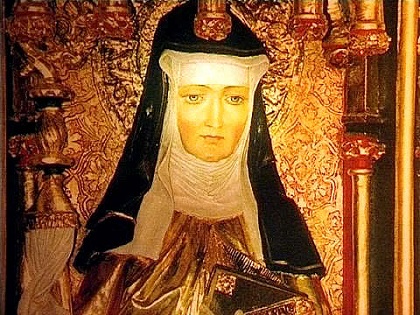 Death of Hildegard von Bingen near Bingen. Feast day of St. Hildegard. Hildegard was born in Bermersheim, Germany (at that time the Holy Roman Empire) near the Rhine. She was brought up in a convent (which was common among daughters of noble families). In 1147 or 1148 she founded her own Benedictine convent near Bingen. In 1165 she founded another Benedictine convent near Rüdesheim. Hildegard had had visions since childhood but kept them secret until adulthood. She is now considered to be one of the greatest mystics in the history of Germany. She was also a natural scientist, healer, artist, poet and musician. During her lifetime she was in frequent correspondence with the emperor, Friedrich Barbarossa, and had influence on his decisions. Her books include Wisse die Wege des Herrn, Buch des verdienstlichen Lebens, Buch des göttlichen Werkes, Liber Simplicis Medicnae and Liber Compositae Medicinae. In the two medical books she catalogued 280 plants and their medicinal properties. Investigations of her life were undertaken by Popes Gregory IX, Innocent IV, Clement V and John XXII but Hildegard has not been formally canonized. She has been considered a saint, however, since the 13th century. There is formal celebration of her feast day (September 17) in the liturgy in Limburg, Mainz, Speyer and Trier.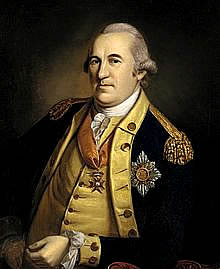
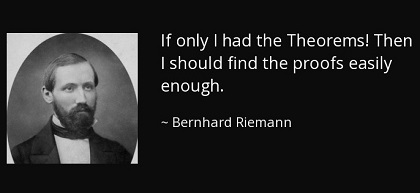 Birth of Bernhard Riemann in Breselenz, Germany. Riemann’s work in mathematics led to innovations in theoretical physics and relativity theory. The Riemann surface is named in his honor as is Riemannian geometry. He was a professor of mathematics at the University of Göttingen.
 Death of Willy Messerschmitt in Munich, Germany. Messerschmitt was an aircraft designer at the Bayerische Flugzeugwerke in Augsburg, which ultimately became the Messerschmitt-Bölkow-Blohm corporation.