St. Barbara’s Day, celebrated on 4 December, is one of Germany’s most atmospheric and quietly powerful winter traditions. While it receives less international attention than St. Nicholas Day or Christmas Eve, the customs surrounding St. Barbara remain deeply rooted in German culture, especially within Catholic regions and rural communities. At its heart is a simple yet evocative ritual: cutting a cherry branch on 4 December and watching it bloom by Christmas. This tradition – the famous Barbarazweig – has survived for centuries and continues to enchant German families with its blend of symbolism, seasonal reflection, and gentle hope.
Who Was St. Barbara?
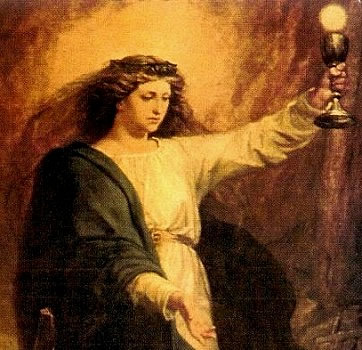
St. Barbara is one of the most fascinating and widely revered figures in Christian folklore. According to legend, she was a young woman living in the 3rd century, possibly in modern day Turkey or Lebanon. Her father, Dioscorus, was a wealthy pagan who isolated Barbara in a tower to protect her from outside influence. During his absence, Barbara secretly converted to Christianity. Enraged, Dioscorus tried to force her to renounce her faith. According to the story, she refused and was executed by her own father, who was then struck down by lightning as divine punishment.
Whether historically accurate or not, this legend shaped Barbara’s identity as a symbol of courage, resilience, and steadfast faith. Over time, St. Barbara became the patron saint of:
In medieval Germany, her protective qualities made her one of the most popular saints. She was invoked against lightning, sudden death, and accidents involving stone, earth, or gunpowder. Her feast day, 4 December, eventually took on a special seasonal significance as well.
Why St. Barbara’s Day Matters in the German Winter Calendar
St. Barbara’s Day falls early in Advent, a season once associated with fasting, introspection, and preparing for both Christmas and the long winter months. The date has agricultural, symbolic, and spiritual meaning. In premodern Germany, farmers closely observed the early days of December for signs about the coming winter. St. Barbara’s Day – arriving just after St. Andreas’ Day on 30 November and just before St. Nicholas Day on 6 December – formed part of a trio of early winter feast days that blended Christian devotion with rural custom.
Barbara also became a key figure in what Germans call the dark season. Her story of endurance through confinement resonated with the psychological landscape of December, when nights lengthen and communities turn inward. The idea that something as barren and dormant as a winter branch could bloom by Christmas symbolized hope, renewal, and the return of light.
The Tradition of the Barbara Branch (Barbarazweig)
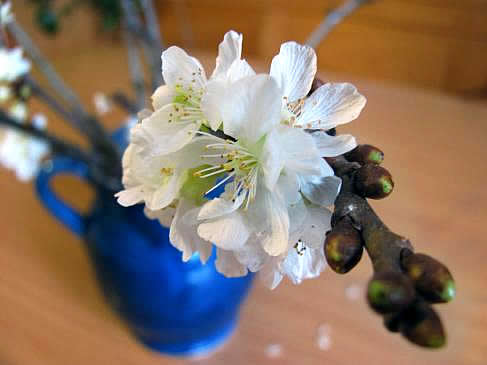
No custom defines St. Barbara’s Day in Germany more clearly than the Barbarazweig – a cherry branch (or sometimes another fruit tree branch) placed in water on 4 December. If the branch blossoms by Christmas Eve, it is considered a sign of good luck for the coming year.
This tradition is so widespread that even Germans unfamiliar with Barbara’s story recognize the annual ritual of placing branches in vases in early December. Families display the blooming branches on windowsills, in hallways, or on dinner tables as a living Advent decoration.
Origins of the Barbara Branch Tradition
Historical sources suggest that the custom may have originated from an early Christian prison legend. According to one version, Barbara is said to have snagged her dress on a barren cherry branch while being taken to prison. The branch remained in her cell and miraculously bloomed on the day of her death, symbolizing divine grace.
Another interpretation links the custom to winter solstice traditions. Long before Christianity, Germanic cultures used blossoming branches as signs of returning life during the darkest months. The Christian custom may have absorbed this older symbolism, transforming it into a ritual of hope and spiritual awakening.
How the Tradition Works
The ritual is simple but requires care:
• On 4 December, cut a cherry branch (alternatively apple, plum, or forsythia). • Bring it indoors and place it in warm water. • Some families gently tap or crack the base of the branch to stimulate blooming. • Change the water every few days. • Watch for the first signs of buds opening as Christmas approaches.
The result is a delicate burst of white or pink blossoms in the heart of winter – a striking contrast to the cold, dark season.
Symbolic Meaning
Germans often interpret the blooming branch as representing:
• hope during darkness • new beginnings • resilience • the promise of spring • spiritual preparation for Christmas • the survival of faith under pressure
In many households, the branch serves as a natural Advent calendar, offering a quiet reminder of the season’s deeper meaning.
St. Barbara and Miners: A Deep German Connection
One of the strongest associations with St. Barbara in Germany is her patronage of miners. This connection has shaped regional customs in mining areas for centuries.
Barbara in Mining Regions
Germany once had extensive mining networks in:
• the Ruhr region • the Ore Mountains (Erzgebirge) • Saarland • the Harz Mountains • Bavaria (Berchtesgaden and Oberpfalz)
Miners faced constant danger from cave ins, explosions, and toxic gases. St. Barbara, as a protector from sudden death, became their spiritual guardian. Mining towns often built Barbara chapels, held processions in her honour, and installed her icons at mine entrances.
The Barbara Processions (Barbarafeier)
In the Ore Mountains and other mining regions, St. Barbara’s Day was – and often still is – marked by ceremonial parades featuring the traditional uniforms of the miners’ guilds. These parades include:
• black mining uniforms with brass buttons • feathered hats • lanterns symbolizing light in darkness • brass bands playing traditional miners’ marches
These events express not just religious devotion but the pride and identity of mining communities. Even after many mines closed, the Barbara parades remained as cultural celebrations.
The Barbara Altar and Blessing
Mining communities historically held special church services on 4 December where tools, helmets, and lamps were blessed. This ritual symbolized protection, but also a communal acknowledgement of the harsh labor that shaped local life.
Symbolism of Light and Darkness
St. Barbara is deeply connected to the themes of light, illumination, and protection. These themes carry special resonance during the German Advent.
Light as Safety
In mining culture, light was everything – a source of safety, survival, and emotional comfort. Because Barbara saved people from lightning and sudden harm, she became a symbol of protective light underground.
Many Barbara icons show her carrying a tower or a lamp, reinforcing the symbolism of light emerging from confinement.
Light in Advent
As St. Barbara’s Day falls during the darkest weeks of the year, Germans naturally associated her with the broader Advent imagery of candles, stars, and glowing windows. The blooming branch, placed near a candlelit Advent wreath, embodies the interplay between natural and spiritual light.
St. Barbara in German Folklore and Superstition
Beyond religious traditions, St. Barbara became part of a rich folklore tapestry.
Barbara as a Weather Saint
Like many saints in the German folk calendar, Barbara was linked to weather predictions:
“Barbara im Schnee, dann Christtag im Klee.” “If Barbara comes in snow, Christmas will be mild.”
“Barbara klar und rein, wirds ein guter Januar sein.” “A clear and pure Barbara’s Day signals a good January.”
These proverbs reflect the agricultural rhythms that shaped rural life.
Barbara and Marriage Divination
Just as St. Andreas’ Day served as a moment for young women to divine their future husbands, St. Barbara’s Day often took on a similar role.
In some regions, women placed the Barbara branch in water and believed:
• if it bloomed early, marriage would come soon • if it failed to bloom, the year would bring delays or obstacles
This belief survived well into the twentieth century.
Regional Variations Across Germany
St. Barbara’s Day varies across the country, with notable regional customs.
The Rhineland and Western Germany
The Rhineland retains some of the strongest Barbara branch traditions. Families, schools, and even bakeries distribute branches each year. Catholic churches often bless the branches during mass.
In Cologne and Bonn, the day is also linked to local school activities where children place branches in cups and watch them bloom together.
Bavaria and Southern Germany
Bavaria, with its strong Catholic heritage, maintains both mining and household traditions. Many Bavarian churches are dedicated to Barbara, and mining regions still observe ceremonial parades.
In Franconia, some families bake simple pastries called Barbarakuchen – modest, rustic cakes symbolising Barbara’s humility.
The Ore Mountains (Erzgebirge)
The Ore Mountains hold some of the grandest Barbara celebrations due to their mining history. The day marks the beginning of the festive season in this region, famous for its wooden Christmas pyramids, candle arches, and nutcrackers. Barbara parades, concerts, and church services draw large crowds.
Eastern Germany
In Saxony and Thuringia, the Barbara branch tradition remains well known even among secular families. Schoolchildren often cut branches and take them home in December.
At first glance, St. Barbara’s Day may seem small – a minor feast, a simple branch in a vase. Yet its cultural impact is profound. It speaks to perennial human concerns: danger, resilience, hope, and the longing for light during the darkest days of the year. Through the Barbarazweig, Germans keep alive a memory of courage and spiritual awakening, linking the cold stillness of winter to the joyful promise of Christmas.
St. Barbara’s Day continues to bloom, year after year, not only in cherry branches but in the cultural imagination of Germany – a reminder that even in darkness, something beautiful can emerge.