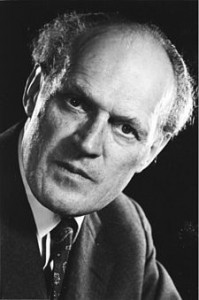
June 26, 1826 Birth of Adolf Bastian in Bremen, Germany. Bastian proposed a theory of cultural evolution which has similarities to and may have influenced Carl Jung's idea of the collective unconscious. June 26, 1829 Death of Johann Heinrich Wilhelm Tischbein in Haina, Germany. Tischbein was a portraitist. Tischbein is remembered primarily … [Read more...]
June 25 in German History
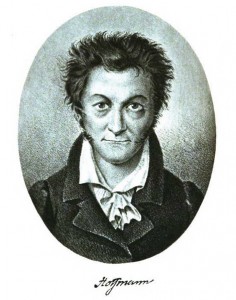
June 25, 1530 The 28 articles of the Lutheran churches are presented to the Emperor Charles V. (The Augsburg Confession). June 25, 1708 Johann Sebastian Bach resigns his position at the Church of St. Blasius in Mühlhausen. June 25, 1767 Death of the musician Georg Philipp Telemann in Hamburg, Germany. As a young man he was … [Read more...]
June 24 in German History
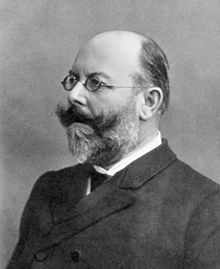
June 24, 1292 Graf Adolf von Nassau was crowned German King at Aachen. He was King of the Germans until deposed by the Habsburg, Albert I. June 24, 1768 Death of Johann Julius Hecker in Berlin, Germany. It was he who developed the "Realschule", the track of secondary schools stressing practical education to parallel the classic … [Read more...]
June 23 in German History
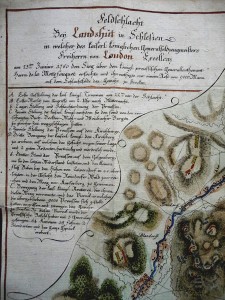
June 23, 1760 The Battle of Landshut in Silesia is fought. The Battle of Landshut was an engagement fought on June 23, 1760 during the Seven Years' War. A Prussian army of 12,000 men under General Heinrich August de la Motte Fouqué fought an Austrian army of over 28,000 men under General von Loudon and suffered a defeat, with its commander … [Read more...]
June 22 in German History

June 22, 1767 Birth of Wilhelm von Humboldt in Potsdam, Germany. Friedrich Wilhelm Christian Karl Ferdinand von Humboldt (22 June 1767 – 8 April 1835) was a Prussian philosopher, government functionary, diplomat, and founder of the Humboldt University of Berlin, which was named after him in 1949 (and also after his younger brother, Alexander … [Read more...]
June 21 in German History
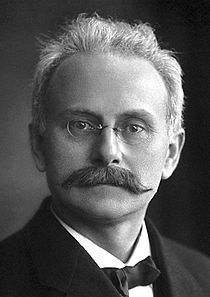
June 21, 1002 Birth of Pope Leo IX (original name Bruno von Egisheim und Dagsburg) in Egisheim, Germany. Bruno was the cousin of the Holy Roman Emperor, Heinrich III. Heinrich Appointed him Pope, but he refused to accept until elected in Rome. He became Pope on February 12, 1049. He immediately began a series of reforms including forbidding … [Read more...]
June 20 in German History
June 20, 981 Death of St. Adalbert von Magdeburg. St. Adalbert worked at the court of the Archbishop of Cologne. In 959 he left the service and became a monk at the monastery of St. Maximin in Trier. He was later made a bishop and was sent to establish Christianity in Russia in 961. The mission was at a request from princess Olga to the German … [Read more...]
The Mass Media in Germany

Until 1990 Germany was a divided country. The media system of the former GDR was highly centralized and worked under the control of the Communist Party. It disappeared during the process of unification, but patterns of media usage still differ between East and West. Today, the major media production centers are located in the “old” West, newspapers … [Read more...]
Radio and Television in Germany
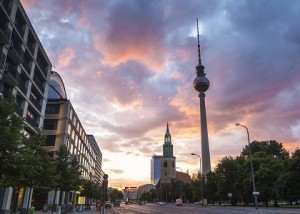
Radio and television are administered in a decentralized fashion as prescribed in the Basic Law. The intent behind the pattern of regional decentralization is to prevent the exploitation of the media by a strong national government, as had happened under the Nazi dictatorship. Germany has two public broadcasting corporations. The first, ARD, was … [Read more...]
Newspapers in Germany

West Germany has always had highly developed mass media. The independence of the press and its freedom from censorship are guaranteed in Article 5 of the Basic Law. Conversely, the communist regime in East Germany tightly controlled the media. Despite government censorship, East Germans were voracious newspaper and magazine readers. More than three … [Read more...]
- « Previous Page
- 1
- …
- 112
- 113
- 114
- 115
- 116
- …
- 163
- Next Page »