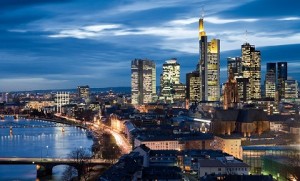
Following unification, the Federal Republic encompassed 356,958 square kilometers and was one of the largest countries in Europe. With about 81.3 million people in mid-1995, it ranked second behind Russia in population among the countries of Europe. Unification actually reduced the Federal Republic's population density, however, because East … [Read more...]
Religion in Germany

Roman Catholicism, one of Germany's two principal religions, traces its origins there to the eighth-century missionary work of Saint Boniface. In the next centuries, Roman Catholicism made more converts and spread eastward. In the twelfth and thirteenth centuries, the Knights of the Teutonic Order spread German and Roman Catholic influence by force … [Read more...]
Structure of German Society
Most of the workforce is employed in the services sector. West Germany completed the transition from an industrial economy to one dominated by the services sector in the 1970s, and by the late 1980s this sector employed two-thirds of the workforce. In contrast, when the Berlin Wall fell, East Germany still had not made this transition. Because more … [Read more...]
Age-Gender Distribution in Germany
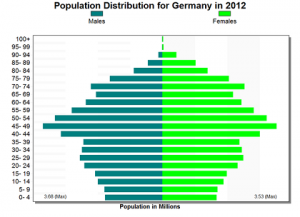
In the early 1990s, an age-gender distribution pyramid of unified Germany's population displayed at its apex the legacy of heavy war casualties: a preponderance of elderly women too great to be explained by women's greater longevity. Official statistics show that in 1990 there were approximately 2.7 million more females than males (41.2 million … [Read more...]
Mortality in Germany
In the postwar period, the former GDR developed a comprehensive health care system that made steady advances in reducing infant mortality and extending life expectancy for both men and women. Early in the postwar period, life expectancy in some categories was actually longer for East Germans than for West Germans, and infant mortality was lower … [Read more...]
Fertility in Germany

Despite the Berlin Wall and the fortified boundary that divided them, the two Germanys had many similar demographic developments in the postwar period. In the late 1950s and especially in the 1960s, both Germanys experienced a "baby boom," stimulated by increased economic prosperity and a heightened sense of security. During the second half of the … [Read more...]
Marriage and Family in Germany
Like most other advanced countries in the postwar era, Germany recorded fewer marriages, more divorces, and smaller families. In 1960 there were 690,000 marriages, compared with 516,000 in 1990. The total for 1993 amounted to only 442,000, but most of this decline was caused by a drop of than more 50 percent in the number of marriages in the new … [Read more...]
Women In German Society
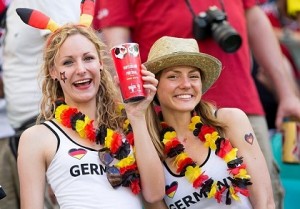
For centuries, a woman's role in German society was summed up and circumscribed by the three "K" words: Kinder (children), Kirche (church), and Küche (kitchen). Sometimes the fourth "K" is mentioned: Kleider (clothes). Throughout the 20th century, however, women have gradually won victories in their quest for equal rights. In 1919 they received the … [Read more...]
Asylum-Seekers In Germany
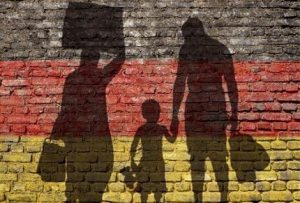
The right to asylum enjoys constitutional status in Germany Political persecutees are afforded asylum in Germany in accordance with Article 16a of the Basic Law (GG) of the Federal Republic of Germany. As in many other countries, the right to asylum is guaranteed in Germany not only on the basis of the obligation under international law … [Read more...]
Ethnic Germans
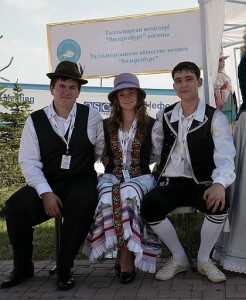
Ethnic Germans have immigrated to Germany since the end of World War II. At first, these immigrants were Germans who had resided in areas that had formerly been German territory. Later, the offspring of German settlers who in previous centuries had settled in areas of Eastern Europe and Russia came to be regarded as ethnic Germans and as such had … [Read more...]