May 22, 337 Death of Constantine the Great, the emperor of the Roman Empire. He had started his political career as one of the four Roman Emperors at the time of the division of power. He ruled the Western Empire from the city of Trier (now in Germany). He later waged battle against the other emperors and emerged finally as the sole emperor. It … [Read more...]
Women In German Society

For centuries, a woman's role in German society was summed up and circumscribed by the three "K" words: Kinder (children), Kirche (church), and Küche (kitchen). Sometimes the fourth "K" is mentioned: Kleider (clothes). Throughout the 20th century, however, women have gradually won victories in their quest for equal rights. In 1919 they received the … [Read more...]
Asylum-Seekers In Germany
The right to asylum enjoys constitutional status in Germany Political persecutees are afforded asylum in Germany in accordance with Article 16a of the Basic Law (GG) of the Federal Republic of Germany. As in many other countries, the right to asylum is guaranteed in Germany not only on the basis of the obligation under international law … [Read more...]
May 21 in German History

May 21, 996 The Pope Gregory V crowns Otto III as the Emperor of the Holy Roman Empire. Gregory V was the first German Pope. Otto III later brought troops to Italy to combat the forces of an anti-pope, John XVI who attempted to take the office of pope from Gregory V. Otto restored Gregory in 998. May 21, ca. 1250 May 21 is the feast day of … [Read more...]
Ethnic Germans
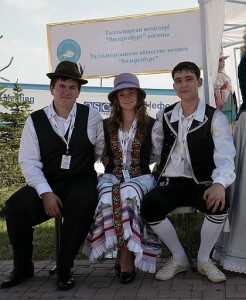
Ethnic Germans have immigrated to Germany since the end of World War II. At first, these immigrants were Germans who had resided in areas that had formerly been German territory. Later, the offspring of German settlers who in previous centuries had settled in areas of Eastern Europe and Russia came to be regarded as ethnic Germans and as such had … [Read more...]
Foreigners In Germany

A total of nearly 8.2 million people holding only foreign citizenship were registered in the Central Register of Foreigners (AZR) at the end of 2014. This was the highest number of foreigners ever registered in Germany since the AZR was established in 1967. Compared with 2013, the number of foreigners rose by roughly 519,300 or 6.8% in 2014. This … [Read more...]
Immigration In Germany
Immigration has been a primary force shaping demographic developments in the two Germanys in the postwar period. After the erection of the Berlin Wall in 1961, the immigration flow, first into West Germany and later into united Germany, consisted mainly of workers from southern Europe. In addition, the immigrants included several other groups: a … [Read more...]
German Population
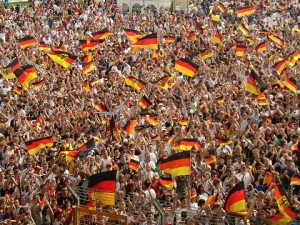
The German population has reached a new record. In 2018, the population grew by 227,000 people, or 0.3 percent, as the Federal Statistical Office (Destatis) announced in Wiesbaden. This is the first time in history that over 83 million people live in Germany. The exact figure at the end of the year was given by the Federal Office at 83.0192 … [Read more...]
May 20 in German History
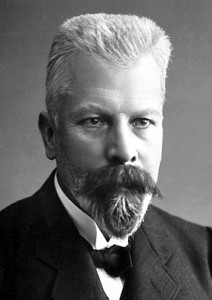
May 20, 1860 Birth of the biochemist Eduard Buchner (1860-1917) in Munich. He was given the Nobel Prize in chemistry in 1907 for demonstrating that the fermentation of carbohydrates results from the action of enzymes in yeast. May 20, 1851 Birth of Emile Berliner (1851-1929) in Hannover, Germany. Berliner is best known for … [Read more...]
May 19 in German History
May 19, 804 Death of Alcuin, intellectual in the court of Karl der Große (Charlemagne) in Aachen. Alcuin was born in about 730 in York in England. He was educated at and became the master of the cathedral school of York. In 781 he made the acquaintance of Karl der Große (Charlemagne) and joined him at Charlemagne's capital of Aachen as the … [Read more...]
- « Previous Page
- 1
- …
- 120
- 121
- 122
- 123
- 124
- …
- 163
- Next Page »