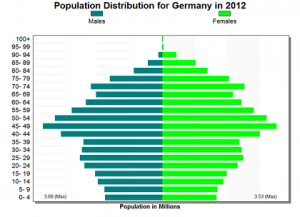
In the early 1990s, an age-gender distribution pyramid of unified Germany's population displayed at its apex the legacy of heavy war casualties: a preponderance of elderly women too great to be explained by women's greater longevity. Official statistics show that in 1990 there were approximately 2.7 million more females than males (41.2 million … [Read more...]
May 31 in German History
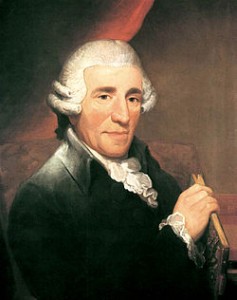
May 31, 1740 Death of Frederich Wilhelm I in Potsdam, Germany. Friedrich Wilhelm was the second king of Prussia. His policies developed Prussia into an efficient and powerful state. He married the daughter of Georg of Hannover (later to become George I, king of England). May 31, 1773 Birth of the romantic writer Ludwig Tieck in Berlin. … [Read more...]
May 30 in German History
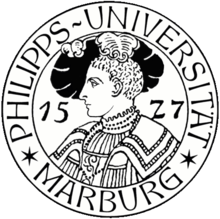
May 30, 1527 The University of Marburg is founded. Philipps-Universität Marburg is not only a German university steeped in tradition, it is also the oldest university in the world that was founded as a Protestant institution in 1527. It has been a place of research and teaching for nearly five centuries. It was founded by Landgrave Philip I … [Read more...]
May 29 in German History
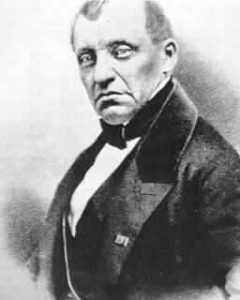
May 29 Feast Day of St. Maximin von Trier (? – ca. 349) (Latin name Maximinus) The Roman Maximin came to Trier (then the capital of the Western Roman Empire, now in Germany) to study with St. Agritius (then the Bishop of Trier) and was ordained a priest by him. Maximin would become the bishop of Trier in ca. 332. He was a staunch defender of the … [Read more...]
May 28 in German History

May 28, 1660 Birth of George I in Osnabrück, Germany, first Elector of Hannover and the first Hanoverian King of Great Britain. George I, the first Hanoverian King of Great Britain, was born in Osnabrück, Hanover (now Germany) on May 28, 1660. The English Parliament's "Act of Settlement" of 1701, in an attempt to ensure a Protestant succession … [Read more...]
May 27 in German History

May 27, 1525 Death of Thomas Müntzer in Mühlhausen. Thomas Müntzer was born in 1489 in Stolberg, Germany and died on May 27, 1525 in Mühlhausen, Germany. He was a leading radical reformer during the Protestant reformation and the leader of the peasants' revolt in Thuringia in 1524-25. Müntzer was a significant figure in the religious and … [Read more...]
May 26 in German History
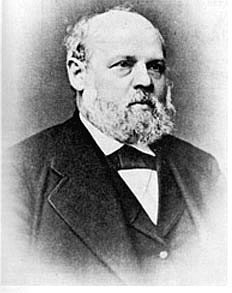
May 26, 1799 Birth of August Kopisch in Breslau, Germany (now in Poland). Kopisch was a painter and poet. Two of his books of poetry are Gedichte (1836) and Allerlei Geister (1848). Allerlei Geister was based on legends and fairy tales. Kopisch studied painting and archaeology in Italy (1823–28) and in 1826 rediscovered, with Ernst Fries, … [Read more...]
Mortality in Germany
In the postwar period, the former GDR developed a comprehensive health care system that made steady advances in reducing infant mortality and extending life expectancy for both men and women. Early in the postwar period, life expectancy in some categories was actually longer for East Germans than for West Germans, and infant mortality was lower … [Read more...]
May 25 in German History

May 25, 1521 The Emperor of the Holy Roman Empire, Charles V officially declares Martin Luther a criminal and heretic for refusing to recant at the Diet of Worms. May 25, 1848 Annnete von Droste-Hülshoff dies in Meersburg, Germany. She is one of the leading writers of the 19th Century. She is most noted for her poetry, Gedichte (1838) … [Read more...]
Fertility in Germany

Despite the Berlin Wall and the fortified boundary that divided them, the two Germanys had many similar demographic developments in the postwar period. In the late 1950s and especially in the 1960s, both Germanys experienced a "baby boom," stimulated by increased economic prosperity and a heightened sense of security. During the second half of the … [Read more...]
- « Previous Page
- 1
- …
- 122
- 123
- 124
- 125
- 126
- …
- 166
- Next Page »