
March 14, 968 Death of St. Mathilda (ca. 895 - 968). St. Matilda, the wife of the German king Heinrich I was born in about 895 in Engern, Saxony, Germany. Matilda and King Heinrich married in 909. She was the mother of Otto who would become the Emperor of the German Empire (a.k.a. Holy Roman Empire). Her son Bruno became the Archbishop of … [Read more...]
March 13 in German History
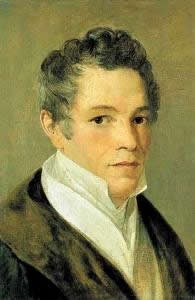
March 13, 1741 Birth of Joseph II in Vienna, Austria. The Habsburg, Joseph II was the Holy Roman Emperor from 1765-1790. Until Maria Theresia's (his mother's) death in 1780, Joseph ruled attuned to her strong advice. He strengthened the University of Vienna, introduced a universal code of civil law in 1786, ordered the end of serfdom, granted … [Read more...]
March 12 in German History
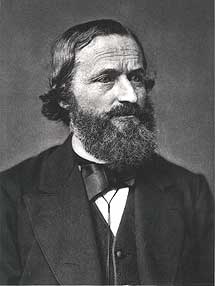
March 12, 1821 Birth of Luitpold in Würzburg, Germany. Luitpold was the third son of Ludwig I. During the reign of Ludwig II ("Mad King Ludwig" who built the wonderful castles) he served as regent. He introduced liberal democratic structures into Bavaria and did much to establish Munich's position as a cultural center. Luitpold, Prince … [Read more...]
The Salian Dynasty, 1024-1125 – Medieval Germany
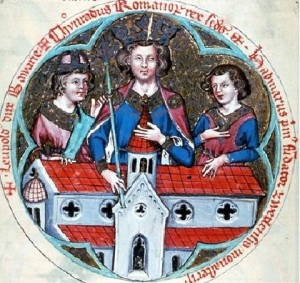
After the death of the last Saxon king in 1024, the crown passed to the Salians, a Frankish tribe. The four Salian kings--Conrad II, Henry III, Henry IV, and Henry V--who ruled Germany as kings from 1024 to 1125, established their monarchy as a major European power. Their main accomplishment was the development of a permanent administrative system … [Read more...]
March 11 in German History
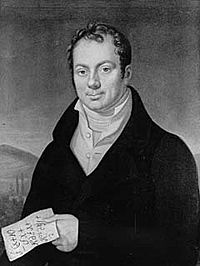
March 11, 1780 Birth of August Leopold Crelle (1780-1855) in Eichwerder, Germany. Crelle was a mathematician who founded the prestigious journal, Crelle's Journal (original name: Journal für die reine und angewandte Mathematik) in 1826. March 11, 1850 A constitution is adopted in Prussia. March 11, 1894 Birth of Otto … [Read more...]
March 10 in German History
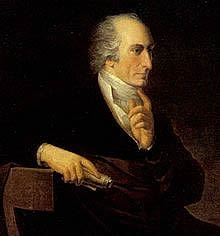
March 10, 1503 Birth of Ferdinand I in Alcala de Henares, Spain. The Spanish born Habsburg, Ferdinand, would become the Holy Roman Emperor, and the king of Bohemia and Hungary. In the "Peace of Augsburg" of 1555 he agreed to the right of regional princes to determine the religion of their own territories. March 10, 1615 Death of St. John … [Read more...]
The Saxon Dynasty, 919-1024 – Medieval Germany

Because the dukes of the East Frankish Kingdom had wearied of being ruled by a foreign king, they elected a German to serve as their king once the Carolingian line expired. The election of Conrad I (r. 911-18), Duke of Franconia, as the first German king has been marked by some historians as the beginning of German history. Conrad's successor, … [Read more...]
The Carolingian Dynasty, 752-911 – Medieval Germany
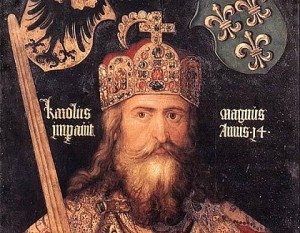
Charlemagne inherited the Frankish crown in 768. During his reign (768-814), he subdued Bavaria, conquered Lombardy and Saxony, and established his authority in central Italy. By the end of the eighth century, his kingdom, later to become known as the First Reich (empire in German), included present-day France, the Netherlands, Belgium, and … [Read more...]
March 9 in German History

March 9, 1009 Death of St. Bruno von Querfurt (970 – 1009) Bruno was educated at the cathedral school in Magdeburg. He later entered a monastery and took his vows in 999. He was sent as a missionary to Poland. In 1008 he sought to found a mission among the Prussians. He and his companions were killed by the resentful pagans there. He was soon … [Read more...]
March 8 in German History

March 8, 1714 Birth of Carl Phillip Imanuel Bach in Weimar, Germany. He was the son of Johann Sebastian and Maria Bach. His first position was that of harpsichordist to Friedrich II of Prussia. In 1767 he became music director in Hamburg. In addition to the great music he composed, he is noted for his book, Versuch über die wahre Art das Klavier … [Read more...]
- « Previous Page
- 1
- …
- 134
- 135
- 136
- 137
- 138
- …
- 163
- Next Page »