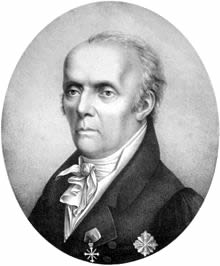
March 19, 1745 Birth of Johann Peter Frank (1745-1821) in Rodalben, Germany. Frank was a German physician and hygienist who pioneered in the science of public health. His vision is outlined in his System einer vollständigen medicinischen Polizey (A Complete System of Medical Policy) (1779). This work was first published in 1779, and was … [Read more...]
March 18 in German History
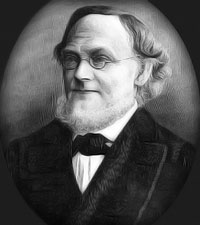
March 18, 1690 Birth of Christian Goldbach (1690-1764) in Königsberg, Germany (now in Russia). A mathematician, Goldbach accomplished significant work in the theory of curves, infinite series and the integration of differential equations. But he is most known for the development of a number theory now called "Goldbach's conjecture". March … [Read more...]
March 17 in German History
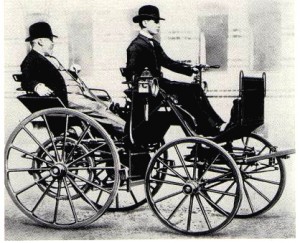
March 17, 180 The Roman emperor Marcus Aurelius dies while on a military campaign at the Danube. He died at his camp in Vienna (Vindobona). March 17, 1591 Death of Jost Amman in Nürnberg, Germany. Amman was a leading painter and print maker of his age. March 17, 1799 Birth of Heinrich Leo in Rudolstadt, Germany. Leo was a … [Read more...]
Bismarck and the Unification of Germany
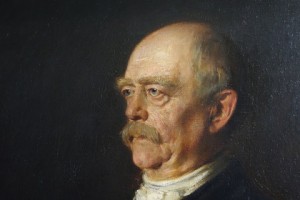
Liberal hopes for German unification were not met during the politically turbulent 1848-49 period. A Prussian plan for a smaller union was dropped in late 1850 after Austria threatened Prussia with war. Despite this setback, desire for some kind of German unity, either with or without Austria, grew during the 1850s and 1860s. It was no longer a … [Read more...]
The Restoration of Germany
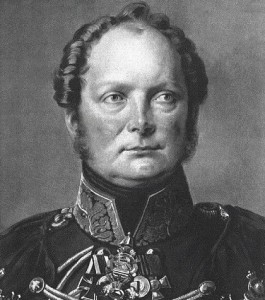
Within just a few months, liberal hopes for a reformed Germany were disappointed. Conservative forces saw that the liberal movement was divided into a number of camps having sharply different aims. Furthermore, the liberals had little support left among the lower classes, who had supported them in the first weeks of the revolution by constructing … [Read more...]
The Revolutions of 1848
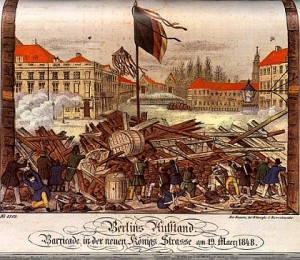
Europe endured hard times during much of the 1840s. A series of bad harvests culminating in the potato blight of 1845-46 brought widespread misery and some starvation. An economic depression added to the hardship, spreading discontent among the poor and the middle class alike. A popular uprising in Paris in February 1848 turned into a revolution, … [Read more...]
Economic and Political Trends in Germany Toward Unification
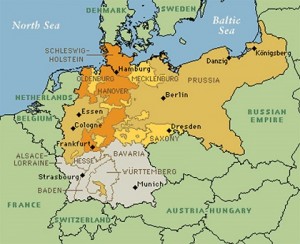
It was not possible for Metternich and his allies to suppress completely the desire for liberal reforms, including the establishment of constitutional parliamentary government, economic freedom, and civil liberties. Some of these reforms had already been under discussion during the eighteenth-century Enlightenment, and awareness of their … [Read more...]
The German Confederation, 1815-66
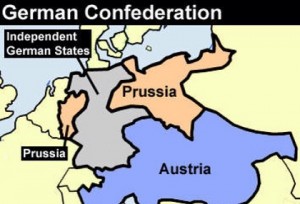
The Congress of Vienna (1814-15), convened after Napoleon's defeat, sought to restore order in Europe disrupted by revolutionary and imperial France. Its members' objective was a constellation of states and a balance of power that would ensure peace and stability after a quarter-century of revolution and war. In addition to the delegates of many … [Read more...]
The French Revolution and Germany
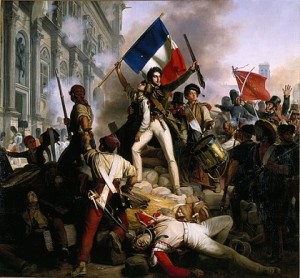
The French Revolution, which erupted in 1789 with the storming of the Bastille in Paris, at first gained the enthusiastic approval of some German intellectuals, who welcomed the proclamation of a constitution and a bill of rights. Within a few years, most of this support had dissipated, replaced by fear of a newly aggressive French nationalism and … [Read more...]
The Smaller States of Germany: German History
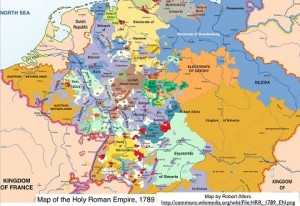
By the eighteenth century, none of the other states of the German empire were strong enough to have territorial ambitions to match those of Prussia and Austria. Some of the larger states, such as Saxony, Bavaria, and Wuerttemberg, also maintained standing armies, but their smaller size compelled them to seek allies, some from outside the empire. … [Read more...]
- « Previous Page
- 1
- …
- 135
- 136
- 137
- 138
- 139
- …
- 166
- Next Page »