
February 17, 1665 Birth of Rudolph Jacob Camerarius (1665-1721) in Tübingen, Germany. Camerarius was the botanist who proved the existence of sexes in plants, identified the reproductive parts, and demonstrated the role of pollen. He was a professor of medicine and director of the botanical gardens at Tübingen. February 17, 1717 Birth … [Read more...]
February 16 in German History

February 16, 1514 Birth of Georg Joachim Rheticus (1514-1574) in Feldkirch, Austria. Rheticus was an astronomer and mathematician who was one of the first to accept the heliocentric theory of Copernicus. A professor at the University of Wittenberg, he went to Poland and studied with Copernicus in 1539-1540. He also did significant work on … [Read more...]
February 15 in German History

February 15, 1368 Birth of Sigismund, the Holy Roman Emperor from 1433-1437, near Nürnberg, Germany. He was the last emperor of the House of Luxembourg. In 1396 he assembled and led an army against the Turks, who had penetrated as far as Serbia, but he was badly defeated in the campaign. It was Sigismund who invited Jan Hus to the Church Council … [Read more...]
February 14 in German History
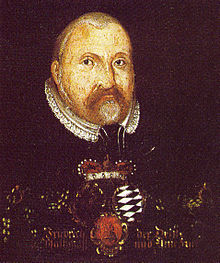
February 14, 1515 Birth of Friedrich III (1515-1576) in Simmern, Germany. Friedrich was also called "Friedrich der Fromme". He was the elector of the Palatine of the Rhine. He became a Protestant in 1546. He assisted the development of Protestantism in Germany, France and Holland. February 14, 1722 Birth of Georg Christian Füchsel … [Read more...]
February 13 in German History

February 13 Feast Day of St. Jordan von Sachen (ca. 1200-1237) Jordan was born in ca. 1200 near Osnabrück, Germany. He followed St. Dominic (the founder of the Dominican order) as the general of the order. He held that office from 1222-1237. He was a very talented administrator and led the order in establishing its enduring structure. He saw … [Read more...]
February 12 in German History

February 12, 1777 Birth of Friedrich de La Motte Fouque in Brandenburg, Germany. Descended from a French noble family, Fouque was for a time a very popular writer. His best known works are Undine (1811) and Der Held des Nordens (1808). February 12, 1804 The philosopher Immanuel Kant (1724-1804) dies in Königsberg (now Kaliningrad in … [Read more...]
Germany Today – German Online Newspapers and Magazines

The best way to let people around the world know about your country is to use mass media. Thus, you can get the latest news on Germany and its life from newspapers, radio and TV. It would be great to explore each source separately, but let's be wise and reasonable, and use the wide possibilities offered by the Internet. Start your media journey … [Read more...]
Gays and Lesbians in Germany

According to Freud, our social behavior, thoughts and actions most of all go by our sexual instinct. Persons of the opposite sexes are drawn to each other with some supernatural force, and all the rest is done to impress, get recognition, win and possess that other one (don't tell me I am wrong). Indeed, this is the most exciting side of the human … [Read more...]
German Wines

You will probably be surprised to see an article about German wine, why not beer, right? Indeed, being the most popular drink among the Germans, beer has captured attention of the whole country and become the German national drink. Still wine is also an object to overall popularity. There is an anonymous German advice to beer and wine drinkers: … [Read more...]
February 11 in German History
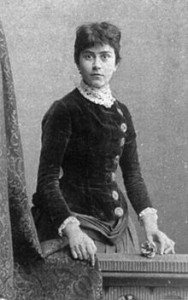
February 11, 1813 Birth of Otto Ludwig in Eisfeld, Germany. Ludwig was a novelist and playwright of the period of Poetic Realism, a term which he coined. Among his works are Die Erbförster (1850), and Zwischen Himmel und Erde (1855). Ludwig died in Dresden, Germany on February 25, 1865. February 11, 1869 Birth of Else Lasker-Schüler … [Read more...]
- « Previous Page
- 1
- …
- 144
- 145
- 146
- 147
- 148
- …
- 166
- Next Page »