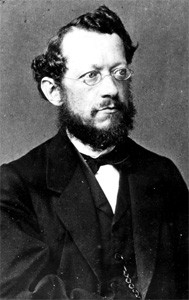
February 7, 1825 Birth of Karl August Möbius (1825-1908) in Eilenburg, Germany. Möbius, a zoologist, discovered symbiosis in marine invertebrates. In 1863 he was one of the founders of the Hamburg Zoo. He designed Germany's first public aquarium. February 7, 1870 Birth of Alfred Adler in Penzing, Austria. Adler earned his M.D. at the … [Read more...]
February 6 in German History
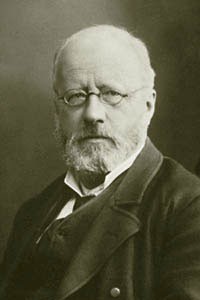
February 6 Feast Day of St. Amandus von Maastricht (? – ca. 680) St. Amandus was born near Nantes (modern France) in the late 6th century. Resisting his family's desire of a secular life for him he fled and entered a monastery. After years living in isolation as a hermit/monk he was consecrated as a missionary bishop. His first work was in … [Read more...]
February 5 in German History

February 5, ca. 1015 Death of St. Adelheid von Vilich (ca. 960 – ca. 1015) St. Adelheid was born to a noble family in Vilich near Bonn, Germany. At a young age she entered the conventof St. Ursula in Cologne, Germany. Her family founded a convent at Vilich where she was made the abbess. She instituted the rule of St. Benedict at the convent. She … [Read more...]
February 4 in German History
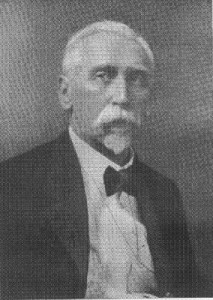
February 4, 856 The feast day of Hrabanus Maurus is celebrated on February 4 in Fulda, Mainz and Limburg. He entered the monastery at Fulda (Germany) at age 10. In 801 he began study with Alcuin at the monastery in Tours (France). He then returned to Fulda and became the headmaster of the school there. He was ordained a priest in 814. In 822 he … [Read more...]
February 3 in German History

February 3, 865 Death of St. Ansgar. St. Ansgar was born on September 8, 801 in Corbie (in modern France). In 823 he became a teacher in the newly founded monastery in Corvey, Westphalia (modern Germany). In 829 he founded the first Christian church in Sweden. He returned to Germany in 831 and became the first bishop of Hamburg. He continued his … [Read more...]
February 2 in German History
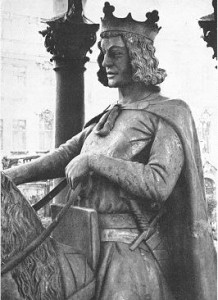
February 2, 962 The Magdeburger Reiter: a tinted sandstone equestrian monument, c. 1240, traditionally intended as a portrait of Otto I (detail), Magdeburg Otto I is crowned as Augustus (Emperor of the Holy Roman Empire) in Rome by Pope John XII. The empire as founded by Karl der Große (Charlemagne) had been divided after his death. Otto … [Read more...]
February 1 in German History
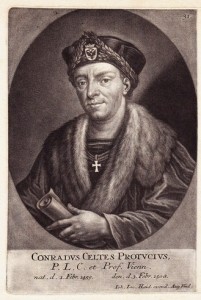
February 1, 1459 Birth of Conradus Celtis in Wipfeld, Germany. A very successful poet in his day, Celtis was named "Poet Laureate" by the Emperor Friedrich III at Nürnberg in 1487. In 1491 he became professor of poetry at the University of Ingolstadt. In 1497 he was appointed a professor at the University of Vienna. It was he who … [Read more...]
January 30 in German History
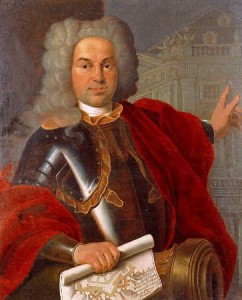
January 30, 1687 Birth of Balthasar Neumann (1687-1753) in Eger, Austrian Empire (now in the Czech Republic). Neumann was the leading architect of the Baroque period in Austria and Germany. In 1711 he moved to Würzburg, Germany, to work for the Bishop/Elector. In 1719 he began work on the palace of the Bishop, a work which would continue … [Read more...]
January 29 in German History
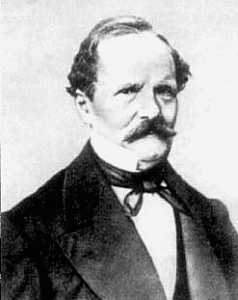
January 29, 1499 Birth of Katharina von Bora (1499-1552), wife of Martin Luther, in Lippendorf, Neukieritzsch, Germany. "Die Lutherin", as she was referred to, was sent at the age of 5 to the Benedictine cloister in Brehna in 1504 for education. At the age of 9 she moved to the Cistercian monastery Marienthron (Mary's Throne) in Nimbschen. … [Read more...]
January 28 in German History
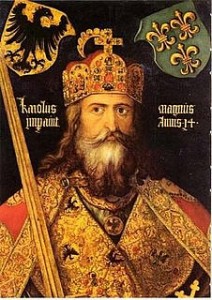
January 28, 814 - Feast Day of St. Karl der Große (Charlemagne) (ca. 742-814) Karl der Große or Charlemagne was the king of the Franks. (The Franks were a Germanic people who had extended their influence over parts of modern France and Belgium by this date in history.) On Christmas day of the year 800 he was crowned emperor of an empire … [Read more...]
- « Previous Page
- 1
- …
- 142
- 143
- 144
- 145
- 146
- …
- 163
- Next Page »