
The combination of tangy cider vinegar, onions, and smoked bacon makes this German side dish absolutely addictive. It's so good, you'll want to eat it as the main meal! There is something about adding bacon to recipes that sends the dish over the top. Between the crispy tenderness of the sauteed cabbage and the crunchy bacon bits, this easy side … [Read more...]
Schloss Braunfels

Castle Braunfels is located on a basalt rock west of the health resort Braunfels in the Central Hessian Lahn-Dill-Kreis. The castle soars 100 m (328 ft) above the Lahn valley. It has been the seat of the Counts of Solms since the 13th century and is still owned by the counts of Oppersdorff and Solms-Braunfels in the 21st century. As Castellum … [Read more...]
Excuses in German – Entschuldigungen

There is a number of ways to say "I'm sorry" in German. Basically, "Entschuldigung!" means "Excuse me!" or "Apologies!" and "Es tut mir leid" means "I am sorry." If you look a bit closer, "die Entschuldigung"(feminine) is a noun meaning: "the apology", but the root of the word is "die Schuld" = "guilt". "ent-" is a prefix of verbs meaning … [Read more...]
Schloss Moritzburg – a Beautiful Baroque Castle

Moritzburg Castle is one of the most impressive baroque palaces in central Europe. Reached via a tree-lined avenue, it is situated on an island in the middle of a lake. After visiting the palace, you can enjoy a romantic stroll to the enchanting Fasanenschlösschen (little pheasant castle) built in the rococo style. Moritzburg Castle (Schloss … [Read more...]
Speckeier – Eggs with Bacon

Speckeier are scrambled eggs with bacon. It's a perfect dish for Vesper - German snack time in-between main meals (Zwischenmahlzeit). A Zwischenmahlzeit is also referred to as Brotzeit, Vesper or Zweites Frühstück for adults. After all, snacks aren’t just for children! The English word “snack” is also used, as is Imbiss, although these refer … [Read more...]
Altena Castle – World’s First Hostel

Altena Castle (Burg Altena) is a Medieval hill castle in the town of Altena in North Rhine-Westphalia. Built on a spur of Klusenberg hill, the castle lies near the Lenne in the Märkischer Kreis. The castle was erected by the early Counts of Berg in the early 12th century. Eventually, the House of Berg abandoned Altena and moved their residence to … [Read more...]
Karl Drais, the Bicycle and Typewriter Inventor
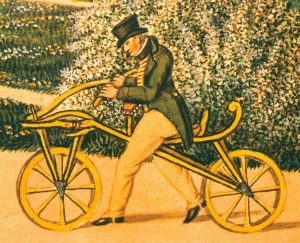
Karl Freiherr von Drais (born on 29 April 1785 in Karlsruhe – died on 10 December 1851 in Karlsruhe as well) was a German forest official and significant inventor in the Biedermeier period. Drais was a prolific inventor, who invented the Laufmaschine ("running machine"), also later called the Velocipede, Draisine (English) or draisienne (French), … [Read more...]
Kalbsvögerl – “Little Veal Birds”!

Kalbsvögerl, literally "little veal birds", are small veal roulades with herbal spicy stuffing. Perfect to enjoy with mashed potatoes or Spätzle. Ingredients: 8 thinly cut veal steaks (100 g each) 2 spring onions 1/2 bunch of parsley 2 stems thyme and marjoram 1 (about 125 g) coarse, uncooked bratwurst 1 tbsp flour 1 bunch of soup … [Read more...]
How to Use “aber”, “doch”, “denn”, “ja” – German Modal Particles
Modal particles are flavoring words that add a deeper element to language. In German, these could be words that soften the harshness of a comment, add a persuasive or suggestive element to a request or otherwise add subtle meaning to a sentence without changing the grammatical context. Most of the time, particles are only used in spoken … [Read more...]
Carl von Linde Who Gave the World the Refrigerator
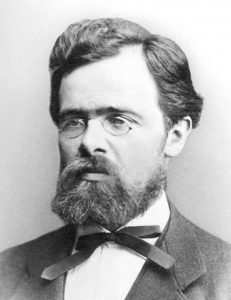
Carl von Linde was a German engineer (born on June 11, 1842 – died on November 16, 1934). Linde was best known for his refrigeration and gas separation technologies. Carl von Linde was the first person to extract oxygen gas from the air, making it a commercially viable product and thus launching the industrial gas industry. He also developed modern … [Read more...]
- « Previous Page
- 1
- …
- 62
- 63
- 64
- 65
- 66
- …
- 163
- Next Page »