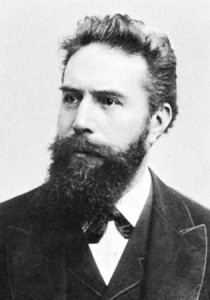
March 27, 1178 Death of Bl. Frowin (? - 1178) Frowin has never been formally canonized but is referred to as "blessed" by the medieval chroniclers. They also state his feast day as March 7 and attribute many miracles to him. Frowin was likely born in the Black Forest of Germany. In 1146 he was made the second abbot of the Benedictine … [Read more...]
March 26 in German History
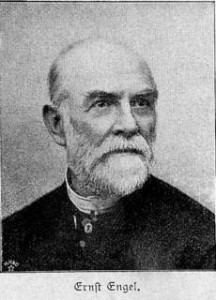
March 26, 809 Death of St. Liudger (742-809) St. Liudger was born near Utrecht (Modern Holland) in about 742. He was a missionary to the Friesians and Saxons. His vocation was occasioned by the Martyrdom of St. Boniface whose work he wished to continue. He studied under Alquin and retained a lifelong association with him. He was ordained a … [Read more...]
Problems of Parliamentary Politics in The Weimar Republic
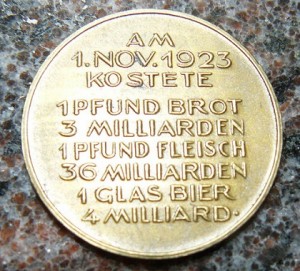
The Weimar Republic was beset with serious problems from the outset that led many Germans either to withhold support from the new parliamentary democracy or to seek actively to destroy it. The extreme left and much of the right provided the republic's most vitriolic opponents. Its supporters included the bulk of the left, represented by the SPD, … [Read more...]
The Weimar Republic, 1918-33
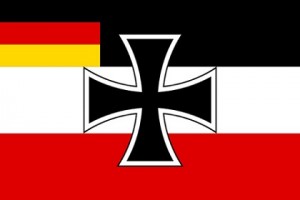
The Weimar Republic, proclaimed on November 9, 1918, was born in the throes of military defeat and social revolution. In January 1919, a National Assembly was elected to draft a constitution. The government, composed of members from the assembly, came to be called the Weimar coalition and included the SPD; the German Democratic Party (Deutsche … [Read more...]
Germany in World War I
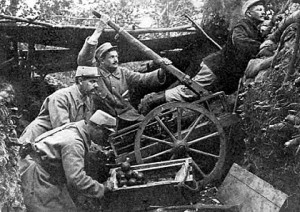
Germany's leadership had hoped for a limited war between Austria-Hungary and Serbia. But because Russian forces had been mobilized in support of Serbia, the German leadership made the decision to support its ally. The Schlieffen Plan, based on the assumption that Germany would face a two-front war because of a French-Russian alliance, required a … [Read more...]
Foreign Policy in the Wilhelmine Era
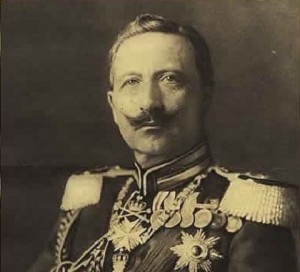
Foreign policy in the Wilhelmine Era (1890-1914) turned away from Bismarck's cautious diplomacy of the 1871-90 period. It was also marked by a shrill aggressiveness. Brusque, clumsy diplomacy was backed by increased armaments production, most notably the creation of a large fleet of battleships capable of challenging the British navy. This new … [Read more...]
Bismarck’s Foreign Policy
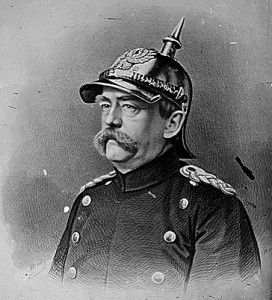
The crash of 1873 and the subsequent depression began the gradual dissolution of Bismarck's alliance with the National Liberals that had begun after his triumphs of 1866. In the late 1870s, Bismarck began negotiations with the economically protectionist Conservative Party and Center Party toward the formation of a new government coalition. … [Read more...]
The Tariff Agreement of 1879 in Germany and Its Social Consequences
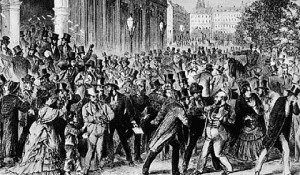
Germany experienced an economic boom immediately after unification. For the first time, the country was a single economic entity, and old impediments to internal trade were lifted. The federal chancellery published a new commercial code and established a uniform currency. The indemnity that France had to pay Germany after losing the 1870-71 war … [Read more...]
The Economy and Population Growth in Germany
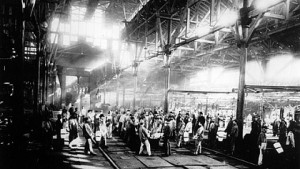
Germany experienced an economic boom immediately after unification. For the first time, the country was a single economic entity, and old impediments to internal trade were lifted. The federal chancellery published a new commercial code and established a uniform currency. The indemnity that France had to pay Germany after losing the 1870-71 war … [Read more...]
Political Parties in Imperial Germany
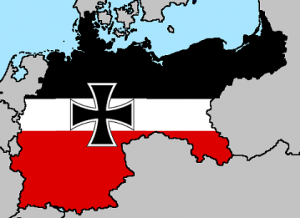
The German Empire--often called the Second Reich to distinguish it from the First Reich, established by Charlemagne in 800--was based on two compromises. The first was between the king of Prussia and the rulers of the other German states, who agreed to accept him as the Kaiser (emperor) of a united Germany, provided they could continue to rule … [Read more...]
- « Previous Page
- 1
- …
- 130
- 131
- 132
- 133
- 134
- …
- 163
- Next Page »