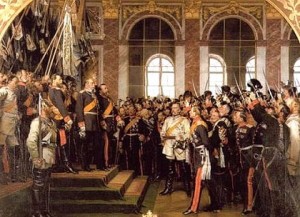
The German Empire--often called the Second Reich to distinguish it from the First Reich, established by Charlemagne in 800--was based on two compromises. The first was between the king of Prussia and the rulers of the other German states, who agreed to accept him as the Kaiser (emperor) of a united Germany, provided they could continue to rule … [Read more...]
March 25 in German History
March 25, 1252 Birth of Konradin (Konrad der jüngere) in Wolfstein, Germany. The Swabian, Konradin, who held the title "king of the Romans" was the last of the Hohenstaufen dynasty. His downfall came in a conflict with the Frenchman, Charles of Anjou. After losing the battle and being captured, he was beheaded in the marketplace in Naples in … [Read more...]
March 24 in German History
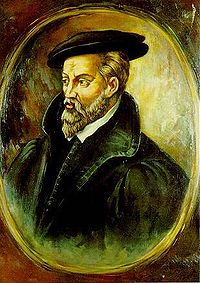
March 24, 1494 Birth of Georgius Agricola (1494-1555) (original name, Georg Bauer) in Clauchau, Germany. Agricola was a humanist, physician and scientist who is often called "the father of mineralogy". He was one of the first to base his science on the observation of nature rather than speculation. The American president Herbert Hoover … [Read more...]
March 23 in German History
March 23, 1819 Assassination of August Kotzebue in Mannheim, Germany. Kotzebue was a dramatist who wrote over 200 plays. Among his plays are Spanier in Peru (1796), Der Wildfang (1798), and Die deutschen Kleinstädter (1803). In addition to his plays, Kotzebue was engaged in politics during his entire life which caused him much trouble. He was … [Read more...]
March 22 in German History
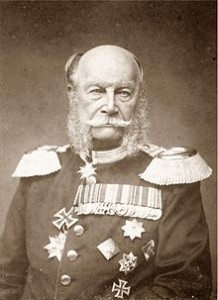
March 22, 1459 Birth of Maximilian I in Wiener Neustadt. Maximilian was the archduke of Austria, the German king and the Holy Roman emperor. He did much to expand and consolidate the Habsburg holdings. He nearly became Pope. The Pope Julius was very ill and a schismatic Council of Pisa offered him the position as an anti-Pope. After much … [Read more...]
March 21 in German History
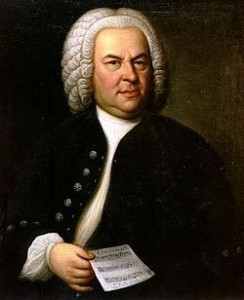
March 21, 1295 Birth of Heinrich Seuse (also spelled Suso in some texts) (original name Heinrich von Berg) in Konstanz, Germany. Seuse, a Dominican, was one of the outstanding mystics in German religious history. He studied under another great mystic, Meister Eckehart, in Cologne. He came under criticism and attack when he held to the positions … [Read more...]
March 20 in German History
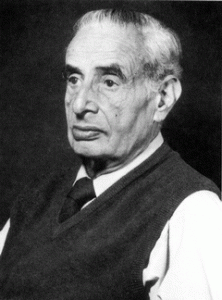
March 20, 1239 Death of Hermann von Salza in Salerno, Italy (born in Thüringen, Germany ca. 1170). Salza was the Grand Master of the Teutonic Knights who led them in their crusade in Hungary and the crusade against the pagan Prussians. The Prussian crusade would lead to the establishment of Prussia as a German, Christian theocracy under the … [Read more...]
March 19 in German History
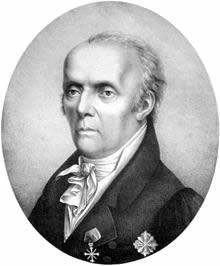
March 19, 1745 Birth of Johann Peter Frank (1745-1821) in Rodalben, Germany. Frank was a German physician and hygienist who pioneered in the science of public health. His vision is outlined in his System einer vollständigen medicinischen Polizey (A Complete System of Medical Policy) (1779). This work was first published in 1779, and was … [Read more...]
March 18 in German History
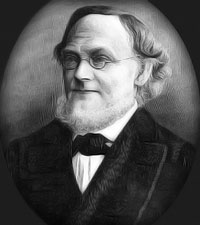
March 18, 1690 Birth of Christian Goldbach (1690-1764) in Königsberg, Germany (now in Russia). A mathematician, Goldbach accomplished significant work in the theory of curves, infinite series and the integration of differential equations. But he is most known for the development of a number theory now called "Goldbach's conjecture". March … [Read more...]
March 17 in German History
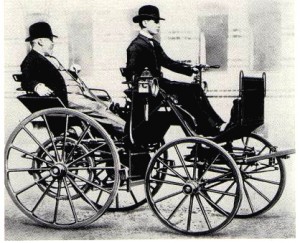
March 17, 180 The Roman emperor Marcus Aurelius dies while on a military campaign at the Danube. He died at his camp in Vienna (Vindobona). March 17, 1591 Death of Jost Amman in Nürnberg, Germany. Amman was a leading painter and print maker of his age. March 17, 1799 Birth of Heinrich Leo in Rudolstadt, Germany. Leo was a … [Read more...]
- « Previous Page
- 1
- …
- 131
- 132
- 133
- 134
- 135
- …
- 163
- Next Page »