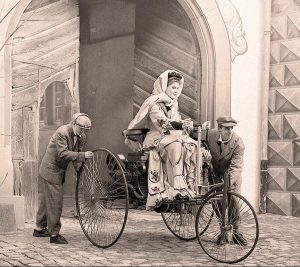
Bertha Benz (May 3, 1849 – May 5, 1944) was a German automotive pioneer. She was the business partner and wife of automobile inventor Karl Benz. In 1888, she was the first person to drive an automobile over a long distance. In doing so, she brought the Benz Patent-Motorwagen worldwide attention and got the company its first sales. Two years before … [Read more...]
German Adverbs

Similar to English, German adverbs are words that modify verbs, adjectives or other adverbs. They are used to indicate a place, time, cause, and manner, and they can be found in various parts of a sentence. Adverbs are divided into four main groups: Adverbs of Place Adverbs of Time Adverbs of Manner and Degree Adverbs Indicating … [Read more...]
Hackbraten – Meatloaf
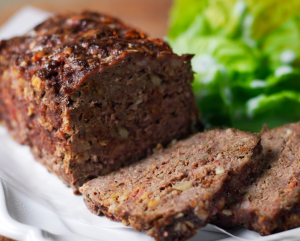
Hackbraten is a great dish for dinner parties – it’s a nice-looking meat dish yet comparably cheap because it’s made with minced meat. What’s more, you can prepare it in advance, store it in the fridge and let it bake in the oven while you entertain your guests. Serve with mashed potatoes or Spätzle. Ingredients: 500 g ground beef (or 1/2 … [Read more...]
German Women – Scientists and Inventors
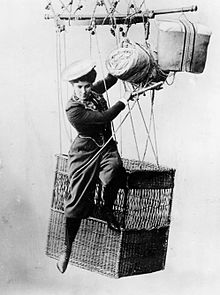
Here are seven German female inventors whose innovations, both large and small, have improved our world in various ways. Caroline Lucretia Herschel Caroline Lucretia Herschel (1750-1848) was the first woman to receive full recognition in the world of astronomy. Between 1786 and 1797, she discovered eight comets and 14 nebulae. She received many … [Read more...]
German Power Women that Have Changed the World

German Socialist Luise Zietz proposed the establishment of an annual International Woman's Day and was seconded by fellow socialist and later communist leader Clara Zetkin, supported by Käte Duncker, although no date was specified at that conference. Delegates (100 women from 17 countries) agreed with the idea as a strategy to promote equal rights … [Read more...]
Weimar – The City of Goethe and Bauhaus
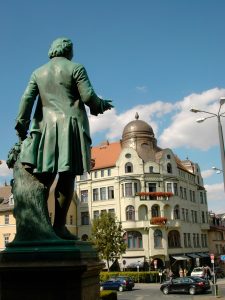
Weimar is a city in the federal state of Thuringia, Germany. The city was a focal point of the German Enlightenment and home of the leading characters of the literary genre of Weimar Classicism, the writers Johann Wolfgang von Goethe and Friedrich Schiller. In the 19th century, famous composers like Franz Liszt made a music center of Weimar and … [Read more...]
German Idioms – Part 3

In Part 3, we delve deeper into German idioms that offer insights into the nation's mindset and values. Expressions such as “Den Nagel auf den Kopf treffen” and “Sich zum Affen machen” not only enrich your vocabulary but also provide a window into German culture. Let's explore these sayings and their everyday applications. Wo sich Fuchs und Hase … [Read more...]
German Pork Schnitzel
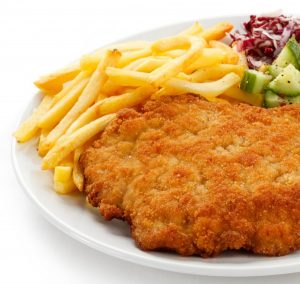
In Germany, Schnitzel is usually made of pork, although turkey, chicken and veal are also common. The pork loin is pounded to a 1 cm thickness, seasoned with salt and pepper, and then dipped into flour, egg and bread crumbs. It is usually served with French fries, mashed potatoes, or Spätzle. The dish has been extremely popular since the end of the … [Read more...]
German Idioms – Part 2
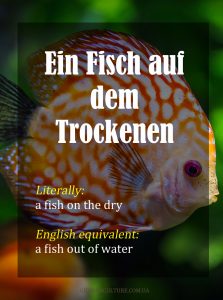
Building upon our previous exploration, Part 2 introduces more German idioms that showcase the language's richness and humor. Phrases like “Die Kirche im Dorf lassen” and “Da steppt der Bär” reveal cultural nuances and everyday wisdom. Join us as we unpack these expressions and their relevance in modern German. Er muss zu allem seinen Senf … [Read more...]
German Idioms – Part 1
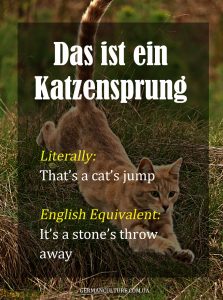
German idioms are an integral part of daily communication, adding color and depth to the language. In this first installment, we delve into expressions that might baffle non-native speakers but are second nature to Germans. From “Da liegt der Hund begraben” to “Ich verstehe nur Bahnhof,” explore the literal translations and the stories behind these … [Read more...]
- « Previous Page
- 1
- …
- 69
- 70
- 71
- 72
- 73
- …
- 163
- Next Page »