
December 2, 1817 Birth of Heinrich von Sybel in Düsseldorf, Germany. Sybel was a historian who had studied with Ranke in Berlin. His early books show the critical method of Ranke. He became deeply involved in politics, however, and came to view history as a means to educate for specific purposes. He came to be a firm believer in Prussia's … [Read more...]
December 1 in German History

December 1, 1018 Death of Dietmar in Merseburg, Germany. The Saxon, Dietmar was an important chronicler of his age and his works are important documentation to the period. December 1, 1724 Birth of Karl Theodor, the Wittelsbach Elector (Holy Roman Empire) of the Palatinate. On December 30, 1777 the Bavarian line of the Wittelsbach … [Read more...]
Josef Mengele – the Infamous Nazi Doctor
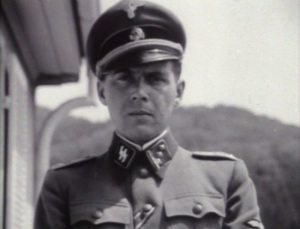
Some readers may accuse such action to place an article about the person who brought great shame and shadow to German history into the 'Famous People' link. But Dr. Josef Mengele was one of the most infamous persons in German history and everybody must remember his name in order to prevent the horror in a future. He was sent to Auschwitz in 1943 … [Read more...]
Friedrich Nietzsche Quotes
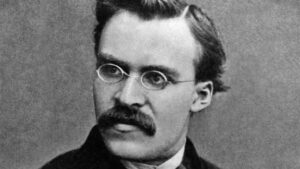
Friedrich Nietzsche was not your average philosopher. He didn’t aim to comfort readers—he aimed to wake them up. Often poetic, sometimes scathing, and always provocative, Nietzsche’s quotes distill his explosive insights on power, morality, individualism, and meaning. This collection of Nietzsche quotes captures the raw energy of his thought and … [Read more...]
The Grimms’ Brothers Fairy Tales: Timeless Magic in Storytelling
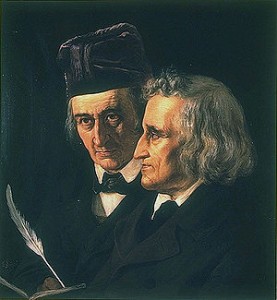
From enchanting princesses asleep in faraway castles to mischievous creatures causing mayhem, the fairy tales penned by the Grimms' Brothers have cast a spell over generations. Their cultural legacy is undeniably significant, making them synonymous with the very essence of storytelling. If you've ever been curious about the timeless magic … [Read more...]
Germany Under Hitler and the Nazi
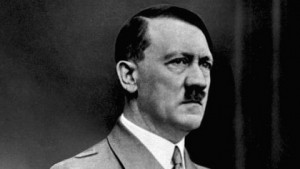
Nationalism is an infantile idea. It is a measles of mankind. --Albert Einstein The stars must have been in a special position above the Austrian town Braunau on April 20, 1889, when Adolf Hitler was born. Neither his father Alois Schickelgruber Hitler whom Adolf hated, nor his mother Klara Poelzl whom he, to the contrary, adored, could foresee … [Read more...]
Gerhard Schroeder: “I’m a climber”
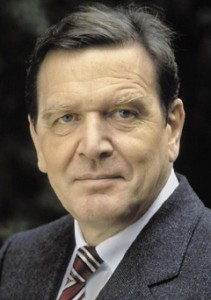
On September 27, 1998, Gerhard Schroeder, a "bluff and combative" legislator from Lower Saxony, was chosen a new chancellor of Germany. Mass media consider him to be a "breath of fresh air" after 16 years of Helmut Kohl's governing. This was a big news for the whole political world. The event hit the headlines of the leading newspapers and … [Read more...]
Wim Wenders – German Film Director, Producer and Writer
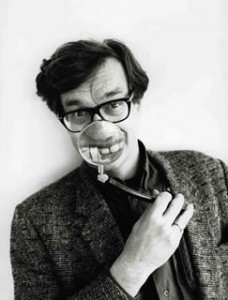
"I want to make personal films, not private films." Wim Wenders was born to create. He recognized it at high school in Oberhausen, where Wim began his studies in medicine and philosophy. Wenders decided to become a painter and moved to Paris, where he failed his entry test at the Art Academy. But this failure led him to the studio of Johnny … [Read more...]
Werner Herzog
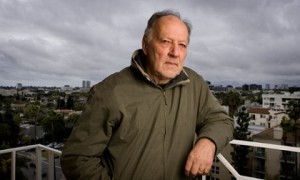
“Together, I said, we shall boil fire and stop fish.” Werner Herzog (real name Werner H. Stipetic) was born in Munich on September 5, 1942. He grew up in a remote mountain village, where were any films, television, or telephones. In the age of 14 he decided to see the world and started traveling on foot. During the same time he was inspired … [Read more...]
Wilhelm Hoffmann – E.T.A. Hoffman
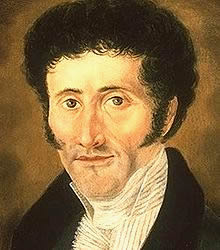
E(rnst) T(heodor) A(madeus) Wilhelm Hoffmann (1776-1822) was a German writer, composer, caricaturist, and painter, mostly known for his stories in which supernatural characters reveal people's hidden secrets. Hoffmann's first passions were music and painting, and only in the middle of his short life he started writing. His fiction works were the … [Read more...]
- « Previous Page
- 1
- …
- 156
- 157
- 158
- 159
- 160
- …
- 163
- Next Page »