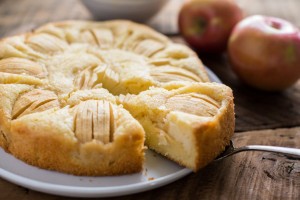
There are countless apple cakes in Germany, but this one, in which a rather plain batter rises up and bakes around sliced apples, has to be one of the most popular. Cakes like these are often called Mittwochskuchen (Wednesday cakes) because they can easily be made during the week when time is short. Ingredients: 3 medium apples 1/2 … [Read more...]
Sausage and Sauerkraut Pockets (Würstchen & Sauerkraut-Taschen)

Phyllo pastry is very similar to German Strudel pastry and can be used in the same ways. These savory snacks can be prepared ahead and baked just before serving so they are warm and crisp. Ingredients: 4 large sheets phyllo dough (10 x 12 inches) 2 3/4 ounces butter, melted 2 Bratwurst or Bockwurst sausages, grilled and chopped 10 oz Sauerkraut, … [Read more...]
Potato Skins stuffed with Bratwurst, Beer-Caramelized Onions and Sauerkraut
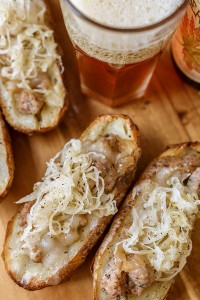
Early fall in Germany means Oktoberfest. So get together and celebrate with delicious savory food like stuffed potato skins and cold flowing beer! Ingredients: • 4 russet potatoes, scrubbed and dried • Canola oil • salt • black pepper • 2 Bratwurst sausage links, sliced into circles • 2 large onions, quartered and sliced thinly • ½ cup … [Read more...]
Beer Bratwurst Braised with Onions and Apples
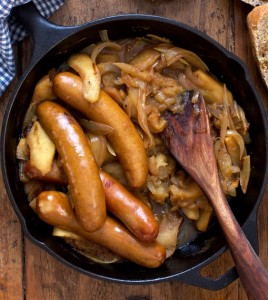
Few dishes capture the essence of rustic German comfort food quite like Beer Bratwurst Braised with Onions and Apples. With its savory bratwurst, sweet apples, and malty beer broth, this dish delivers a perfect balance of heartiness and flavor. A mainstay at family dinners, fall festivals, and of course, Oktoberfest, this recipe highlights the … [Read more...]
Interesting Facts About the Brandenburg Gate

Brandenburg gate is one of the most iconic scenes of recent German history. Hundreds of thousands of people celebrated in front of the Brandenburg Gate as the Berlin Wall fell on November 9th, 1989. The Gate has now come to represent German unity and freedom since the end of the Cold War and divided country. Here are a few facts that you … [Read more...]
German Red Berry Pudding (Rote Grütze)
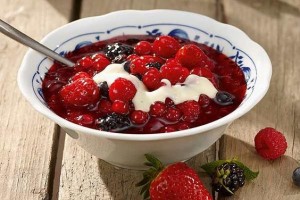
This refreshing summer dessert takes advantage of the cherry and berry season. Rote Grütze is a popular specialty from Northern Germany and has a lovely tart flavor. Serve with vanilla custard, cream or vanilla ice-cream. Ingredients: 6 cups fresh or frozen, unsweetened berries (raspberries, strawberries, red currants, or a combination of … [Read more...]
Esslingen am Neckar

Esslingen am Neckar is a city in the Stuttgart Region of Baden-Württemberg in southern Germany, seat of the District of Esslingen as well as the largest city in the district. It is located on the Neckar River, about 14 km southeast of Stuttgart city center. The regions surrounding the city of Esslingen are also mostly … [Read more...]
Schultüte (School Cone)

A "Schultüte" (or School Cone, even though the word "Tüte" translates more as "bag" from German), is a paper or plastic bag in form of a big cone. When children in Germany, Czech Republic, close to the borders with Germany, parts of Poland (Greater Poland, Upper Silesia, Warmia), Austria, and parts of Switzerland set off for their first day in … [Read more...]
Bauernfrühstück (Farmer’s breakfast)
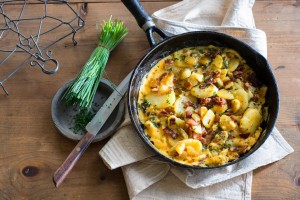
There are few better ways to start the day than with Bauernfrühstück, or "Farmer’s Breakfast". This traditional German dish was born from simplicity and necessity – a satisfying meal to fuel a long day of work in the fields. It combines leftover potatoes, eggs, onions, and bacon into one glorious skillet of golden comfort. Savory, flexible, and … [Read more...]
Crispy German Potato Pancakes (Kartoffelpuffer)
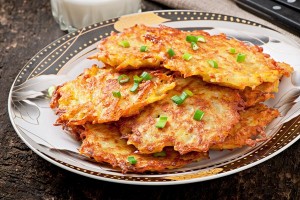
Few foods are as beloved and satisfying in German cuisine as Kartoffelpuffer, the irresistibly crispy potato pancakes found at markets, fairs, and dinner tables across the country. Also known in some regions as Reibekuchen or Erdäpfelpuffer, these golden-brown delights offer the perfect mix of crunchy edges and soft, savory centers. Whether served … [Read more...]
- « Previous Page
- 1
- …
- 81
- 82
- 83
- 84
- 85
- …
- 163
- Next Page »