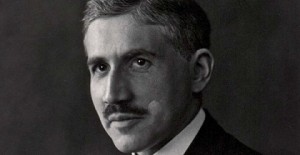
October 6 German/American Day in the U.S.A. - the holiday that celebrates German American heritage, commemorates the date in 1683 when 13 German families from Krefeld near the Rhine landed in Philadelphia. These families subsequently founded Germantown, Pennsylvania, the first German settlement in the original thirteen American colonies. … [Read more...]
October 5 in German History
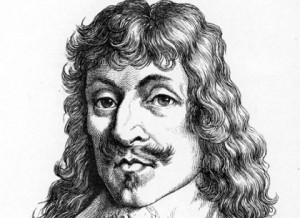
October 5, 1056 Birth of the Holy Roman Emperor, Heinrich III. October 5, 1609 Paul Fleming is born in Hartenstein, Germany. Fleming became one of the outstanding poets of the German Baroque period of literature. A poet of outstanding natural talent, Fleming had befriended the intellectual, Martin Opitz, while a student at the University … [Read more...]
October 4 in German History
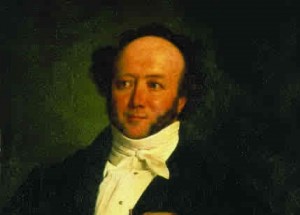
October 4, 1515 The painter Lucas Cranach the Younger is born in Bamberg, Germany. Lucas Cranach was a German Renaissance painter and portraitist, the son of Lucas Cranach the Elder. He began his career as an apprentice in his father's workshop alongside his brother Hans. Henceforth, his own reputation and fame grew. After his father's death, he … [Read more...]
October 3 in German History
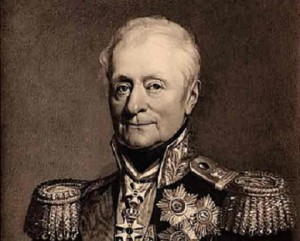
October 3 Day of German unity. This is a national holiday in Germany commemorating unification of the two Germanys after 40 years of separation (1949-1989). Germany reunited on October 3, 1990. October 3, 1210 It is most likely that Hermann von Salza was elected Grand Master of the Teutonic Knights on this date. He held that office until … [Read more...]
October 2 in German History
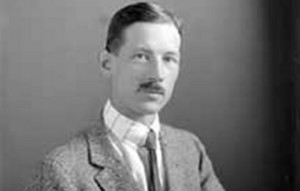
October 2, 1616 Birth of Andreas Gryphius in Glogau, Germany (now Poland). Gryphius was one of the greatest of the German Baroque writers. Gryphius is noted for his poetry and his dramas. He is the author of Leo Armenius, Catharina von Georgien, Cardenio und Celinde and Herr Peter Squentz. Gryphius died in 1664. October 2, 1800 Birth of … [Read more...]
October 1 in German History
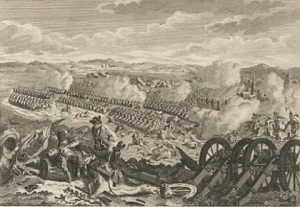
October 1, 1756 The Battle of Lobositz takes place in the Seven Years' War (1756-1763) (Siebenjähriger Krieg) between Prussia and Austria and their allies. October 1, 1904 Birth of Otto Robert Frisch in Vienna, Austria. Frisch was a physicist who did his doctoral work at the University of Vienna. Working with Niels Bohr in Copenhagen he … [Read more...]
September 30 in German History
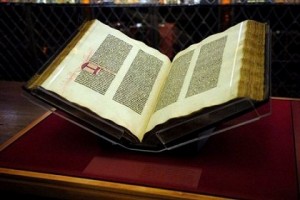
September 30 Feast day of St. Ursus (? - ca. 303). St. Ursus was a Roman Legionnaire who had converted to Christianity. According to the legends of the saints he was tortured attempting to force him to worship pagan idols. Finally he was beheaded. He is associated with St. Maurice and Solothurn, Switzerland where he was put to death. The chapel … [Read more...]
September 29 in German History
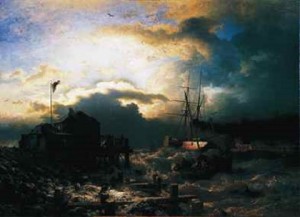
September 29, 1686 Birth of Cosmas Damian Asam in Benediktbeuren, Germany. He and his brother, Egid Quirin were leading masters of the baroque style of illusionist decoration in the late baroque period. September 29, 1815 Birth of Andreas Achenbach in Kassel, Germany. Achenbach was a landscape painter in the early part of the period of … [Read more...]
September 28 in German History
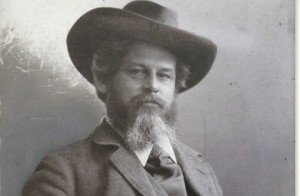
September 28, 1811 Birth of Friedrich Hecker in Eichtersheim, Germany. He was a liberal politician who was involved in several actions attempting to eliminate the monarchy and establish a republic. Under political pressure he fled to the United States where he served as a colonel in the Union Army in the Civil War. September 28, 1828 Birth … [Read more...]
September 27 in German History
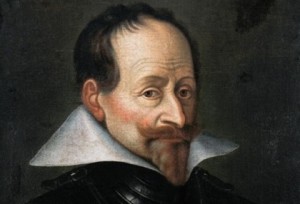
September 27, 1651 Death of Maximillian I in Ingolstadt, Germany. Maximillian was the Duke of Bavaria and involved in the Thirty Years' War in support of the Catholic cause. Bavaria had fallen into economic chaos when Maximillian came to power, but he was able to introduce measures which restored the strength of the Bavarian economy. He further … [Read more...]
- « Previous Page
- 1
- …
- 98
- 99
- 100
- 101
- 102
- …
- 163
- Next Page »