
Few baked treats capture the warmth and wonder of a German holiday season like the Stutenkerl. These sweet, soft bread men – with raisin eyes, a cheerful shape, and often a little clay pipe tucked under one arm – fill bakeries across western and northern Germany every November and December. Soft like brioche, slightly sweet, and delicately scented … [Read more...]
Lebkuchen

They are world-famous and inseparably tied to Christmas – Nuremberg Lebkuchen or gingerbread. These internationally-known delicacies were first baked by Franconian monks, who created these sweet baked goods as early as the 14th century. Ingredients: For the cookies: 3 cups all-purpose flour, plus extra for kneading 1¼ teaspoons ground nutmeg 1¼ … [Read more...]
Kletzenbrot – Traditional German Christmas Fruit Bread
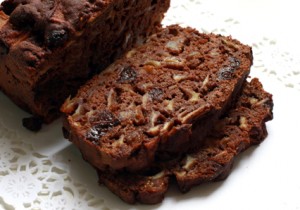
Ingredients: 125g dried apricots 250g dried pears 250g dried figs 250g stoned prunes 125g currants 250g sultanas 250g sugar 225ml water 1 cup liquid for 1 packet of dried yeast 250g flour 1 tsp cinnamon 1 pinch of ground cloves 1 pinch of ground cardamom 1 pinch of ground ginger 250g chopped hazelnuts 50g chopped candied orange … [Read more...]
German Christmas Stollen

Stollen is a fruit bread containing dried fruit and often covered with powdered sugar or icing sugar. The bread is usually made with chopped candied fruit and/or dried fruit, nuts and spices. Stollen is a traditional German bread usually eaten during the Christmas season, when it is called Weihnachtsstollen (after "Weihnachten") or Christstollen … [Read more...]
October 10 in German History
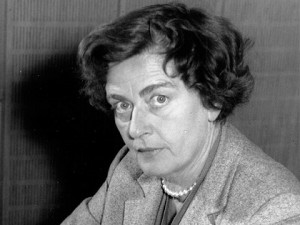
October 10, 1713 Birth of Johann Krebs in Buttelstedt, Germany. He was a composer of organ music. He was a pupil of Johann Sebastian Bach. October 10, 1791 Death of Christian Friedrich Daniel Schubart in Stuttgart, Germany. Schubart was a poet of the Sturm und Drang period (most noteworthy representatives of this period are Goethe and … [Read more...]
October 9 in German History
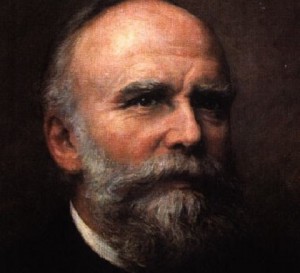
October 9, 1047 Death of Suidiger (Pope Clement II), the second German pope. Suidiger had been the bishop of Bamberg. He was installed as pope by the German king, Heinrich III on December 25, 1046. There had been three rivals claiming the office of pope when Heinrich III arrived in Rome. He deposed all three and installed Suidiger as Clement … [Read more...]
October 8 in German History
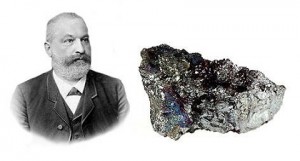
October 8, 1585 Birth of Heinrich Schütz in Köstritz, Germany. One of the most talented early German composers, Schütz was given the position of court composer in Dresden. Works by Schütz include Dafne, Musikalische Exequien, and Kleine geistliche Konzerte. October 8, 1656 Death of Johann Georg I in Dresden, Germany. Johann Georg … [Read more...]
Baumkuchen
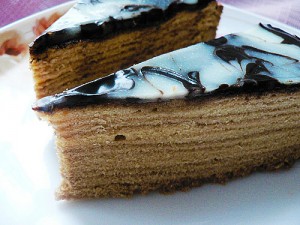
Baumkuchen, often referred to as the "King of Cakes," is a traditional German cake that's as rich in flavor as it is in history. This unique cake is known for its characteristic rings that resemble tree rings, hence its name, which literally translates to "tree cake." This article delves into the history, preparation, and cultural significance of … [Read more...]
Saffron Buns (St. Lucia Buns)

Ingredients: *-*-*-*-*-*-*-*-*-*-*-*-*-*-*-*-*-*-*-*-*-* 8 tablespoons (1 stick) unsalted butter 1-1/3 cups milk 1 teaspoon saffron threads, chopped fine and soaked in a few drops of water 1 tablespoon active dry yeast 2/3 cup sugar 1/2 teaspoon salt 2 eggs, divided use 4 cups unbleached flour + flour for kneading Raisins for garnish … [Read more...]
October 7 in German History
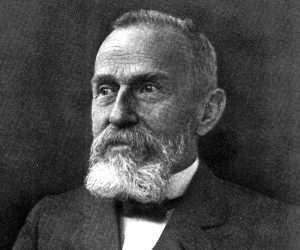
October 7, 1794 Birth of Wilhelm Müller in Dessau, Germany. Müller was a lyric poet who focused on Greek culture. October 7, 1822 Birth of Rudolf Leuckart in Helmstedt, Germany. Leuckart pioneered the science of parasitology. He was a professor of biology at the Universities of Göttingen, Giessen and Leipzig. October 7, … [Read more...]
- « Previous Page
- 1
- …
- 97
- 98
- 99
- 100
- 101
- …
- 163
- Next Page »