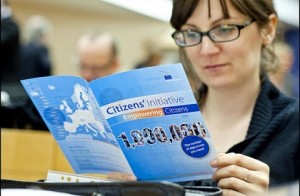
In the early 1970s, a new form of political participation in the form of citizens' initiative associations sprang up throughout West Germany. These associations, in essence nontraditional interest groups, were loosely and often temporarily organized groups of citizens mobilized in response to one particular local issue. Concerns ranged from school … [Read more...]
June 19 in German History
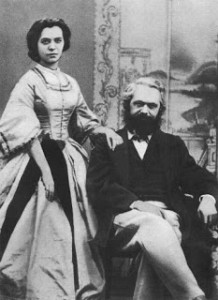
June 19, 1867 Death of Maximillian, the Emperor of Mexico, in Queretaro, Mexico. Born in Vienna, Austria. He became Emperor of Mexico at the urging of the French, who controlled it as a colony. Maximilian rather naively accepted assurances that he had been popularly elected emperor by the inhabitants of Mexico. His reign lasted until 1867 when … [Read more...]
June 18 in German History
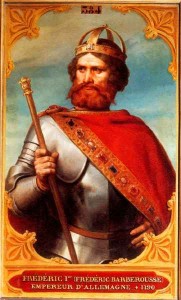
June 18, 1152 Friedrich I (Barbarossa) is crowned Emperor of the Holy Roman Empire by Pope Adrian IV in Rome. (Barbarossa is from Latin and means "red beard"). Before his imperial election, Frederick was by inheritance Duke of Swabia (1147–1152, as Frederick III). He was the son of Duke Frederick II of the Hohenstaufen dynasty and Judith, … [Read more...]
June 17 in German History
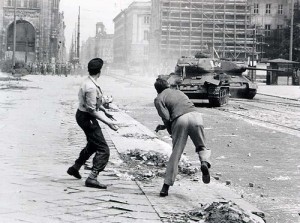
June 17, 1810 Birth of the poet, Ferdinand Freiligrath, in Detmold, Germany. Freiligrath's political/social engagement was reflected increasingly in his poetry to the extent that his work was banned and he was forced to leave Germany. Freiligrath died in 1876. June 17, 1885 Death of Edwin Freiherr von Manteufel in Carlsbad, … [Read more...]
June 16 in German History
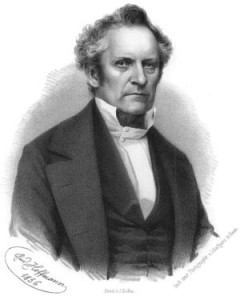
June 16, 1801 Birth of Julius Plücker (1801-1868) in Eberfeld, Germany. He was a German mathematician and physicist. He made fundamental contributions to the field of analytical geometry and was a pioneer in the investigations of cathode rays that led eventually to the discovery of the electron. June 16, 1804 Death of Johann Adam … [Read more...]
June 15 in German History
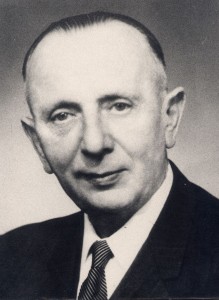
June 15, 1520 The Roman Pope, Leo X, threatens to ex-communicate Martin Luther. June 15, 1866 Prussia attacks Austria as a result of a dispute over Schleswig-Holstein. Prussia won the war by the 1st of July at the Battle of Königsgrätz. June 15, 1890 Birth of Georg Wüst (1890-1977) in Posen, Germany (now Poland). Wüst was an … [Read more...]
June 14 in German History
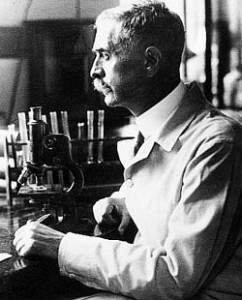
June 14, 1757 Death of Karl August Archduke of Saxe-Weimar-Eisenach. He made an intellectual center of Weimar through his invitation and patronage of Goethe, Herder, Schelling, Hegel and Schiller. June 14, 1862 Birth of John Ulric Nef in Herisau, Switzerland. Nef was a chemist who demonstrated that carbon can have a valence. He came to the … [Read more...]
June 13 in German History
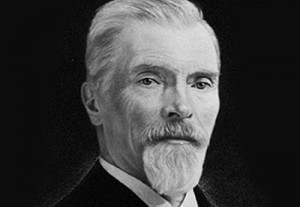
June 13, 1539 Birth of Jost Amman in Zürich, Switzerland. Amman was a leading painter and Printmaker of his age. June 13, 1809 Birth of Heinrich Hoffmann in Frankfurt am Main. Hoffmann is most widely known as the author of Struwwelpeter, a classic children's book. June 13, 1885 Birth of Elisabeth Schumann in Merseburg, Germany. … [Read more...]
The Churches as a Political Force in Germany
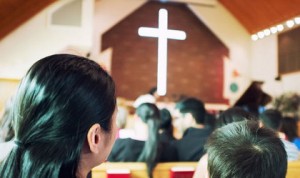
Religious associations represent a third major group of organized interests in the German policy process. The experience of the Third Reich had a profound influence on the postwar development of Protestant and Roman Catholic churches in the Federal Republic. Both espoused the view that moral responsibility extends to political responsibility and … [Read more...]
Labour Unions as a Political Force in Germany

During the Weimar Republic, labor unions were divided along partisan lines, a situation that led to competition among the socialist, communist, Catholic, and liberal trade associations. After World War II, labor leaders wanted to break with the past and form a trade union federation independent of political parties. The result was the establishment … [Read more...]
- « Previous Page
- 1
- …
- 113
- 114
- 115
- 116
- 117
- …
- 163
- Next Page »