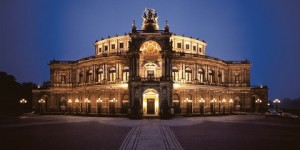
Dresden Theaterplatz is the heart of tourists' pilgrimage. First of all the place is famous for sightseeing tour which may take long hours to value enough the beauty of Zwinger, Schinkelwache restaurant with amazing history, Gallery of the Old Masters with world-famous masterpieces gathered from all over the world, Hofkirche Church and the heart of … [Read more...]
March 3 in German History
March 3, 1033 Death of St. Kunigunde von Luxembourg (ca. 980–1033) St. Kunigunde was the daughter of Count Siegfried of Luxembourg. In 999 she married emperor Heinrich II of the Holy Roman Empire (a.k.a. the German Empire). They were married in Paderborn, Germany. She was crowned as empress by Pope Benedict VIII in Rome. In 1017 she founded … [Read more...]
March 2 in German History
March 2, 1481 Birth of Franz von Sickingen in Ebernburg, Germany. A character in Goethe's play, Götz von Berlichingen, the historic Sickingen was a defender of the Protestant cause in Germany. His end came when he declared war on Richard of Greiffenclau, the archbishop of Trier and was defeated. After that defeat he gradually lost support and … [Read more...]
March 1 in German History
March 1, 1077 Imperial diet removes Heinrich IV as Kaiser and subsequently elects Rudolf von Schwaben. March 1, 1683 Birth of Karoline von Brandenburg-Ansbach in Ansbach, Germany. Caroline was the wife of the second of the German Kings of England, George II. She was a very strong influence on her husband's execution of his kingly … [Read more...]
February 28 in German History
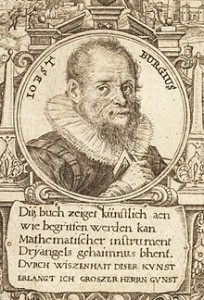
February 28, 1552 Birth of Joost Bürgi (1552-1632) in Lichtensteig, Switzerland. A watchmaker, astronomer and mathematician, Bürgi invented logarithms, possibly as early as 1588, and had compiled his logarithmic tables by 1603. (The Scottish mathematician, John Napier, who is often credited with the invention in British histories, invented … [Read more...]
February 27 in German History
February 27, 272 Birth of Constantine. Constantine the Great was the emperor of the Roman Empire. He had started his political career as one of the four Roman Emperors at the time of the division of power. He ruled the Western Empire from the city of Trier (now in Germany). He later waged battle against the other emperors and emerged finally as … [Read more...]
February 26 in German History
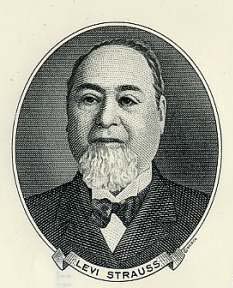
February 26, 1361 Birth of Wenceslas in Nürnberg, Germany. Wenceslas gained the titles, German King, King of Bohemia and King of the Romans. He was a very weak ruler in unsettled times. He was deposed, spent some time in prison and lost his position as King of Bohemia. He retained the title of King of the Germans until his death although he … [Read more...]
February 25 in German History
February 25 Feast Day of St. Walpurgis (ca. 710-779) (Name also spelled Walpurga and Walburga) St. Walpurgis was the daughter of St. Boniface's sister. In about 748 she was called by St. Boniface to assist in the missionary effort in Germany. In 761 she became the abbess of the Benedictine monastery in Heidenheim. She is entombed in Eichstätt in … [Read more...]
February 24 in German History
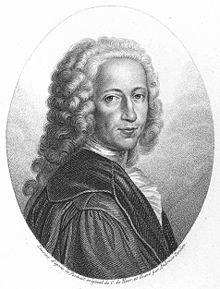
February 24, 1557 Birth of Matthias, Holy Roman Emperor, in Vienna, Austria. Matthias was the Habsburg ruler of the empire at the time that the 30 Years' War started (1618). February 24, 1622 Birth of Johann Clauberg in Solingen, Germany. Clauberg was a philosopher who became the leading German follower of Rene Descartes. He was a … [Read more...]
February 23 in German History
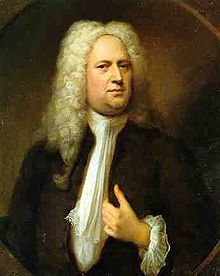
February 23, 1011 Death of St. Willigis von Mainz ( ? – 1011) St. Willigis was born to the family of a wagon builder in a village in Lower Saxony, Germany. He became the chancellor of Germany under the emperor Otto I. In 975 he became the Archbishop of Mainz. In 975 he was named the Primate of Germany by Pope Benedict VII. It was he who crowned … [Read more...]
- « Previous Page
- 1
- …
- 137
- 138
- 139
- 140
- 141
- …
- 163
- Next Page »