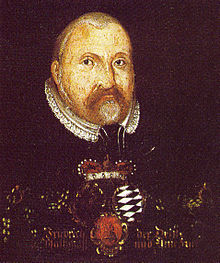
February 14, 1515 Birth of Friedrich III (1515-1576) in Simmern, Germany. Friedrich was also called "Friedrich der Fromme". He was the elector of the Palatine of the Rhine. He became a Protestant in 1546. He assisted the development of Protestantism in Germany, France and Holland. February 14, 1722 Birth of Georg Christian Füchsel … [Read more...]
February 13 in German History

February 13 Feast Day of St. Jordan von Sachen (ca. 1200-1237) Jordan was born in ca. 1200 near Osnabrück, Germany. He followed St. Dominic (the founder of the Dominican order) as the general of the order. He held that office from 1222-1237. He was a very talented administrator and led the order in establishing its enduring structure. He saw … [Read more...]
February 12 in German History

February 12, 1777 Birth of Friedrich de La Motte Fouque in Brandenburg, Germany. Descended from a French noble family, Fouque was for a time a very popular writer. His best known works are Undine (1811) and Der Held des Nordens (1808). February 12, 1804 The philosopher Immanuel Kant (1724-1804) dies in Königsberg (now Kaliningrad in … [Read more...]
Germany Today – German Online Newspapers and Magazines

The best way to let people around the world know about your country is to use mass media. Thus, you can get the latest news on Germany and its life from newspapers, radio and TV. It would be great to explore each source separately, but let's be wise and reasonable, and use the wide possibilities offered by the Internet. Start your media journey … [Read more...]
Gays and Lesbians in Germany
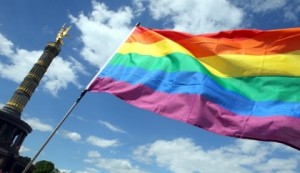
According to Freud, our social behavior, thoughts and actions most of all go by our sexual instinct. Persons of the opposite sexes are drawn to each other with some supernatural force, and all the rest is done to impress, get recognition, win and possess that other one (don't tell me I am wrong). Indeed, this is the most exciting side of the human … [Read more...]
German Wines

You will probably be surprised to see an article about German wine, why not beer, right? Indeed, being the most popular drink among the Germans, beer has captured attention of the whole country and become the German national drink. Still wine is also an object to overall popularity. There is an anonymous German advice to beer and wine drinkers: … [Read more...]
February 11 in German History
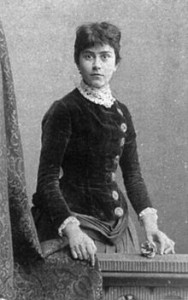
February 11, 1813 Birth of Otto Ludwig in Eisfeld, Germany. Ludwig was a novelist and playwright of the period of Poetic Realism, a term which he coined. Among his works are Die Erbförster (1850), and Zwischen Himmel und Erde (1855). Ludwig died in Dresden, Germany on February 25, 1865. February 11, 1869 Birth of Else Lasker-Schüler … [Read more...]
February 10 in German History
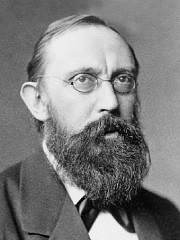
February 10, 1543 Birth of Johann Eck (birth name Johann Maier) in Egg, Germany. Eck was ordained a Catholic priest in 1508 and attained the degree, Doctor of Theology in 1510. He then was appointed as professor of theology at the University of Ingolstadt. Eck was outraged at Luther's 95 theses which he denounced as heresy in 1518. He debated … [Read more...]
February 9 in German History
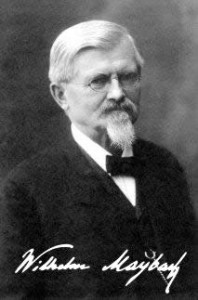
February 9, 1834 Birth of Felix Dahn in Hamburg, Germany. Dahn was a professor of law at the universities of Munich, Würzburg and Berlin. In addition to his work in law he wrote histories and historical novels. Among his histories are Die Könige der Germanen (11 volumes), Die Urgeschichte der germanischen und romanischen Völker and Deutsche … [Read more...]
February 8 in German History
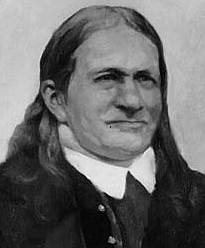
February 8, 1487 Birth of Ulrich in Reichenweier, Germany. Ulrich was the Herzog of Württemberg from 1498. Due to political problems he was removed from his position by fellow nobles in 1519. Through political intrigues he regained control of Württemberg in 1534. At that time he dissolved the monasteries, confiscated church lands and invited … [Read more...]
- « Previous Page
- 1
- …
- 141
- 142
- 143
- 144
- 145
- …
- 163
- Next Page »