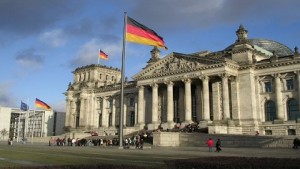
As of mid 1995, Germany was a country coming to terms with the recent unification of its western and eastern portions following four decades of Cold War division. Achieved in October 1990, German unification consisted, in effect, of the incorporation of the German Democratic Republic (GDR, or East Germany) into the Federal Republic of Germany (FRG, … [Read more...]
Culture of German Management

German management, as it has evolved over the centuries and has established itself since World War II, has a distinct style and culture. Like so many things German, it goes back to the medieval guild and merchant tradition, but it also has a sense of the future and of the long term. The German style of competition is rigorous but not ruinous. … [Read more...]
Deutsche Mark – National German Currency
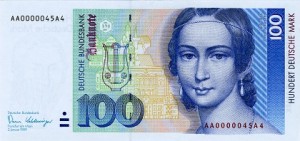
At the core of Germany's success and influence lies its currency. The deutsche mark gave concrete expression to West Germany's international financial and economic success and also contributed to it. Since unification, it has become even more important as a symbol as well as an instrument of Germany's new central role in Europe. The success of the … [Read more...]
Germany in the World Economy
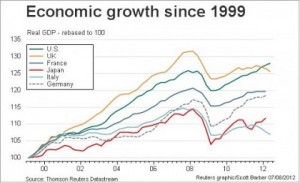
Along with the United States and Japan, Germany has one of the world's biggest economies and most dominant central banks. Of the three, Germany has the smallest and most vulnerable economy. Germany's GDP of DM3 trillion is less than one-third of United States GDP and less than one-half of Japan's. Despite Germany's relatively small size, it has … [Read more...]
Impact of Unification on German Economy
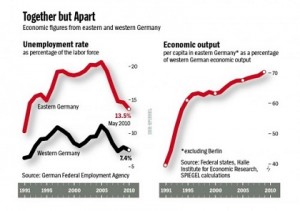
The East German and West German economies at the time of unification looked very similar. They both concentrated on industrial production, especially machine tools, chemicals, automobiles, and precision manufactures. Both had a well-trained labor force and an important export component, although their exports went largely in opposite directions. … [Read more...]
The Economic Miracle of Germany
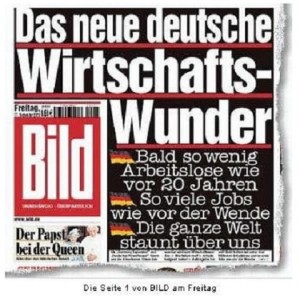
The economic reforms and the new West German system received powerful support from a number of sources: investment funds under the European Recovery Program, more commonly known as the Marshall Plan; the stimulus to German industry provided by the diversion of other Western resources for Korean War production; and the German readiness to work hard … [Read more...]
Bundesbank
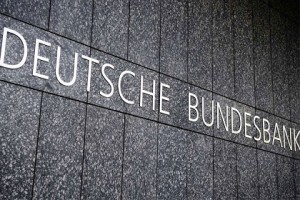
The single most important economic institution in Germany outside the federal government is the central bank, the Deutsche Bundesbank (commonly called the Bundesbank). It has the dominant voice in German monetary policy. Through that voice, it establishes and maintains a firm policy in favor of solid currency value within Germany and increasingly … [Read more...]
June 8 in German History
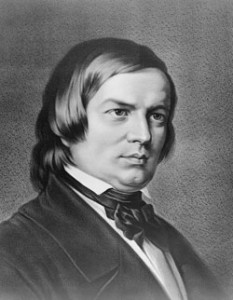
June 8, 1650 Death of Maximilian von Trauttmansdorff in Vienna, Austria. Von trauttmansdorff was an Austrian diplomat who had played a key role in Habsburg imperial politics for many years when he was called upon to negotiate an end to the Thirty Years' War. After negotiations lasting for five years the War ended with the Peace of Westphalia in … [Read more...]
June 7 in German History

June 7, 1826 Death of Joseph von Fraunhofer in Munich, Germany. The physicist, Fraunhofer was the first to observe the dark lines in the spectrum of the sun, which became known as Fraunhofer lines. In his further work he discovered and charted similar spectral lines in the elements. His work led to the development of the technique of … [Read more...]
June 6 in German History
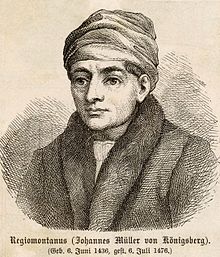
June 6, 1134 Death of St. Norbert von Xanten (ca. 1080 - 1134) St. Norbert was born in about 1080 in Xanten, Germany. He was ordained a priest when he was 35. He gave away all his many properties and dedicated his life to God. In 1119 at the direction of Pope Calixtus II, Norbert founded a religious order at Prémontré (modern France). After … [Read more...]
- « Previous Page
- 1
- …
- 116
- 117
- 118
- 119
- 120
- …
- 163
- Next Page »