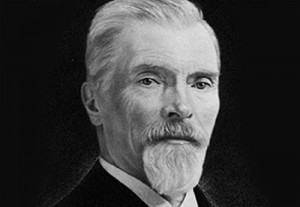
June 13, 1539 Birth of Jost Amman in Zürich, Switzerland. Amman was a leading painter and Printmaker of his age. June 13, 1809 Birth of Heinrich Hoffmann in Frankfurt am Main. Hoffmann is most widely known as the author of Struwwelpeter, a classic children's book. June 13, 1885 Birth of Elisabeth Schumann in Merseburg, Germany. … [Read more...]
The Churches as a Political Force in Germany
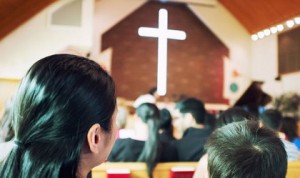
Religious associations represent a third major group of organized interests in the German policy process. The experience of the Third Reich had a profound influence on the postwar development of Protestant and Roman Catholic churches in the Federal Republic. Both espoused the view that moral responsibility extends to political responsibility and … [Read more...]
Labour Unions as a Political Force in Germany
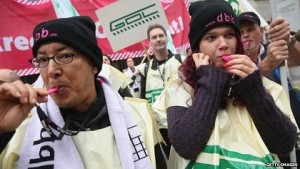
During the Weimar Republic, labor unions were divided along partisan lines, a situation that led to competition among the socialist, communist, Catholic, and liberal trade associations. After World War II, labor leaders wanted to break with the past and form a trade union federation independent of political parties. The result was the establishment … [Read more...]
Business and Industry as a Political Force in Germany
There are three levels at which business and industrial interests seek representation. First, business wants its perspective heard as the government formulates policy. Second, business needs representation in negotiations with labor unions. Third, business may desire support in cultivating new clients or suppliers. Each of these objectives is met … [Read more...]
Party of Democratic Socialism
The communist party that ran East Germany was the Socialist Unity Party of Germany (Sozialistische Einheitspartei Deutschlands--SED). Founded in 1946, the SED controlled the government and the electoral process and supervised the omnipresent State Security Service (Staatssicherheitsdienst--Stasi). To be considered for important positions in East … [Read more...]
The Republikaner and the German People’s Union
On the opposite end of the political spectrum from the Greens are two parties of the far right, the Republikaner (Die Republikaner--REP), with about 23,000 members, and the German People's Union (Deutsche Volksunion--DVU), with 26,000 members. As of mid- 1995, these two parties had not gained sufficient support to win seats in the Bundestag, but … [Read more...]
Green Party of Germany
In the early years of the FRG, several minor parties representing a range of political views from the neo-Nazi right to the communist left played a role in the political system. Support for these parties dwindled over time, and, after 1961, the FDP was the only smaller party to cross the 5 percent threshold necessary to gain Bundestag … [Read more...]
Free Democratic Party of Germany
The Free Democratic Party (Freie Demokratische Partei--FDP) is much smaller than the CDU or SPD, but its limited electoral strength masks the party's inordinate influence. Prior to the 1994 election, the FDP had experienced its worst results in national elections in 1969 (5.8 percent) and 1983 (7 percent). Both of those poor showings occurred … [Read more...]
Social Democratic Party of Germany
Founded in 1875, the Social Democratic Party of Germany (Sozialdemokratische Partei Deutschlands--SPD) is Germany's oldest political party and its largest in terms of membership. After World War II, under the leadership of Kurt Schumacher, the SPD reestablished itself as an ideological party, representing the interests of the working class and the … [Read more...]
Christian Democratic Union/Christian Social Union
Following World War II, the Christian Democratic Union (Christlich Demokratische Union--CDU) was founded by a diverse group of Catholics and Protestants, businesspeople and trade unionists, and conservatives and moderates. The party espoused a Christian approach to politics and rejected both Nazism and communism. CDU members advocated conservative … [Read more...]
- « Previous Page
- 1
- …
- 117
- 118
- 119
- 120
- 121
- …
- 166
- Next Page »