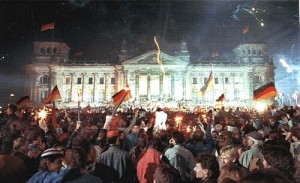
On October 3, Germany celebrates its Unification Day (Tag der Deutschen Einheit). This day back in 1990 brought a happy and a very significant event on the world political scene. The symbol of the Cold War - the Berlin Wall - was torn down, and East Germans could freely face the world. To have a better understanding of what actually happened in … [Read more...]
The Tradition of Sylvester in Germany
In Germany, New Year’s Eve is not simply the closing of a calendar. It is Sylvester, a night filled with traditions that reflect centuries of history, layers of folklore, and a cultural instinct for marking transitions with intentional ritual. Germans view Sylvester not only as a time for celebration, but also as a symbolic threshold between old … [Read more...]
German Maiwein

May Wine is a traditional May Day beverage Maiwein (May Wine) is a German drink, dedicated to springtime and flavored with fresh Waldmeister (sweet woodruff). Maiwein, a white wine, imported from Germany, can be found in stores. Waldmeister is a fragrant herb, a small plant with white blossoms. In Germany it grows in the forests. However, the … [Read more...]
May Day in Germany
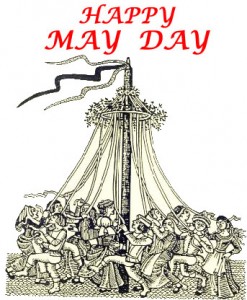
May 1st is an international holiday in Germany known as May Day The first of May is Labor Day (Tag der Arbeit). The International Workers' Congress in Paris designated May Day as a public holiday in 1889, and in 1919 the National Assembly in Weimar declared it a public holiday in Germany. It is observed by holding meetings, marches and giving … [Read more...]
December 21 in German History
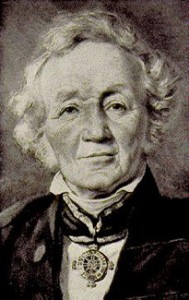
December 21, 1597 Death of St. Peter Canisius (1521 - 1597) Peter de Hondt (St. Peter Canisius) was born in Nimwegen (Germany at that time, now the Netherlands). In 1536 he began his studies at the University of Cologne. In 1543 he became the first German to enter the order of Jesuits. He founded the first Jesuit house in Germany in Cologne. … [Read more...]
Valentine’s Day in Germany – Valentinstag

February 14th is Valentine's Day, and though celebrating Valentine’s Day has only become popular within the last few decades in Germany, there are several traditions Germans have taken on wholeheartedly. This includes giving cards, sweet treats and flowers to their loved ones on this special day. As the celebration of St. Valentine’s Day is quite … [Read more...]
Love at First … Site?

St. Valentine's Day is approaching.. Holiday's history and recipes -- for you and your sweetheart! "Love is the ultimate outlaw. It just won't adhere to any rules. The most any of us can do is sign on as its accomplice." -- Tom Robbins, Still Life With Woodpecker St. Valentine's Day (February 14) is the most romantic day of the whole year, the … [Read more...]
Love Republic Dos and Don’ts
Observe the simple rules and spread the message of Peace, Love, Unity and Respect Now that Loveparade has become a titanic (no allegory intended!) event attracting around 1.5 million visitors, it is very important to mind some rules of behavior in order not to turn a smiling, laughing mega-party into a hyperventilated, dehydrated and just plain … [Read more...]
Join the Love Republic!
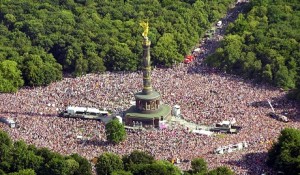
Loveparade'2001 will be different from the previous eleven Parades because it won't take place on the second Saturday of July as it used to be. According to the local authorities' statement made in the beginning of April, July 14 has already been reserved by the Greens since September'2000 for a meeting. There is an opinion that the Greens' … [Read more...]
December 20 in German History
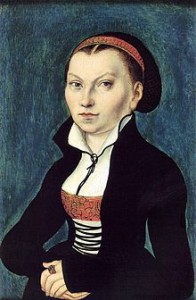
December 20, 1552 Death of Katharina von Bora (1499-1552), wife of Martin Luther, in Torgau. "Die Lutherin", as she was referred to, was sent at the age of 5 to the Benedictine cloister in Brehna in 1504 for education. At the age of 9 she moved to the Cistercian monastery Marienthron (Mary's Throne) in Nimbschen. After several years of religious … [Read more...]
- « Previous Page
- 1
- …
- 151
- 152
- 153
- 154
- 155
- …
- 163
- Next Page »