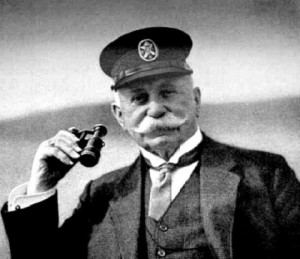
July 8 Feast Day of St. Kilian. St. Kilian was born in about 640, possibly in Ireland. He undertook missionary work to Germany. He began his work near Würzburg. He was killed by the pagans in the area in about 689. He is entombed in Würzburg. St. Kilian's feast day is July 8. July 8, 810 Pepin, the son of Karl der Große (Charlemagne), dies … [Read more...]
Johannes Brahms

Johannes Brahms is the German composer and is called the Beethoven’s true successor in the German music. Johannes Brahms was born in 1833 in Hamburg, however, the most important and latest part of his life devoted to Vienna. Brahms started his composing being inspired by the Hungarian and German folklore music and later became a genius of sublime … [Read more...]
Ludwig van Beethoven
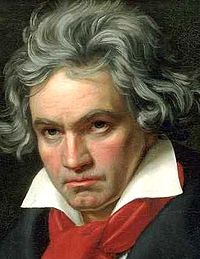
Beethoven was born in 1770 in Bonn, however, most of his life of a musician he spent in Vienna. Of the seven children born to Johann van Beethoven, only Ludwig, the second-born, and two younger brothers survived infancy. Beethoven's musical talent was obvious at a young age. His first music teacher was his father. Although tradition has it that … [Read more...]
Johann Sebastian Bach
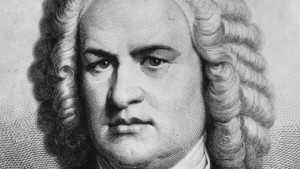
Johann Sebastian Bach (March 21, 1685 - July 28, 1750) was the master of Baroque composition who in his later years held the post of music director in Leipzig, Germany. Bach's abilities as an organist were highly respected throughout Europe during his lifetime, although he was not widely recognised as a great composer until a revival of interest … [Read more...]
July 7 in German History

July 7, 1720 Maria Bach (wife of J. S. Bach) dies in Köthen, Germany. Maria Bach was the first wife of Johann Sebastian Bach. July 7, 1860 Birth of Gustav Mahler in Kaliste, Bohemia. Mahler composed 10 symphonies. His work was a significant influence on Schoenberg and Shostakovich. July 7, 1884 Birth of the German … [Read more...]
Land Police Agencies in Germany
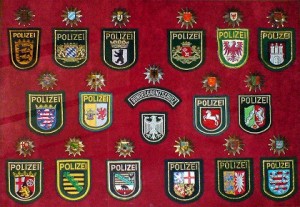
Below the federal level, police forces are organized by the Laender and are collectively known as Land police (Landpolizei). The forces are organized by cities, towns, or rural communities, but all are integral components of the police forces of the Land in which they are located. The Land minister of interior supervises police operations in his or … [Read more...]
Dissidence and Terrorist Activity in Germany
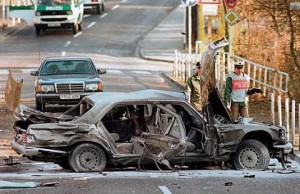
Opposition to the West German government has existed since its inception in 1949, and, in keeping with German tradition, radical students have sometimes been in the front ranks of those protesting various policies and situations: the use of nuclear power and the presence of atomic weapons; the government's policy toward the universities; and United … [Read more...]
Federal Police Agencies in Germany

Established in 1951, the Federal Border Force (Bundesgrenzschutz--BGS) was the first federal police organization permitted by the Allied occupation authorities. During the early 1950s, there were frequent incidents on the borders with East Germany and Czechoslovakia, and the occupation authorities became convinced of the need for a competent border … [Read more...]
Police Agencies in Germany
Law enforcement in Germany is conducted by federal, state and municipal law enforcement agencies. The Federal Police is a specialized force responsible for border protection, railway policing and aviation security. The federal structure of the Federal Republic of Germany gives the 16 states (Länder) the authority to maintain their own police … [Read more...]
Internal Security in Germany
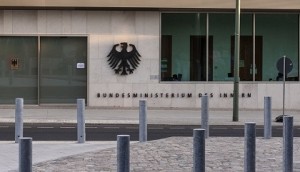
The German legal system is the product of many centuries of development, starting with the tribal laws of the first Germans. Those indigenous customs were influenced and changed under Roman law and later by the laws that prevailed in the Holy Roman Empire. Feudal law also had a strong influence. When more formal law and legal institutions appeared … [Read more...]
- « Previous Page
- 1
- …
- 109
- 110
- 111
- 112
- 113
- …
- 163
- Next Page »